

7 Essential Types of Kitchen Knives Every Cook Should Know
Choosing the right kitchen knife can make meal prep smoother and safer, but with so many options, it is easy to feel unsure where to start. Each knife is built for a specific purpose and using the wrong one can slow you down or lead to uneven results. The right set of knives means you can slice, dice, mince, and chop with confidence and precision.
This list breaks down exactly what each main kitchen knife does best, drawing on proven facts and expert tips. Discover which blades will help you tackle nearly 95 percent of your kitchen cutting tasks, bring finesse to delicate work, and turn every prep session into a pro experience. Get ready to find out how the right knives can completely change the way you cook.
Table of Contents
- Chef’s Knife: The Ultimate All-Purpose Tool
- Paring Knife: Precision for Small Tasks
- Santoku Knife: Versatility for Slicing and Dicing
- Utility Knife: A Handy Middle-Ground Blade
- Bread Knife: Effortless Slicing of Loaves
- Boning Knife: Mastering Meat Preparation
- Ulu Knife: Unique Design for Specialized Tasks
Quick Summary
| Key Insight | Explanation |
|---|---|
| 1. High-Quality Chef’s Knife is Essential | It serves as the primary cutting tool, handling 95% of kitchen tasks efficiently with proper grip and technique. |
| 2. Proper Knife Maintenance is Crucial | Regular honing and professional sharpening every 6-12 months ensure knives remain sharp and effective for various culinary tasks. |
| 3. Use Appropriate Knives for Specific Tasks | Each knife type, from paring to boning, is designed for particular tasks, enhancing precision and efficiency in the kitchen. |
| 4. Ergonomic Design Enhances Comfort | Knives with ergonomic handles reduce hand fatigue and provide better control, making food preparation more enjoyable and efficient. |
| 5. Adopt Correct Cutting Techniques | Using the recommended cutting techniques for each knife maximizes performance, ensuring safety and efficiency while working in the kitchen. |
1. Chef’s Knife: The Ultimate All-Purpose Tool
Every professional kitchen and serious home cook knows that the chef’s knife is the single most important cutting tool in culinary preparation. This versatile blade is designed to handle almost every cutting task with precision and efficiency.
The standard 8-inch chef’s knife is considered the workhorse of kitchen cutlery, capable of performing approximately 95% of kitchen cutting tasks. Its balanced design allows for exceptional performance across multiple food preparation techniques.
Key capabilities of a chef’s knife include:
- Chopping vegetables with uniform precision
- Slicing meats and proteins cleanly
- Mincing herbs and garlic
- Dicing ingredients quickly and consistently
- Breaking down larger food items
A high-quality chef’s knife is the cornerstone of any serious cook’s toolkit.
The blade’s effectiveness depends on two critical factors: material quality and proper handling technique. Premium chef’s knives are typically constructed from high-carbon stainless steel, which provides:
- Superior edge retention
- Exceptional sharpness
- Enhanced durability
- Resistance to corrosion
Proper grip and technique are equally important for maximizing your chef’s knife performance. Professional chefs recommend positioning your thumb and forefinger directly on the blade’s base for maximum control and safety.
Pro tip: Always hone your chef’s knife before each use and get it professionally sharpened every 6-12 months to maintain optimal cutting performance.
2. Paring Knife: Precision for Small Tasks
If the chef’s knife is a kitchen’s workhorse, the paring knife is its precision instrument. These compact blades are designed for intricate culinary tasks that require surgical accuracy and delicate maneuvering.
Typically measuring around 3.5 inches long, the paring knife is engineered for maximum control and detailed cutting. Its small size and nimble design make it the go-to tool for tasks that larger knives cannot handle.
Key applications for a paring knife include:
- Peeling fruits and vegetables
- Removing seeds and stems
- Creating decorative garnishes
- Trimming precise edges
- Segmenting citrus fruits
- Deveining shrimp
A paring knife transforms complex cutting tasks into simple, elegant movements.
Most paring knives are constructed from hardened steel with ergonomic handles, ensuring both durability and comfort during extended use. The blade’s narrow profile allows for exceptional maneuverability, making it indispensable for tasks requiring fine motor skills.
Blade materials significantly impact a paring knife’s performance. High-carbon stainless steel offers:
- Superior sharpness
- Excellent edge retention
- Resistance to corrosion
- Lightweight handling
Pro tip: Always use a paring knife on a stable cutting board and keep your fingers curled under to protect them from accidental cuts.
3. Santoku Knife: Versatility for Slicing and Dicing
The Santoku knife represents the pinnacle of Japanese culinary engineering a knife that transcends traditional cutting boundaries. Its name translates to “three virtues” reflecting its exceptional ability to slice, dice, and chop with remarkable precision.
Originating in Japan, the Santoku has quickly gained popularity worldwide for its incredible versatility. Typically measuring between 6 to 7 inches long, this knife features a unique sheep’s foot blade design that differentiates it from Western-style chef’s knives.
Key characteristics of the Santoku knife include:
- Thinner and lighter blade compared to Western knives
- Flat cutting edge promoting precise downward chopping
- Ideal for vegetables, fish, and boneless meats
- Ergonomic handle design for comfort
- Reduced hand fatigue during extended use
The Santoku knife transforms complex cutting tasks into effortless culinary artistry.
Unlike traditional Western knives that rely on a rocking motion, the Santoku encourages a straight up-and-down cutting technique. This design provides superior control and precision during food preparation, making it a favorite among professional chefs and home cooking enthusiasts.
The blade’s construction typically involves high-carbon stainless steel, which offers:
- Exceptional sharpness
- Long-lasting edge retention
- Resistance to corrosion
- Balanced weight distribution
Pro tip: To maintain your Santoku knife’s performance, use a gentle slicing motion and avoid twisting the blade during cutting.
4. Utility Knife: A Handy Middle-Ground Blade
The utility knife is the culinary world’s Swiss Army knife a versatile tool that bridges the gap between larger chef knives and smaller paring knives. Perfectly sized for mid-range cutting tasks, this blade offers precision and flexibility where other knives fall short.
Typically ranging from 4 to 7 inches in length, the utility knife is designed to tackle those awkward kitchen cutting scenarios that challenge both larger and smaller blades. Its narrow, sharp profile makes it ideal for tasks that demand more control and finesse.
Primary uses for a utility knife include:
- Slicing medium-sized fruits and vegetables
- Trimming meat portions
- Cutting sandwiches and smaller proteins
- Preparing garnishes
- Handling detailed food preparation tasks
A utility knife transforms complicated cutting tasks into simple, elegant movements.
The ergonomic design of utility knives ensures comfortable handling during extended food preparation. Its lightweight construction allows for greater maneuverability compared to bulkier chef knives, making it a favorite among both professional chefs and home cooks.
Key blade characteristics include:
- Sharp, narrow cutting edge
- Lightweight construction
- Balanced weight distribution
- Versatile cutting capabilities
- Easy to control and manipulate
Pro tip: Always store your utility knife in a knife block or magnetic strip to maintain its edge and prevent accidental damage.
5. Bread Knife: Effortless Slicing of Loaves
Breads come in all shapes and textures, and mastering their slicing requires a specialized tool. The bread knife with its distinctive serrated edge is engineered to glide through loaves without crushing their delicate crumb.
Typically ranging from 6 to 14 inches, bread knives solve common cutting challenges by featuring unique blade characteristics. The saw-like serrations grip crusty exteriors while gently penetrating softer interiors, ensuring clean and precise slices.
Key advantages of a bread knife include:
- Preventing bread from being compressed
- Creating uniform slice thickness
- Handling both soft and crusty bread types
- Reducing crumb scatter during cutting
- Protecting the bread’s structural integrity
A quality bread knife transforms messy cutting into an art form.
The blade’s offset handle design provides additional benefits by keeping your knuckles safely away from the cutting surface. This ergonomic feature allows for more controlled and comfortable slicing, especially when dealing with larger or harder loaves.
Important blade characteristics include:
- Long serrated edge
- Thin, flexible blade
- Stainless steel construction
- Comfortable handle grip
- Balanced weight distribution
Pro tip: Always slice bread using a gentle sawing motion and let the knife’s weight do the work to avoid compressing the loaf.
6. Boning Knife: Mastering Meat Preparation
Precision is paramount when preparing meats, and no kitchen tool embodies this principle more than the boning knife. This specialized blade is designed to transform raw proteins into perfectly trimmed cuts with minimal waste.
With a narrow blade typically 5 to 6.5 inches long, the boning knife offers exceptional maneuverability around joints and intricate meat structures. Its sharp, pointed tip allows cooks to navigate complex anatomical contours with surgical accuracy.
Key capabilities of a boning knife include:
- Removing bones from poultry
- Separating meat from fish fillets
- Trimming excess fat and connective tissue
- Creating clean cuts around joints
- Minimizing meat loss during preparation
A skilled boning knife transforms butchering from a chore to an art form.
Two primary blade variations exist: flexible and stiff blades. Flexible blades excel with delicate proteins like chicken and fish, while stiff blades provide superior control when breaking down denser meats like beef and pork.
Important features to consider:
- High-carbon stainless steel construction
- Ergonomic handle design
- Precise blade geometry
- Comfortable grip
- Easy maintenance
Pro tip: Always clean and dry your boning knife immediately after use to prevent corrosion and maintain its razor-sharp edge.
7. Ulu Knife: Unique Design for Specialized Tasks
Some kitchen tools transcend ordinary design, and the Ulu knife stands as a testament to ingenious cultural engineering. Originating from Arctic Indigenous cultures, this crescent-shaped blade represents a remarkable solution to specialized cutting challenges.
The Ulu is more than just a knife it’s a multipurpose culinary tool with a rich historical legacy. Its distinctive curved blade and centrally positioned handle create a unique rocking motion that revolutionizes cutting techniques.
Unique characteristics of the Ulu knife include:
- Curved crescent-shaped blade
- Central handle positioned above the cutting edge
- Optimized for single-handed operation
- Versatile cutting capabilities
- Minimal hand fatigue design
The Ulu knife transforms complex cutting tasks into fluid, efficient movements.
Traditionally used by Inuit, Yupik, and Aleut communities, the Ulu was designed for processing meat, fish, and animal hides in challenging Arctic environments. Modern adaptations have expanded its use in contemporary kitchens, making it a fascinating hybrid of traditional craftsmanship and culinary innovation.
Key design features:
- Ergonomic handle placement
- Robust steel construction
- Excellent weight distribution
- Smooth rocking motion
- Minimal blade resistance
Pro tip: When using an Ulu knife, focus on using a gentle rocking motion and letting the blade’s unique geometry do the work for you.
Below is a comprehensive table summarizing the key characteristics and applications of various types of kitchen knives discussed throughout the article.
| Type of Knife | Description | Key Applications |
|---|---|---|
| Chef’s Knife | Versatile and essential, typically 8 inches; balanced high-carbon stainless steel blade. | Chopping vegetables, slicing meats, mincing herbs, breaking down larger food items. |
| Paring Knife | Compact at 3.5 inches, ideal for precision tasks; hardened steel construction. | Peeling fruits and vegetables, removing stems, creating garnishes, deveining shrimp. |
| Santoku Knife | Japanese origin with a sheep’s foot design, encourages straight cuts. | Slicing vegetables, fish, boneless meats; ergonomic for reduced fatigue. |
| Utility Knife | Smaller blade (4-7 inches), bridges the gap between chef’s and paring knives. | Slicing medium-sized fruits, trimming meats, cutting sandwiches. |
| Bread Knife | Serrated edge for crusty and soft bread, offset handle for utility. | Slicing loaves without compressing; ensures clean cuts and uniform slices. |
| Boning Knife | Specialized 5-6.5 inch narrow blade for raw proteins; available in flexible/stiff variations. | Removing bones, trimming fat, preparing fish and meats. |
| Ulu Knife | Unique crescent-shaped blade with an ergonomic central handle for rocking motion cuts. | Processing meat, fish, specialized cutting tasks; inspired by Arctic Indigenous design. |
Elevate Your Culinary Skills with Premium Damascus Knives from Faneema Cutlery
Mastering the use of essential kitchen knives like chef’s, paring, utility, and specialty blades calls for tools that combine sharpness, durability, and precision. If you want to transform your food preparation experience and tackle every chopping, slicing, and dicing task with confidence, explore the sophisticated craftsmanship behind our hand-forged Damascus kitchen knives. Each knife delivers exceptional balance and edge retention designed for culinary enthusiasts who demand excellence.
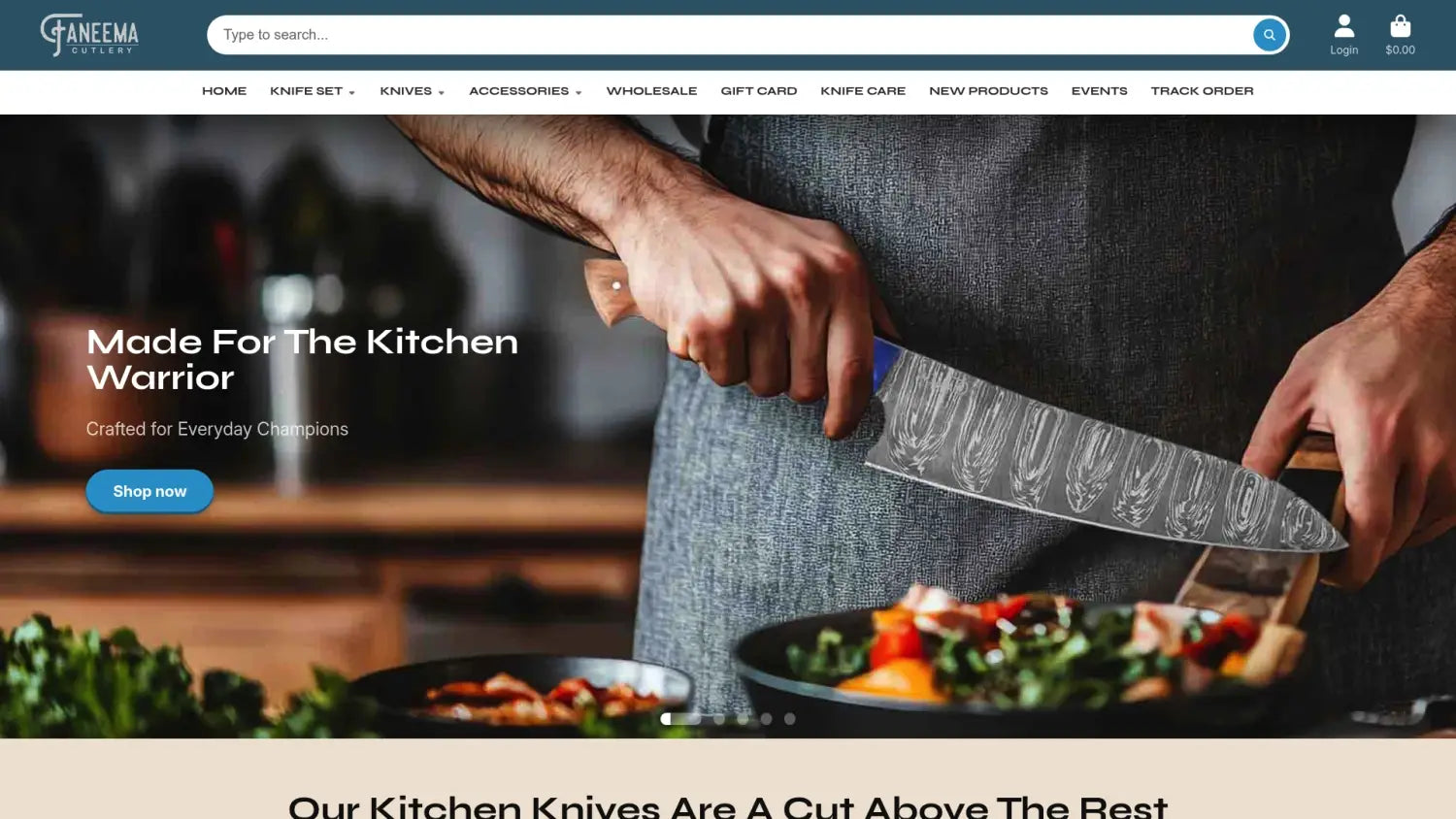
Discover our curated selection in the Premium Damascus Slicer Collection where every blade reflects precision cutting technology inspired by both traditional and modern techniques. Don’t settle for ordinary when you can equip your kitchen with our artisan designs that make every cut effortless. Visit Faneema Cutlery today to find the perfect knife tailored for all your cooking challenges and elevate your culinary craft NOW.
Frequently Asked Questions
What types of kitchen knives should every cook know about?
Every cook should be familiar with seven essential types of kitchen knives: chef’s knife, paring knife, Santoku knife, utility knife, bread knife, boning knife, and Ulu knife. Each knife has specific uses that make food preparation easier and more efficient, so ensure your toolkit includes all these varieties.
How do I choose the right kitchen knife for different tasks?
Select your kitchen knife based on the specific task at hand. For example, use a chef’s knife for general chopping, a paring knife for peeling, and a boning knife for trimming meat, ensuring you optimize your cutting performance.
What is the importance of maintaining my kitchen knives?
Regular maintenance ensures your kitchen knives remain sharp and effective, improving safety and cooking efficiency. Clean and dry your knives thoroughly after each use, and sharpen them every 6-12 months to sustain their performance.
How should I store my kitchen knives to keep them in good condition?
Store your kitchen knives in a knife block, on a magnetic strip, or in a protective sheath to prevent damage to the blades. Proper storage helps maintain the edges and avoids accidents, keeping your kitchen safe and organized.
Can I use a chef’s knife for all cutting tasks in the kitchen?
While a chef’s knife is versatile and can handle about 95% of kitchen tasks, some specialized tasks are better suited for other knives. For details like peeling or fine cutting, always utilize the appropriate knife to achieve the best results.
What are the differences between flexible and stiff boning knives?
Flexible boning knives are better for delicate proteins like fish, allowing for smooth cuts around bones, while stiff boning knives provide control for denser meats. Knowing the differences can help you choose the right knife for your specific meat preparation needs.
Recommended
- Choosing a selection results in a full page refresh.