

Defining Knife Sharpness: Key Factors for Performance
Most American kitchens rely on knives for precision and speed, but only a sharp blade guarantees top performance. Studies reveal that dull knives increase kitchen accidents by up to 70 percent, putting chefs and culinary enthusiasts at risk. Knife sharpness shapes every cut, from delicate herbs to robust meats, transforming the cooking experience with less effort and more control. This guide unpacks the science behind sharpness, practical tips, and material comparisons for chefs serious about mastering their tools.
Table of Contents
- What Is Knife Sharpness and Why It Matters
- Types of Knife Edges and Sharpness Levels
- Critical Characteristics That Affect Sharpness
- How Knife Sharpness Is Measured and Tested
- Common Knife Sharpness Myths and Mistakes
- Comparing Knife Sharpness Across Materials
Key Takeaways
| Point | Details |
|---|---|
| Knife Sharpness Is Essential | Blade sharpness affects cutting efficiency and safety, requiring less physical effort and providing better control during use. |
| Understanding Edge Types Matters | Different knife edge types (plain, serrated, combination) serve specific purposes and require tailored maintenance approaches. |
| Material Selection Influences Performance | The material of the knife (carbon steel, stainless steel, Damascus steel) determines sharpness, edge retention, and care requirements. |
| Debunking Sharpness Myths | Common misconceptions, such as dull knives being safer than sharp ones, can lead to increased injury risks; proper maintenance is crucial for optimal performance. |
What Is Knife Sharpness and Why It Matters
Knife sharpness represents the blade’s fundamental capacity to slice through materials with minimal resistance, a critical performance metric that defines a knife’s effectiveness and utility. At its core, sharpness is the precise geometric configuration of a blade’s cutting edge, determined by intricate factors like edge angle, material composition, and microscopic edge refinement.
Precision matters immensely. Blade cutting efficiency) depends on how finely the edge can initiate and maintain a clean cut with reduced force. Professional chefs understand that a truly sharp knife requires less physical effort, reduces fatigue, and provides superior control during intricate cutting tasks. The sharper the blade, the more predictable and precise the cutting performance.
Safety and performance are intrinsically linked when discussing knife sharpness. A well-maintained sharp knife actually reduces accident risks compared to a dull blade. Sharp blades require less force, minimizing the likelihood of slipping or applying excessive pressure that could lead to unintended injuries. Dull knives demand more physical effort, increasing the potential for unpredictable movements and potential mishaps in high-stakes culinary environments.
Pro tip: Test your knife’s sharpness by gently slicing a piece of paper - a razor-sharp blade will cut smoothly without tearing, while a dull blade will catch and snag.
Types of Knife Edges and Sharpness Levels
Knife edges are far more nuanced than most culinary professionals realize, with each design offering unique performance characteristics that dramatically impact cutting efficiency. Knife edge geometry ranges from ultra-precise surgical configurations to robust chopping profiles, each tailored to specific cutting demands and material interactions.
Three primary edge types dominate professional kitchen landscapes: plain edges, serrated edges, and combination edges. Plain edges deliver the most versatile performance, providing clean, precise cuts across multiple ingredients with remarkable consistency. Serrated edges, characterized by their distinctive teeth-like configuration, excel in cutting through fibrous or tough materials like crusty bread and dense meats, maintaining sharpness longer in challenging conditions. Combination edges strategically blend smooth and serrated sections, offering unprecedented cutting flexibility for chefs who demand adaptability.
The critical factor determining edge effectiveness lies in its angle and refinement. Professional knife makers understand that edge angles range from 10 to 25 degrees, with narrower angles producing exceptionally sharp but delicate edges ideal for precision tasks like filleting, while wider angles create more durable edges suitable for heavy chopping and robust kitchen environments. Damascus steel knives, renowned for their exceptional edge retention, often leverage complex multilayered forging techniques to create edges that balance sharpness and durability.
Pro tip: When selecting a knife, match the edge type to your primary cutting tasks - plain edges for vegetables, serrated for bread, and combination edges for maximum versatility.
Here’s a concise comparison of the three main knife edge types commonly found in professional kitchens:
| Edge Type | Best Uses | Edge Maintenance |
|---|---|---|
| Plain Edge | Slicing vegetables, meat | Requires frequent sharpening |
| Serrated Edge | Cutting bread, tough skins | Stays sharp longer, difficult to sharpen |
| Combination Edge | Versatile multi-purpose | Moderate upkeep, mix of sharpening methods |
Critical Characteristics That Affect Sharpness
Knife sharpness is a complex interplay of multiple scientific and metallurgical factors that extend far beyond simple edge geometry. Critical sharpness characteristics) involve intricate relationships between material composition, edge angle, and microscopic structural details that determine a blade’s cutting performance and longevity.
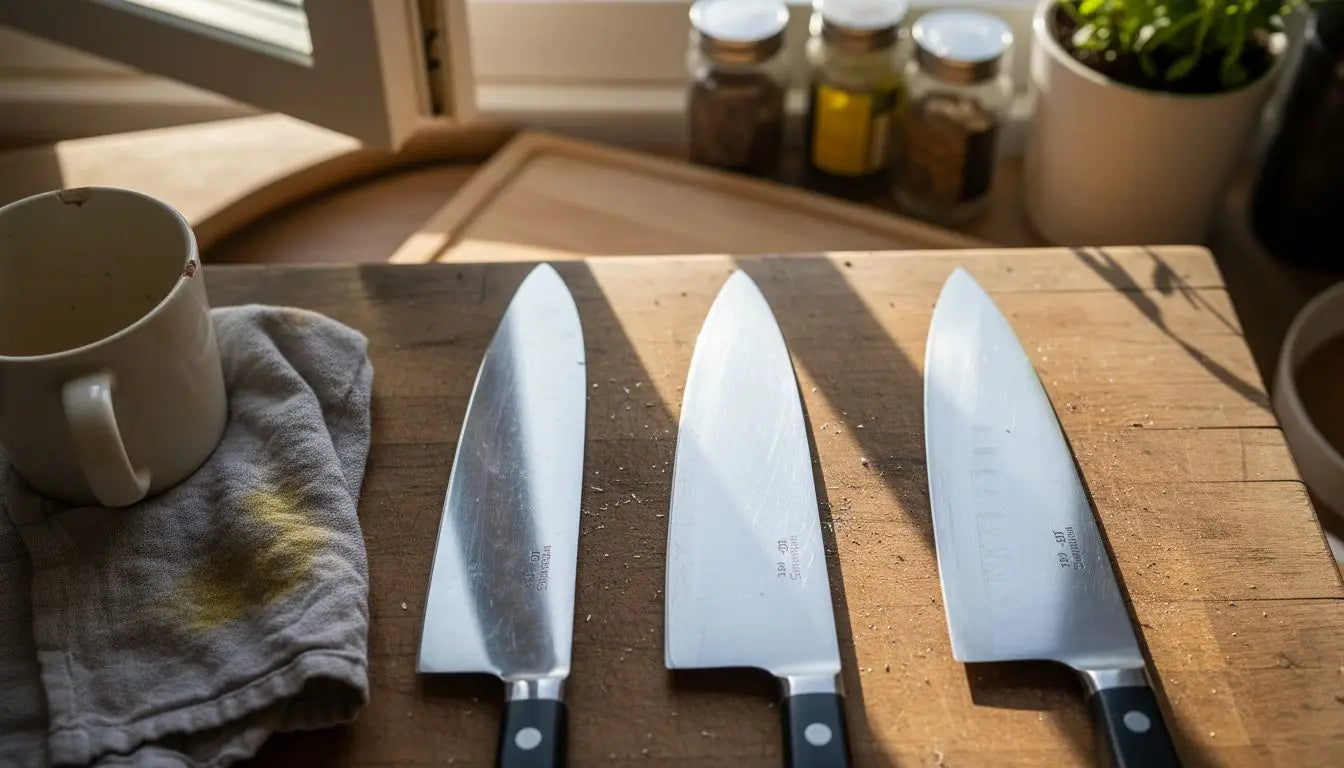
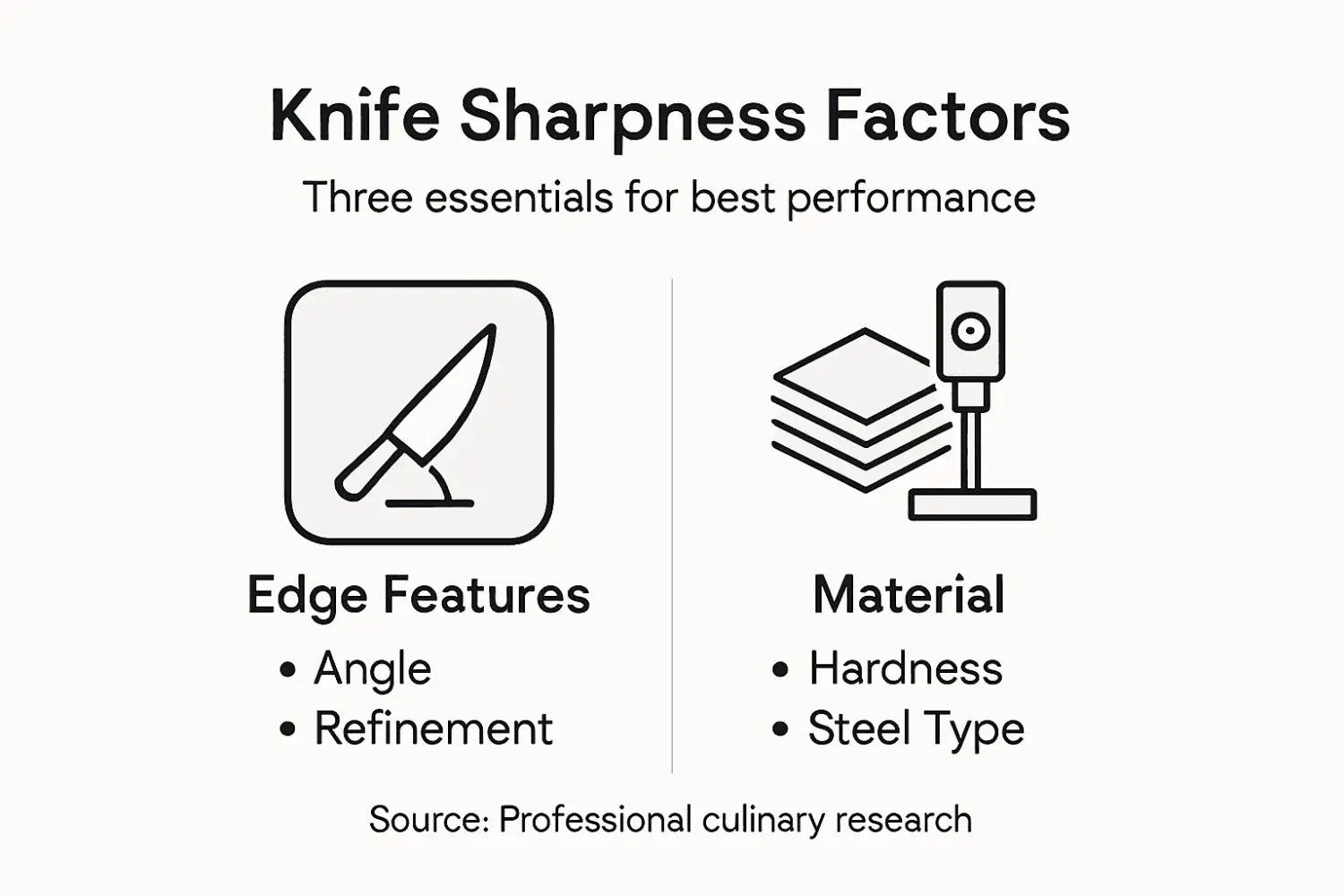
Three fundamental characteristics dominate knife sharpness performance: edge angle, material hardness, and edge refinement. Edge angle determines the initial cutting potential, with narrower angles producing exceptionally sharp but potentially fragile edges. Professional knife makers strategically balance this characteristic, understanding that extreme sharpness must be tempered with structural integrity. Material hardness plays an equally critical role, with higher hardness ratings enabling better edge retention and resistance to deformation. High-carbon steel and premium Damascus steel exemplify materials that maintain exceptional sharpness through advanced metallurgical engineering.
Blade maintenance techniques significantly impact long-term sharpness preservation. The microscopic edge experiences constant stress during cutting, with factors like improper cutting surfaces, incorrect storage, and aggressive use potentially causing rapid edge degradation. Professional chefs and knife enthusiasts recognize that sharpness is not a static attribute but a dynamic characteristic requiring consistent care, precision sharpening, and understanding of the blade’s inherent material properties.
Pro tip: Invest in high-quality whetstones with multiple grit levels to maintain your knife’s edge angle and refinement, treating blade maintenance as a precision skill rather than a routine chore.
How Knife Sharpness Is Measured and Tested
Measuring knife sharpness is a sophisticated scientific process that goes far beyond simple visual inspection or subjective perception. International sharpness testing standards have evolved to create precise, reproducible methods for evaluating blade performance across diverse culinary and industrial applications.
Professional testing laboratories utilize advanced technologies like the Automatic Edge Tester (AET), which provides quantitative measurements of a knife’s cutting capabilities. Blade edge measurement techniques involve simulating real-world cutting scenarios using specialized synthetic media that allows researchers to generate detailed wear curves and performance metrics. These tests analyze critical parameters such as initial cutting force, edge retention, and microscopic edge degradation, providing comprehensive insights into a blade’s true sharpness potential.
The evaluation process encompasses multiple sophisticated assessment protocols. Researchers examine factors including edge angle consistency, material hardness, cutting depth, and resistance to deformation. Professional knife makers and metallurgists rely on these standardized tests to validate blade performance, ensuring that each knife meets rigorous quality standards. The most advanced testing methodologies can track blade performance across hundreds of cutting cycles, providing nuanced data about how different materials and edge geometries influence long-term sharpness and durability.
Pro tip: Invest in a professional knife sharpness tester or seek expert evaluation to truly understand your blade’s performance beyond subjective cutting experiences.
Common Knife Sharpness Myths and Mistakes
Knife sharpness myths can lead professional chefs and culinary enthusiasts down dangerous paths of misinformation, potentially compromising both tool performance and personal safety. Common knife maintenance misconceptions persist despite clear scientific evidence, creating dangerous assumptions about blade care and functionality.
One of the most pervasive myths is the belief that a dull knife is inherently safer than a sharp one. Counterintuitively, dull knives actually increase accident risks by requiring more force to cut, which can cause unpredictable slipping and uncontrolled movements. Professional chefs understand that a precisely sharpened knife provides superior control and reduces physical strain during extended cooking sessions. Another critical misconception involves subjective sharpness testing, where individuals believe that a blade feeling ‘sharp’ against skin indicates true cutting capability. Objective sharpness assessment reveals that even grossly dull knives can produce a misleading sensation, rendering such methods completely unreliable.
Additionally, many home cooks and amateur chefs misunderstand the fundamental difference between honing and sharpening. Honing realigns the edge without removing material, while sharpening actually reconstructs the blade’s geometric profile. Using inappropriate tools or techniques can permanently damage a knife’s edge, reducing its performance and longevity. Professional knife makers emphasize that proper maintenance requires understanding these nuanced distinctions and using specialized techniques tailored to specific blade materials and designs.
Pro tip: Always use manufacturer-recommended sharpening tools and techniques, and invest time in learning proper blade maintenance to preserve your knife’s performance and extend its operational life.
Comparing Knife Sharpness Across Materials
Understanding knife sharpness requires a nuanced exploration of material science and metallurgical engineering. Blade material characteristics) dramatically influence a knife’s cutting performance, with each material offering unique advantages and limitations in edge retention and durability.
Carbon steel, stainless steel, and Damascus steel represent the primary metallurgical frameworks for professional knife construction. Carbon steel offers exceptional sharpness and ease of sharpening, allowing culinary professionals to maintain precise cutting edges with minimal effort. Stainless steel provides superior corrosion resistance and moderate edge retention, making it ideal for high-moisture kitchen environments. Damascus steel, with its complex multilayered construction, represents the pinnacle of blade engineering, combining exceptional hardness with remarkable edge stability through intricate forging techniques.
International cutlery standards provide sophisticated metrics for comparing blade materials, acknowledging that sharpness is not a singular attribute but a complex interaction between material hardness, edge geometry, and intended usage. Harder materials like high-carbon tool steels typically maintain sharper edges for longer periods but may become more brittle, while softer materials offer greater flexibility but require more frequent maintenance. Professional knife makers carefully balance these characteristics, understanding that the ideal blade material depends on specific culinary demands and individual performance requirements.
Pro tip: Select knife materials based on your specific cooking style, considering factors like frequency of use, maintenance capabilities, and the types of ingredients you typically prepare.
Here’s how popular knife materials differ in sharpness, durability, and care requirements:
| Material | Sharpness Level | Edge Retention | Care Difficulty |
|---|---|---|---|
| Carbon Steel | Very high | Moderate | Prone to rust, easy to sharpen |
| Stainless Steel | Moderate | Good | Low maintenance, harder to sharpen |
| Damascus Steel | Exceptional | Excellent | Requires careful maintenance, sharpens well |
Experience Unmatched Sharpness with Premium Damascus Steel Knives
Understanding the critical factors behind knife sharpness reveals one key truth: superior edge geometry and material quality transform everyday cutting into an effortless art. If you struggle with dullness, inconsistent edge angles, or rapid blade wear, it is time to elevate your kitchen tools with precision-crafted knives designed for peak sharpness and durability. Our collection showcases the extraordinary performance of handcrafted Damascus steel blades that balance exceptional sharpness with lasting edge retention.

Discover the unmatched craftsmanship at Faneema Cutlery where each knife is forged with expert attention to detail and designed for chefs and culinary enthusiasts who demand excellence. Whether you need a versatile chef knife or a specialty tool, explore our premium selection and experience cutting precision that reduces effort and enhances control. Visit Faneema Cutlery now to choose your next culinary partner and sharpen your performance today.
Frequently Asked Questions
What factors determine knife sharpness?
Knife sharpness is influenced by several factors including edge angle, material composition, and edge refinement. A sharper edge results in better cutting performance and precision.
How can I test the sharpness of my knife?
A simple method to test your knife’s sharpness is to gently slice a piece of paper. A razor-sharp blade will cut smoothly without tearing, while a dull blade will catch and snag.
What are the different types of knife edges and their uses?
The three main types of knife edges are plain edges (best for slicing vegetables and meat), serrated edges (ideal for cutting bread and tough materials), and combination edges (versatile for multiple tasks).
How does knife material affect sharpness and maintenance?
Knife materials like carbon steel, stainless steel, and Damascus steel significantly impact sharpness and maintenance. Carbon steel offers exceptional sharpness but requires more care, while stainless steel provides good edge retention and is easier to maintain.
Recommended
- Choosing a selection results in a full page refresh.