

Kitchen Knife Types Explained: Elevate Your Cooking
Selecting the right kitchen knife can feel overwhelming for American home cooks who want both efficiency and artistry in their kitchens. With each knife’s anatomy and design affecting its performance, understanding what sets knife types apart helps you achieve greater precision and safety. Discover the unique qualities of blade composition, shape, and ergonomics that influence every slice, and learn why Damascus steel knives stand out for cooks who value craftsmanship and superior cutting results.
Table of Contents
- What Makes Kitchen Knife Types Different
- Essential Knives For Every Kitchen Task
- Specialty Knives And Their Unique Uses
- Damascus Steel Versus Other Materials
- Choosing, Using, And Maintaining Fine Blades
Key Takeaways
| Point | Details |
|---|---|
| Understanding Knife Types | Different kitchen knife types are designed for specific culinary tasks, impacting overall performance and user experience. |
| Essential Knives Collection | A well-rounded kitchen requires essential knives such as a chef’s knife, paring knife, and utility knife for various food preparation tasks. |
| Material Matters | Selecting knives made from high-quality materials, like Damascus steel, offers superior performance and longevity compared to standard materials. |
| Maintenance is Key | Proper maintenance, including immediate cleaning and correct storage, is crucial for extending the life and functionality of kitchen knives. |
What Makes Kitchen Knife Types Different
Kitchen knives are far more than simple cutting tools - they are precision instruments designed for specific culinary tasks. Knife anatomy and design plays a critical role in determining their performance and functionality. Each knife type represents a carefully engineered solution tailored to particular food preparation needs.
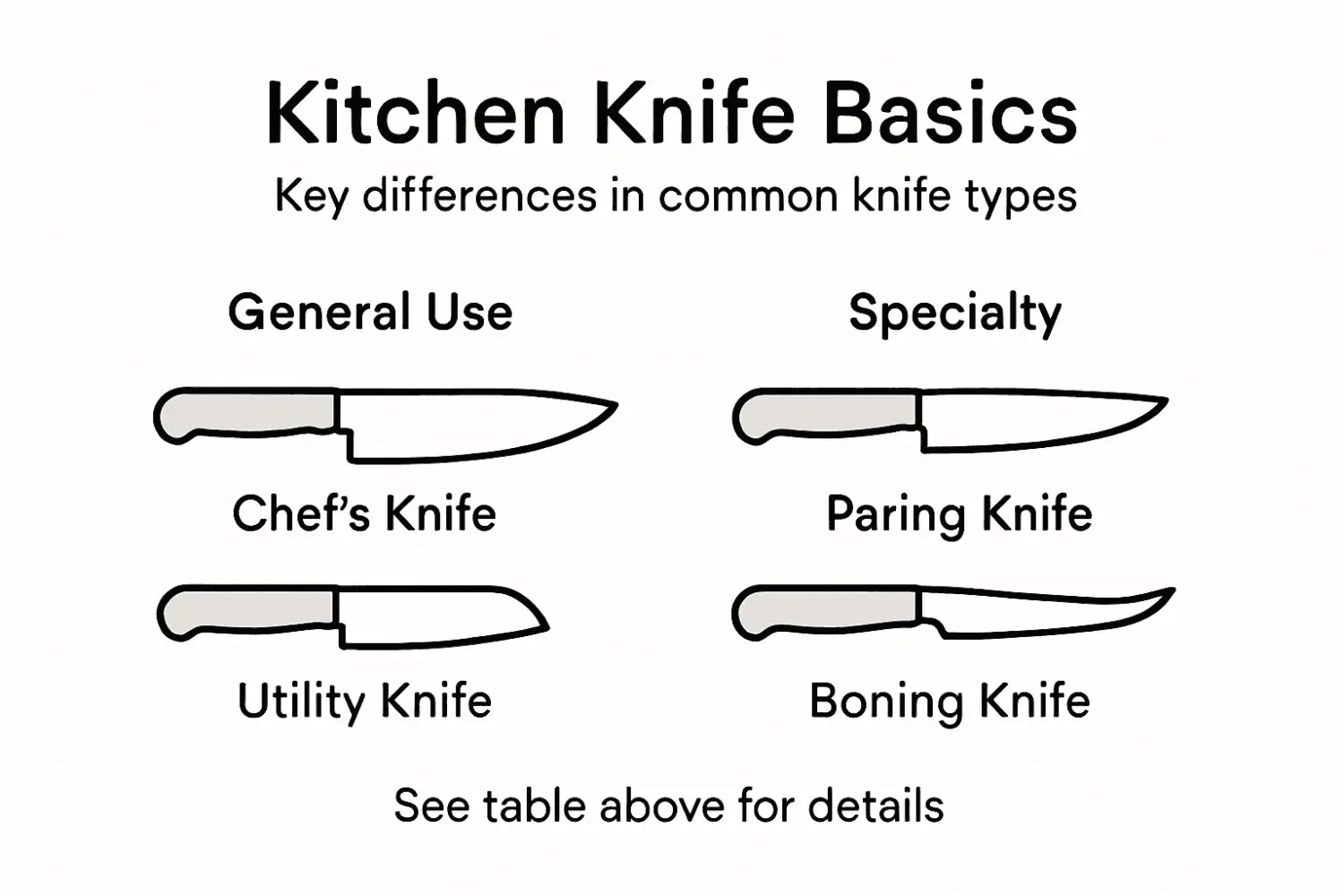
The key differences between kitchen knife types emerge from several fundamental characteristics:
- Blade Shape: Determines cutting technique and precision
- Blade Material: Influences sharpness, durability, and maintenance requirements
- Handle Ergonomics: Affects comfort, control, and user experience
- Weight Distribution: Impacts cutting efficiency and user fatigue
Professional chefs and home cooks recognize that different knife designs serve unique purposes. A chef’s knife offers remarkable versatility, while specialized knives like boning or bread knives excel at specific tasks. Understanding these nuanced differences allows cooks to select the right tool for each culinary challenge.
The primary distinctions between knife types extend beyond simple appearance. Blade composition, including materials like stainless steel or carbon steel, dramatically influences performance. Some knives feature full tangs for superior balance, while others prioritize lightweight design for precision cutting.
Pro tip: Invest in a knife that feels comfortable in your hand and matches your specific cooking style, rather than purchasing generic sets.
Essential Knives for Every Kitchen Task
Every home kitchen requires a strategic collection of knives to handle diverse culinary tasks efficiently. Essential knife types form the backbone of effective food preparation, with each knife serving a unique purpose in cooking and meal preparation.
The fundamental kitchen knife collection typically includes:
- Chef’s Knife: The versatile workhorse for chopping, slicing, and dicing
- Paring Knife: Perfect for intricate tasks like peeling and detailed cutting
- Utility Knife: Ideal for medium-sized cutting jobs and general use
- Serrated Knife: Designed for slicing bread and soft-skinned produce
- Boning Knife: Specialized for meat preparation and trimming
Professional kitchen knife selection goes beyond simply having multiple tools - it’s about understanding each knife’s specific strengths. A chef’s knife, typically 8-10 inches long, serves as the primary cutting instrument for most kitchen tasks. Its wide blade allows efficient rocking motions and precise chopping of vegetables, herbs, and meats.
The specialized nature of each knife type becomes apparent when examining their unique designs. Paring knives excel at detailed work like removing seeds or creating intricate garnishes, while serrated knives effortlessly slice through delicate breads and tomatoes without crushing their soft textures. Boning knives feature narrow, flexible blades perfect for trimming meat and separating flesh from bones with minimal waste.
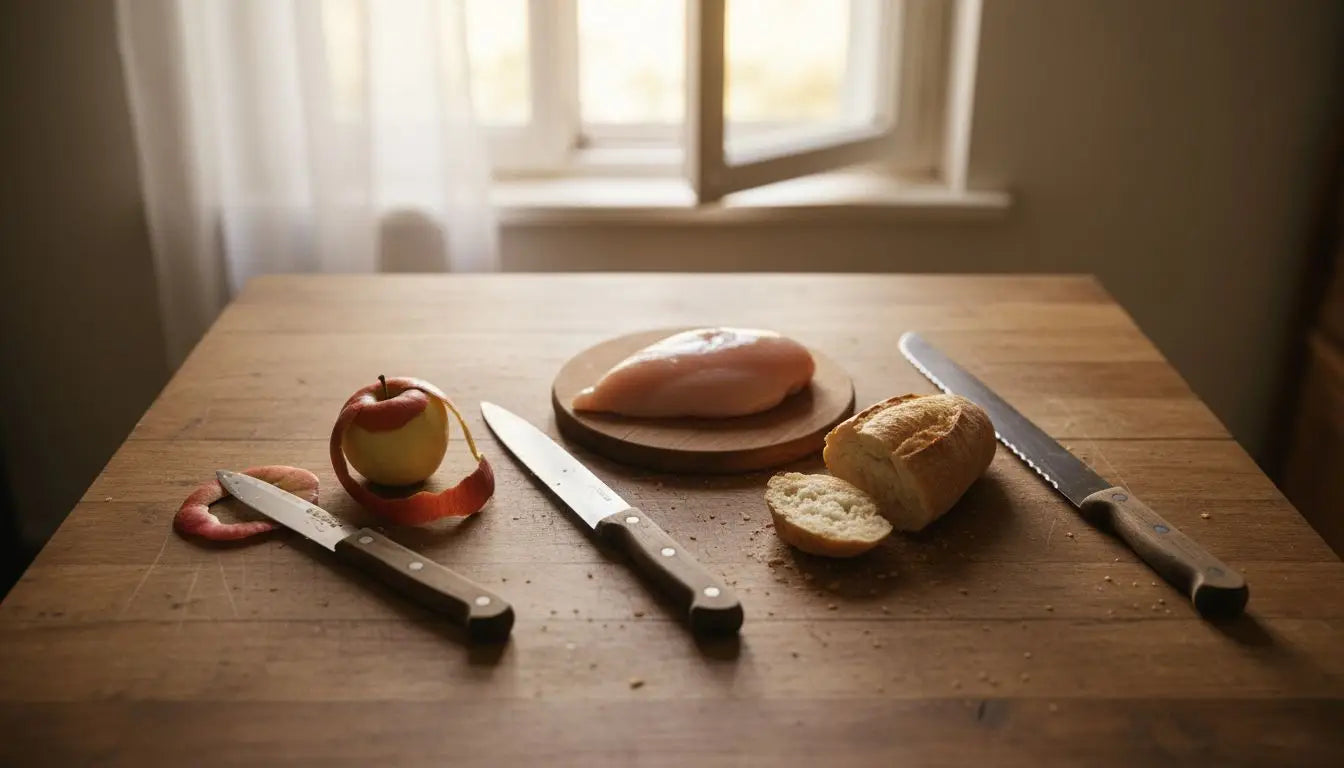
Here’s a summary of essential kitchen knife types and their ideal uses:
| Knife Type | Best For | Typical Blade Length |
|---|---|---|
| Chef’s Knife | Most slicing and chopping tasks | 8-10 inches |
| Paring Knife | Peeling and fine detail work | 3-4 inches |
| Utility Knife | Versatile medium cutting jobs | 5-7 inches |
| Serrated Knife | Soft bread and tomatoes | 8-10 inches |
| Boning Knife | Separating meat from bone | 5-7 inches |
Pro tip: Invest in high-quality knives and learn proper maintenance techniques to ensure longevity and optimal performance.
Specialty Knives and Their Unique Uses
Beyond standard kitchen knives, specialized culinary tools serve precise functions that elevate cooking techniques and efficiency. These meticulously designed instruments address specific cutting challenges that generic knives cannot effectively manage.
Specialty knives encompass a range of unique tools:
- Cleaver: Heavy-duty chopping for bones and tough meats
- Boning Knife: Precision meat preparation and bone separation
- Tomato Knife: Delicate slicing with serrated edges
- Cheese Knife: Designed for cutting various cheese textures
- Scimitar Knife: Specialized for precise steak cutting
Professional kitchen knife selection reveals how each specialty knife’s shape directly correlates to its intended function. Cleavers feature thick, rectangular blades that provide maximum force for breaking down large meat cuts and bones, while boning knives offer narrow, flexible profiles perfect for intricate meat trimming.
The sophisticated design of specialty knives demonstrates remarkable engineering. Tomato knives prevent crushing delicate produce with their carefully serrated edges, and cheese knives come in varied shapes to handle soft, hard, and crumbly cheese types without destroying their unique textures. These tools represent precision instruments that transform ordinary food preparation into a refined culinary experience.
Pro tip: Invest in 2-3 specialty knives that match your most frequent cooking styles, rather than purchasing an entire specialized collection at once.
Damascus Steel Versus Other Materials
Damascus steel represents a pinnacle of knife material engineering, offering exceptional performance that distinguishes it from conventional blade materials. Its unique layered construction provides remarkable advantages that go beyond standard kitchen knife compositions.
Key differences between Damascus steel and other materials include:
- Edge Retention: Superior sharpness maintenance compared to standard stainless steel
- Corrosion Resistance: Enhanced protection against rust and degradation
- Aesthetic Appeal: Distinctive layered patterns and visual complexity
- Durability: Balanced hardness and flexibility not found in single-metal blades
- Performance: Precision cutting with reduced metal fatigue
Knife blade materials vary widely in their characteristics, with Damascus steel standing out as a premium option. While stainless steel offers affordability and basic rust resistance, Damascus steel provides a sophisticated blend of technical performance and visual artistry. Its layered metalworking technique creates blades that are not just tools, but culinary instruments with remarkable cutting capabilities.
The manufacturing process of Damascus steel involves intricate surface engineering that produces blades with exceptional strength and aesthetic beauty. Unlike standard stainless steel knives, which are typically made from a single metal type, Damascus steel combines multiple metal layers, creating a blade with superior mechanical properties and a distinctive wavy or rippled appearance that reflects its complex construction.
Below is a comparison of common kitchen knife blade materials and their defining characteristics:
| Material | Sharpening Ease | Durability | Rust Resistance |
|---|---|---|---|
| Stainless Steel | Easy to maintain | Good, can wear | Resists corrosion |
| Carbon Steel | Sharpens quickly | Very strong | Prone to rust |
| Damascus Steel | Holds sharp edge | Exceptional | Highly resistant |
| Ceramic | Stays sharp long | Brittle if dropped | Will not rust |
Pro tip: Invest in a high-quality Damascus steel knife for your most frequently used cutting tasks, understanding that proper maintenance will significantly extend its exceptional performance.
Choosing, Using, and Maintaining Fine Blades
Kitchen knife selection requires careful consideration of multiple factors beyond simple appearance. Professional chefs and home cooks understand that the right knife can transform cooking from a routine task into a precise culinary art.
Key considerations when selecting fine kitchen blades include:
- Blade Material: Determines durability and performance
- Handle Ergonomics: Ensures comfort during extended use
- Weight Balance: Impacts cutting precision and user control
- Task Specificity: Matches knife design to intended cooking techniques
- Maintenance Requirements: Influences long-term knife performance
Proper blade maintenance involves strategic care techniques, extending the life and performance of high-quality knives. Professional techniques include immediate handwashing after use, thorough towel drying, and storing knives in protective blocks or magnetic strips to prevent blade damage. Regular honing maintains the cutting edge, while occasional professional sharpening ensures consistent performance.
The art of knife handling extends beyond simple cutting techniques. Mastering proper grip, understanding blade angle, and developing muscle memory for different cutting motions can dramatically improve kitchen efficiency. Each knife requires a nuanced approach, with specialized tools demanding specific handling techniques that protect both the blade and the user.
Pro tip: Invest in a high-quality knife storage solution that protects blade edges and prevents unnecessary wear during storage.
Elevate Your Culinary Skills with Precision-Engineered Damascus Knives
Understanding the unique functions of kitchen knives is just the first step toward mastering your cooking. If you seek exceptional sharpness, durability, and ergonomic design to handle every task from fine peeling to powerful chopping explore our curated selection of premium Damascus slicer collection by Faneema Cutlery. Crafted for culinary enthusiasts who value performance and artistry investing in high-quality knives will transform your kitchen experience.

Discover the difference that expertly forged Damascus steel makes in your food preparation. Visit Faneema Cutlery today and unlock your full cooking potential with our range of precision tools including the versatile premium Damascus paring knife collection by Faneema Cutlery. Elevate every cut and savor the pleasure of professional-grade quality at your fingertips.
Frequently Asked Questions
What are the main types of kitchen knives?
The main types of kitchen knives include chef’s knives, paring knives, utility knives, serrated knives, and boning knives, each designed for specific culinary tasks.
How do I choose the right kitchen knife for my cooking style?
Consider factors such as the blade material, handle ergonomics, weight balance, and the specific tasks you frequently perform in the kitchen to select a knife that suits your cooking style.
What is the difference between Damascus steel and stainless steel knives?
Damascus steel offers better edge retention, corrosion resistance, and durability compared to stainless steel, as well as a distinctive aesthetic appeal due to its layered construction.
How should I maintain my kitchen knives for optimal performance?
To maintain kitchen knives, wash them by hand immediately after use, dry them thoroughly, hone the blades regularly, and store them in a protective manner to prevent damage.
Recommended
- Choosing a selection results in a full page refresh.