

Kitchen Knives: How They Transform Cooking Experience
Precision matters every time you step up to the cutting board, whether you are shaping vegetables for a French dish or breaking down American brisket. Kitchen knives are much more than basic utensils—they are extensions of your skill and vision in the kitchen. Every blade type, from chef’s knives to cleavers, brings unique advantages for food preparation and presentation. Discover how choosing a premium Damascus steel knife can transform your culinary process, enhance safety, and offer the versatility professionals and passionate home cooks demand.
Table of Contents
- Defining Kitchen Knives And Their Function
- Types Of Kitchen Knives For Culinary Tasks
- Damascus Steel And Artisan Knife Crafting
- Choosing The Right Knife For Performance
- Safe Knife Use And Maintenance In The Kitchen
- Mistakes To Avoid When Using Kitchen Knives
Key Takeaways
| Point | Details |
|---|---|
| Understanding Knife Types | Different kitchen knives are designed for specific functions, making the right choice crucial for effective food preparation. |
| Knife Maintenance Importance | Regular maintenance, including sharpening and proper storage, is essential to ensure knife safety and performance. |
| Safe Handling Techniques | Adhering to proper grip and cutting techniques minimizes the risk of accidents in the kitchen. |
| Avoiding Common Mistakes | Being aware of typical mistakes, such as using dull blades or improper storage, can prevent injuries and enhance safety. |
Defining Kitchen Knives and Their Function
Kitchen knives are precision tools fundamental to food preparation, designed to transform raw ingredients into culinary masterpieces. Kitchen knives are any specialized cutting instruments intended specifically for food preparation tasks, distinguishing them from dining utensils used at the table.
These essential culinary tools come in multiple variations, each engineered for specific functions:
- Chef’s Knife: General-purpose knife for most cutting tasks
- Paring Knife: Small blade for intricate detail work
- Bread Knife: Serrated edge for slicing breads and pastries
- Cleaver: Heavy blade for breaking down meat and dense ingredients
- Utility Knife: Versatile mid-sized knife for miscellaneous tasks
The design of kitchen knives reflects centuries of culinary evolution, with modern versions representing pinnacles of ergonomic and functional engineering. Professional cooks view kitchen knives as extensions of their own hands, enabling precise techniques like julienne cuts, fine mincing, and professional-grade slicing.
Here’s a quick overview of common kitchen knives and their best uses:
| Knife Type | Best For | Pro Preparation Tip |
|---|---|---|
| Chef’s Knife | Chopping and slicing | Use rocking motion for speed |
| Paring Knife | Peeling and detail work | Grip close to the blade |
| Bread Knife | Slicing breads/cakes | Saw gently; avoid downward force |
| Boning Knife | Removing meat from bones | Use tip for precise maneuvering |
| Cleaver | Breaking dense foods | Use full blade weight for leverage |
Understanding knife functionality goes beyond mere cutting. These tools enable cooks to transform ingredients through specialized techniques, control food texture, and enhance presentation. The right knife can mean the difference between amateur and professional-level food preparation.
Pro tip: Invest in high-quality kitchen knives and learn proper maintenance to ensure they remain sharp and effective for years of culinary adventures.
Types of Kitchen Knives for Culinary Tasks
In professional and home kitchens, specialized knives play a critical role in transforming food preparation. Kitchen knives vary widely in form and function, with each type designed to perform specific culinary tasks with precision and efficiency.
The primary kitchen knife types include:
- Chef’s Knife: Versatile 8-10 inch blade for general cutting tasks
- Paring Knife: Small 3-4 inch blade for intricate detail work
- Bread Knife: Long serrated blade for slicing breads and pastries
- Utility Knife: Mid-sized blade for miscellaneous cutting needs
- Boning Knife: Thin, flexible blade for removing meat from bones
- Cleaver: Heavy rectangular blade for breaking down large meat cuts
Professional cooks master specific knife cuts that require precise techniques like julienne, batonnet, chiffonade, and brunoise. These specialized cuts demand not just skill, but also the right knife for each specific task. Understanding the unique characteristics of each knife type enables cooks to enhance their culinary performance and food presentation.
Blade materials, handle design, and edge geometry further differentiate kitchen knives. High-carbon stainless steel, Damascus steel, and ceramic blades offer different performance characteristics, allowing chefs and home cooks to select tools that match their specific cooking styles and preferences.
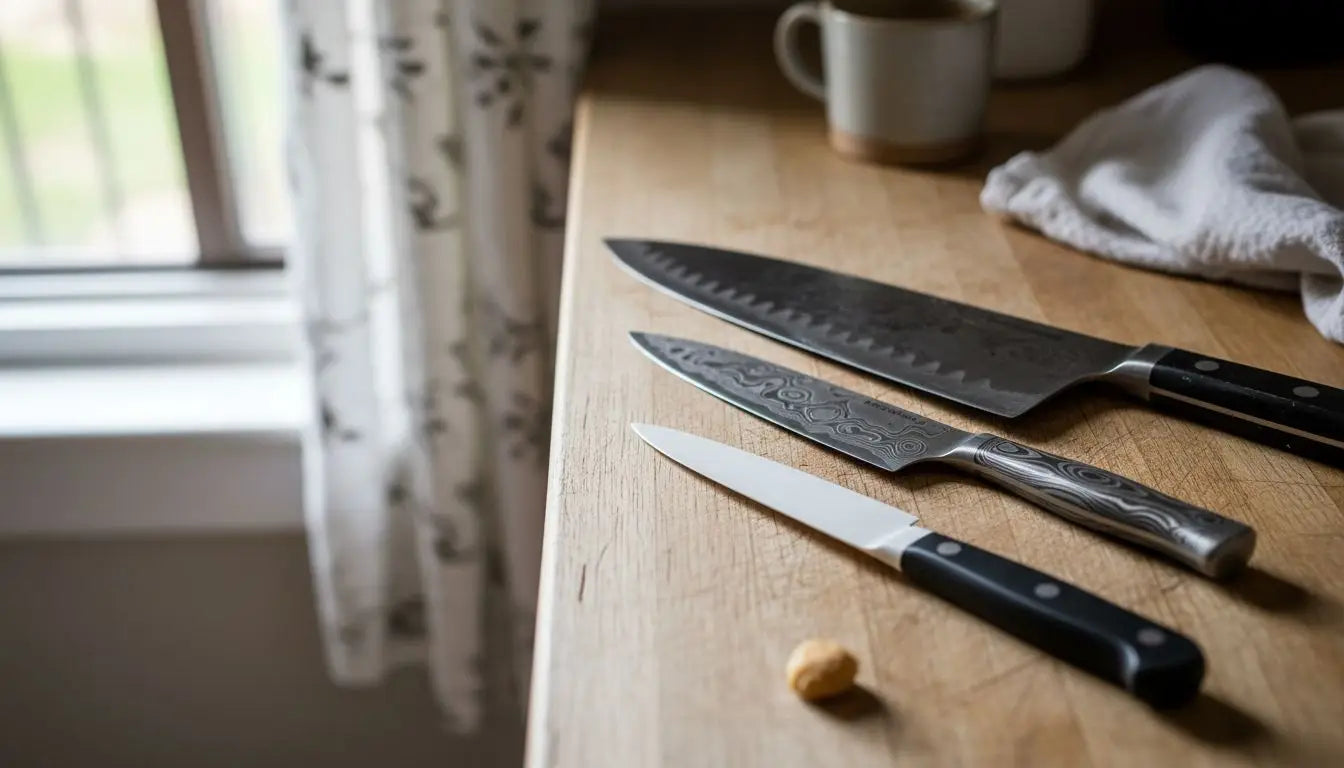
Compare popular kitchen knife blade materials to help you choose the best fit:
| Material | Edge Retention | Maintenance Level | Aesthetic Appeal |
|---|---|---|---|
| High-carbon steel | High | Requires oiling | Classic metallic look |
| Stainless steel | Moderate | Low, resists rust | Shiny, sleek finish |
| Damascus steel | Very high | Moderate upkeep | Unique patterned look |
| Ceramic | Exceptional | Fragile if dropped | Ultra-smooth, bright |
Pro tip: Invest in a comprehensive knife set with 3-5 essential knives and learn proper maintenance techniques to ensure longevity and peak performance.

Damascus Steel and Artisan Knife Crafting
Damascus steel represents a pinnacle of metallurgical artistry, combining centuries-old forging techniques with extraordinary material science. Originating from the Near East, this legendary steel is renowned for its distinctive watery pattern and exceptional performance characteristics that set it apart from conventional knife materials.
The key characteristics of Damascus steel include:
- Layered Construction: Multiple steel layers forge-welded together
- Distinctive Patterns: Unique wavy or swirling surface designs
- Enhanced Durability: Superior strength through strategic material composition
- Exceptional Sharpness: Consistently maintained cutting edge
- Aesthetic Appeal: Visually stunning blade appearance
Artisan blacksmiths combine traditional craftsmanship with scientific insights to create these remarkable knives. The process involves carefully selecting and layering different steel types, repeatedly folding and hammering the metal to create intricate internal structures that provide both strength and visual complexity.
Modern Damascus steel knife production blends historical techniques with advanced metallurgical understanding. Contemporary artisan knife makers use precise temperature control, specialized forging methods, and advanced metallographic techniques to reproduce the legendary performance of ancient Damascus blades, creating kitchen tools that are as much works of art as they are functional instruments.
Pro tip: Examine a Damascus steel knife’s pattern closely - each blade tells a unique story of craftsmanship through its intricate, never-repeated surface design.
Choosing the Right Knife for Performance
Selecting the right kitchen knife significantly impacts cutting performance, transforming everyday food preparation from a mundane task into a precise culinary art. The perfect knife becomes an extension of the cook’s hand, enabling effortless, professional-grade preparation techniques.
Critical factors in choosing a high-performance kitchen knife include:
- Blade Material: High-carbon stainless steel or Damascus steel
- Blade Length: 8-inch chef’s knife for maximum versatility
- Handle Ergonomics: Comfortable grip that reduces hand fatigue
- Balance Point: Centered weight distribution for controlled movements
- Edge Retention: Sharp blade that maintains cutting precision
- Specialized Design: Task-specific blade shapes
Kitchen knife safety involves more than just selecting the right tool, but also understanding proper handling and maintenance techniques. Professional chefs and home cooks alike recognize that a well-maintained knife reduces injury risks and enhances overall cooking performance.
Ultimately, knife selection is a personal journey that balances technical specifications with individual cooking style. Factors like hand size, typical meal preparation, and personal comfort play crucial roles in finding the perfect kitchen knife that feels like a natural extension of your culinary skills.
Pro tip: Test multiple knife styles in person, paying attention to how the handle feels and how balanced the blade seems during sample cutting motions.
Safe Knife Use and Maintenance in the Kitchen
Proper kitchen knife safety requires comprehensive understanding of handling techniques, storage protocols, and maintenance practices. Professional and home cooks alike must recognize that knife safety extends far beyond simple caution.
Key safety practices for kitchen knife handling include:
- Grip Technique: Pinch blade near handle for maximum control
- Cutting Method: Use ‘claw’ hand position to protect fingers
- Blade Maintenance: Keep knives consistently sharp
- Storage Protocol: Use blade guards or designated knife blocks
- Cleaning Procedure: Wash and dry immediately after use
- Work Surface: Always use stable, dedicated cutting boards
Knife maintenance involves regular honing and careful cleaning, which not only preserves the blade’s performance but also prevents potential accidents. Professional chefs understand that a well-maintained knife is fundamentally safer and more predictable than a neglected one.
Safety transcends technical skills - it requires consistent mindfulness. Understanding your knife’s specific characteristics, maintaining proper technique, and creating a disciplined kitchen environment dramatically reduce the risk of accidents and enhance overall culinary performance.
Pro tip: Invest in cut-resistant gloves and always maintain full attention when handling sharp kitchen tools.
Mistakes to Avoid When Using Kitchen Knives
Common kitchen knife mistakes can transform safe cooking into a dangerous experience, potentially leading to serious injuries that could have been easily prevented through proper technique and awareness.
Critical mistakes to avoid include:
- Dull Blade Handling: Using knives with worn edges that require excessive force
- Unsafe Storage: Leaving knives near counter edges or in open drawers
- Improper Grip: Holding knives without proper control or technique
- Catching Falling Knives: Never attempt to catch a dropping knife
- Washing Negligence: Soaking knives in water or leaving them unwashed
- Distracted Cutting: Multitasking while performing precise cutting tasks
Workplace safety regulations emphasize the importance of proper knife handling, highlighting that most knife-related accidents stem from preventable human errors. Professional kitchens prioritize comprehensive training and consistent safety protocols to minimize potential risks.
Beyond physical techniques, knife safety requires mental discipline. Maintaining full attention, understanding your tool’s characteristics, and respecting the inherent sharpness of kitchen knives are fundamental to preventing accidents and ensuring a safe cooking environment.
Pro tip: Create a dedicated knife safety zone in your kitchen, with clear rules about handling, storage, and maintenance.
Elevate Your Culinary Experience with Expertly Crafted Kitchen Knives
The article highlights how the right kitchen knife transforms cooking into an art by enhancing precision, control, and efficiency. If you are striving to master professional cutting techniques and want kitchen tools that deliver exceptional sharpness and durability, choosing handcrafted knives made from premium materials is essential. Faneema Cutlery offers a curated selection of hand-forged Damascus kitchen knives designed to meet the demands of culinary enthusiasts and professionals alike.

Discover the unmatched performance and artistry behind our Damascus steel blades that maintain edge retention while providing ergonomic comfort for every kitchen task. Explore our premium Damascus paring knife collection for detailed work or browse through our best-selling Damascus knives for precise cutting to equip your kitchen with tools that truly elevate your cooking. Visit Faneema Cutlery now to invest in knives that turn everyday meal preparation into a confident, luxurious culinary experience.
Frequently Asked Questions
What types of kitchen knives are essential for home cooking?
Essential kitchen knives include a chef’s knife for general tasks, a paring knife for intricate work, a bread knife for slicing, a utility knife for miscellaneous needs, and a cleaver for heavy cutting.
How can I maintain my kitchen knives for optimal performance?
To maintain your kitchen knives, keep them sharp by regularly honing the edges, wash and dry them immediately after use, and store them in a knife block or with blade guards to prevent damage.
What is the difference between high-carbon steel and Damascus steel in kitchen knives?
High-carbon steel offers high sharpness and edge retention but requires regular maintenance to prevent rust. Damascus steel combines multiple layers to create a visually appealing pattern, with exceptional sharpness and durability, but may also require moderate care.
What are common mistakes to avoid when using kitchen knives?
Common mistakes include using dull blades that require excessive force, improper grip techniques, attempting to catch falling knives, unsafe storage, and multitasking while cutting. Avoiding these mistakes helps maintain safety in the kitchen.
Recommended
- Choosing a selection results in a full page refresh.