

Role of Outdoor Knives: Critical Tools for Camping
Roughly 65 percent of American outdoor enthusiasts believe their choice of knife directly impacts wilderness safety and food preparation results. For culinary fans and amateur chefs, choosing the right premium outdoor knife shapes every camping and foraging experience, blending hand-crafted performance with lasting reliability. Discover what sets high-quality outdoor knives apart and how American craftsmanship meets demanding outdoor needs.
Table of Contents
- What Defines An Outdoor Knife
- Types Of Outdoor Knives And Their Functions
- Key Features Of Premium Outdoor Knives
- Essential Uses For Camping And Foraging
- US Laws And Responsible Knife Carry
- Safety Pitfalls And Common Mistakes
Key Takeaways
| Point | Details |
|---|---|
| Durability and Versatility | Choose outdoor knives with full tang construction and high-carbon steel for optimal strength and reliability in the wilderness. |
| Type Selection | Understand the different outdoor knife types—hunting, survival, and utility—to select the right tool for your specific activities. |
| Safety Practices | Adhere to proper knife handling techniques and maintain your knife regularly to prevent accidents and ensure effective use. |
| Legal Compliance | Research local laws regarding knife ownership and carry responsibly to avoid legal issues while enjoying outdoor activities. |
What Defines an Outdoor Knife
An outdoor knife represents far more than just a simple cutting tool - it’s a critical survival instrument engineered for challenging wilderness environments. These specialized knives are meticulously designed to handle diverse tasks ranging from food preparation to emergency shelter construction. Essential survival tools require specific characteristics that distinguish them from standard kitchen or utility blades.
The fundamental components of an outdoor knife include a robust blade, ergonomic handle, and purposeful design optimized for rugged conditions. Typical features encompass a full tang construction (where blade metal extends through the entire handle), corrosion-resistant materials like high-carbon steel, and a blade profile enabling multiple functional uses. Professional outdoor knives prioritize durability, versatility, and reliability - attributes absolutely critical when operating in unpredictable wilderness settings.
Outdoor knives are categorically defined by their ability to perform multiple critical functions. Multi-functional cutting tools serve purposes like processing firewood, constructing emergency shelters, preparing game or fish, cutting cordage, and potential self-defense scenarios. Professional-grade outdoor knives typically feature blade lengths between 4-6 inches, providing an ideal balance between maneuverability and utility.
Pro tip: When selecting an outdoor knife, prioritize full tang construction and high-carbon steel blades for maximum durability and reliability in challenging environments.
Types of Outdoor Knives and Their Functions
Outdoor knives are specialized tools designed for diverse wilderness challenges, with each type engineered to serve specific functions in challenging environments. Hunting and survival knives represent critical categories of outdoor cutting tools, distinguished by their unique blade profiles and intended applications. Understanding these variations is essential for selecting the right knife for specific outdoor activities.
Three primary categories of outdoor knives dominate wilderness tool collections. Hunting knives feature specialized designs with curved blades and often include gut hooks for field dressing game. Survival knives prioritize versatility, typically constructed with thick, robust blades capable of performing multiple tasks like wood cutting, shelter building, and emergency repairs. Utility knives offer the most flexibility, with designs ranging from compact folding models to full-tang fixed blades that can handle general camp maintenance and food preparation.
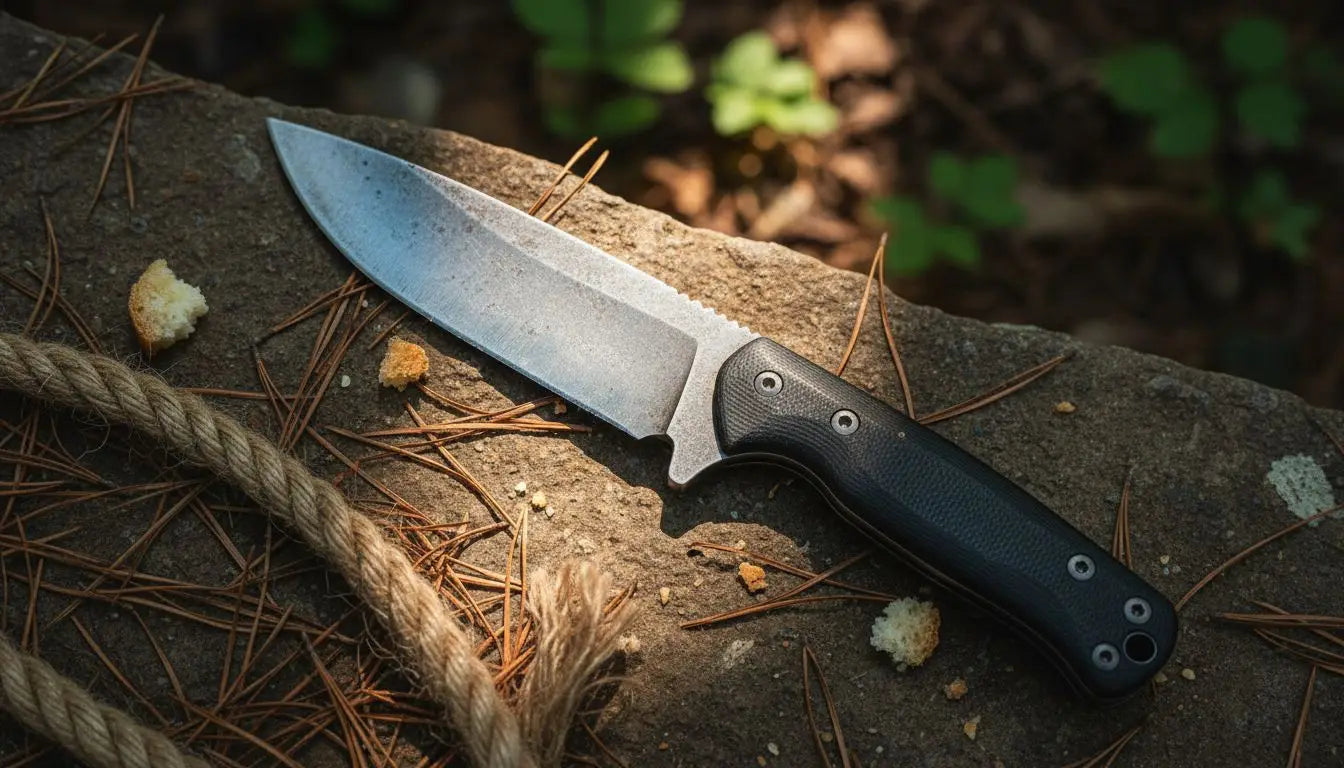
Fixed-blade camping knives are widely considered the most reliable outdoor cutting tools. Their solid construction eliminates moving parts, providing maximum strength and durability in extreme conditions. Professional outdoor enthusiasts typically prefer full-tang designs where blade metal extends completely through the handle, ensuring superior structural integrity and preventing potential failure during critical survival scenarios. Blade lengths between 4-6 inches offer an ideal balance between maneuverability and functional capability.
Pro tip: When choosing an outdoor knife, always prioritize full-tang construction and match the blade design to your specific wilderness activity requirements.
Below is a comparison overview of the main outdoor knife types and their ideal uses:
| Knife Type | Best For | Typical Blade Profile |
|---|---|---|
| Hunting Knife | Game field dressing | Curved blade with gut hook |
| Survival Knife | Shelter & wood tasks | Thick, straight or drop point |
| Utility Knife | Camp chores & prep | Straight or multitool folding |
Key Features of Premium Outdoor Knives
Premium outdoor knives distinguish themselves through exceptional materials, construction techniques, and design elements that elevate them beyond standard cutting tools. High-performance knife materials like high-carbon and specialized stainless steels form the foundation of superior outdoor cutting implements, offering unprecedented durability and edge retention in challenging wilderness conditions.
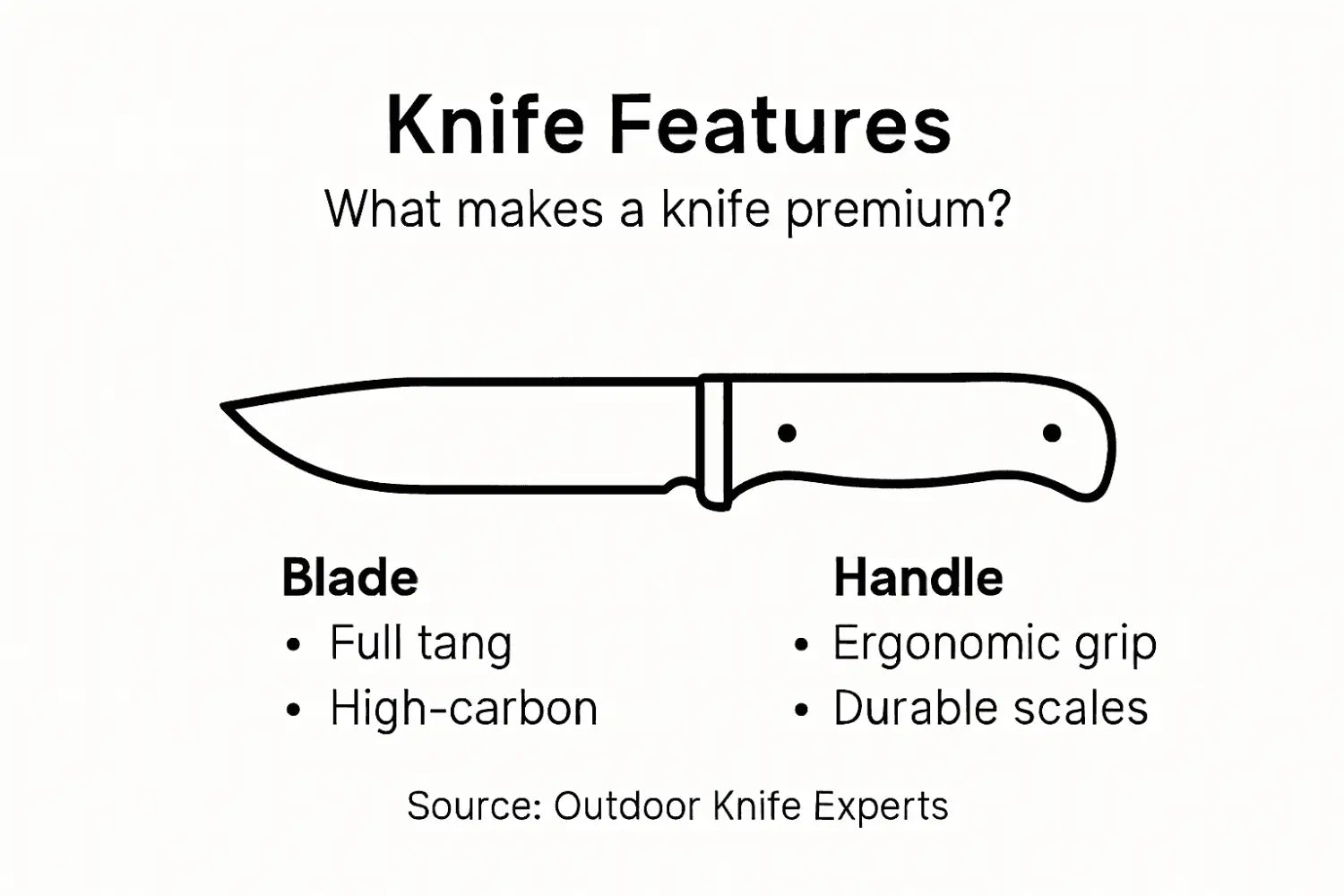
The critical structural components of premium outdoor knives include full tang construction, where blade metal extends completely through the handle, providing maximum strength and reliability. Handle design plays an equally crucial role, with ergonomic materials like textured G10 fiberglass, titanium, and rubber-like composites ensuring secure grip even in wet or extreme environments. Professional-grade knives incorporate advanced features such as specialized blade geometries, corrosion-resistant coatings, and precision heat treatments that enhance overall performance and longevity.
Specialized knife manufacturing techniques emphasize meticulous attention to detail, with premium manufacturers focusing on proprietary steel compositions, advanced heat treatment processes, and precision blade grinding. These techniques produce knives with superior edge retention, exceptional toughness, and remarkable resistance to environmental challenges. Blade profiles are carefully designed to balance weight, strength, and versatility, ensuring optimal performance across multiple outdoor scenarios from wilderness survival to complex camp tasks.
Pro tip: Invest in a premium outdoor knife with full tang construction and inspect the handle materials and blade steel to ensure maximum durability and long-term reliability.
Essential Uses for Camping and Foraging
Essential survival skills require a comprehensive understanding of how outdoor knives function as versatile tools in wilderness environments. These critical implements serve far more than simple cutting purposes, transforming into lifeline instruments that enable campers and foragers to navigate, survive, and thrive in challenging outdoor conditions. A well-chosen knife becomes an extension of the outdoorsman’s capabilities, addressing multiple essential survival needs.
In camping scenarios, outdoor knives play pivotal roles across several critical domains. Wood processing becomes fundamental, with knives enabling firewood preparation, shelter construction, and creating emergency tools. Food preparation represents another crucial function, allowing hunters and campers to clean game, slice ingredients, and manage complex culinary tasks in remote locations. Foragers particularly benefit from precise blade designs that facilitate careful plant harvesting, root extraction, and delicate botanical identification without damaging surrounding vegetation.
Camping survival tools extend beyond immediate physical tasks, serving emergency and protective functions that can mean the difference between comfort and catastrophe. Knives assist in fire starting through batoning techniques, emergency gear repair, cordage cutting, and potential self-defense scenarios. Professional outdoor enthusiasts understand that a high-quality knife represents a multipurpose survival instrument capable of addressing unexpected challenges in unpredictable wilderness environments, from creating makeshift shelters to signaling for rescue.
Pro tip: Practice multiple knife techniques before your wilderness expedition and always carry a knife with a full tang construction for maximum reliability and versatility.
US Laws and Responsible Knife Carry
Knife ownership regulations in the United States represent a complex legal landscape that demands careful navigation by outdoor enthusiasts and professionals. Each state maintains unique statutes governing blade length, carrying methods, and permissible knife types, creating a nuanced legal environment that requires thorough understanding and proactive compliance. Responsible knife carriers must recognize that legal interpretations can vary dramatically between jurisdictions.
State-specific regulations typically address several critical dimensions of knife carry. Blade length restrictions often serve as the primary legal constraint, with many states imposing maximum allowable lengths ranging from 2.5 to 4 inches for concealed carry. Carry methods also receive significant legal scrutiny, distinguishing between open and concealed carry, with some states implementing more stringent requirements for hidden knives. Critical locations such as schools, government buildings, and public transportation facilities typically maintain absolute prohibitions on knife possession.
Responsible knife ownership extends far beyond legal compliance, encompassing ethical considerations and safety protocols. Knife owners must understand that these tools represent functional instruments, not weapons, and should be treated with appropriate respect and caution. Professional outdoor organizations emphasize the importance of safe handling, proper storage, and situational awareness. Understanding local laws, respecting community standards, and maintaining a responsible approach to knife ownership are fundamental principles that protect both individual rights and public safety.
Pro tip: Always research local knife laws before traveling and carry documentation about your knife’s specifications to avoid potential legal misunderstandings.
Safety Pitfalls and Common Mistakes
Knife handling safety requires understanding the most prevalent risks that transform these essential tools into potential hazards. Inexperienced users often treat outdoor knives casually, overlooking critical safety protocols that distinguish responsible knife management from dangerous behavior. The line between a useful tool and a potential injury is remarkably thin, demanding consistent attention and respect.
Several fundamental mistakes compromise user safety and equipment integrity. Improper cutting techniques represent the most immediate danger, with users frequently cutting towards themselves or maintaining inconsistent blade control. Blade maintenance neglect creates secondary risks, as dull or damaged knives require more force to cut, increasing the likelihood of unexpected slippage or unpredictable blade movement. Professional outdoor enthusiasts emphasize that a well-maintained, sharp knife is inherently safer than a poorly kept cutting instrument.
Outdoor knife training goes beyond simple technique, encompassing comprehensive safety awareness and situational understanding. Critical mistakes include treating knives as recreational objects rather than serious tools, failing to establish clear safety boundaries, and neglecting proper storage protocols. Users must recognize that knives are precision instruments requiring deliberate, thoughtful handling, particularly in challenging outdoor environments where marginal errors can have significant consequences.
Pro tip: Invest in professional knife safety training and always practice cutting techniques in controlled environments before attempting them in wilderness settings.
This table summarizes key safety mistakes and how to prevent them:
| Common Mistake | Why It’s Dangerous | Prevention Strategy |
|---|---|---|
| Cutting toward yourself | High risk of self-injury | Always cut away from your body |
| Ignoring blade maintenance | Increased force causes slips | Sharpen and inspect blades regularly |
| Improper storage | Accidents, unauthorized use | Use sheaths and secure storage spots |
Elevate Your Outdoor Adventures with the Right Knife
When venturing into the wilderness, the right outdoor knife can mean the difference between frustration and success. This article highlights how essential a full tang construction and durable blade materials are for handling critical survival tasks like shelter building, firewood processing, and game preparation. If you value versatility, reliability, and expert craftsmanship, choosing a premium outdoor knife is not just a preference, it is a necessity.

Discover the unmatched quality of Damascus steel knives at Faneema Cutlery. Our collection of exquisitely handcrafted outdoor knives offers superior sharpness, durability, and ergonomic design to empower every camping and foraging expedition. Don’t compromise your safety or performance. Explore our curated range now and equip yourself with tools built to overcome the challenges of the wild environment. Visit Faneema Cutlery and step into your next outdoor adventure fully prepared.
Frequently Asked Questions
What is the primary purpose of an outdoor knife?
An outdoor knife serves as a versatile survival tool designed for various tasks in wilderness environments, including food preparation, wood processing, and emergency shelter construction.
What features should I look for in a quality outdoor knife?
When selecting an outdoor knife, prioritize full tang construction, high-carbon steel blades for durability, and ergonomic handle materials for a secure grip, especially in challenging conditions.
What are the different types of outdoor knives and their functions?
Outdoor knives can be classified into hunting knives for game field dressing, survival knives for general outdoor tasks like shelter building, and utility knives for various camp chores and food preparation.
How can I maintain the safety of my outdoor knife?
To ensure safety, always cut away from yourself, maintain a sharp blade to reduce slippage, and store the knife properly in a sheath to prevent accidents.
Recommended
- Choosing a selection results in a full page refresh.