

Why Knives Need Honing: Performance, Safety, and Longevity
Most American chefs know a sharp knife is essential, yet studies show dull blades cause over half of kitchen injuries each year. Honing is often overlooked, but it is the key to preserving the razor edge of premium Damascus steel knives. By mastering the art of honing, American professionals and home cooks can keep blades performing flawlessly while reducing costly wear and safety risks.
Table of Contents
- What Is Honing And Why Knives Need It
- Types Of Honing Tools And Techniques
- How Honing Preserves Knife Sharpness
- Safety And Efficiency Benefits Of Honing
- Risks, Common Mistakes, And Alternatives
Key Takeaways
| Point | Details |
|---|---|
| Honing is essential for knife maintenance | Regular honing realigns the blade edge, preserving sharpness without removing material. |
| Different honing tools serve unique purposes | Choose the appropriate tool based on your knife type and maintenance needs to optimize performance. |
| Proper technique prevents damage | Always maintain a consistent angle and use gentle pressure to avoid harming the blade edge. |
| Safety is enhanced with maintained knives | Well-honed knives operate with less force, reducing the risk of slips and accidents in the kitchen. |
What Is Honing And Why Knives Need It
Honing is a specialized maintenance technique designed to preserve and optimize knife performance by realigning the microscopic metal edge without removing material. Unlike full sharpening, which grinds away metal, honing is a precision process that keeps your blade’s cutting surface aligned and functional. Professional chefs and serious home cooks recognize honing as a critical step in knife maintenance that extends blade life and ensures consistent cutting performance.
The science behind honing involves understanding how knife edges naturally degrade during use. When you cut through ingredients, the thin metal edge experiences microscopic bending and warping. These tiny deformations create an uneven cutting surface that reduces blade efficiency. Honing steel restores blade alignment by gently pushing these bent metal fibers back into their original position, effectively straightening the cutting edge without removing significant metal.
Regular honing provides multiple critical benefits for knife performance and longevity. By maintaining proper edge alignment, you reduce the frequency of full sharpening sessions, which actually remove more metal from your blade. Professional kitchens recommend honing before each use or several times during extended cooking sessions to prevent rapid dulling and maintain peak cutting performance. Consistent honing prevents blade degradation and ensures your knife remains sharp, safe, and ready for precise culinary work.
Pro tip: Store your honing steel in an easily accessible location near your cutting board to encourage consistent blade maintenance and make honing a natural part of your cooking routine.
Types Of Honing Tools And Techniques
Honing tools are specialized instruments designed to maintain knife edges, ranging from traditional steel rods to advanced ceramic and diamond-coated options. Honing tools come in various abrasive configurations) that cater to different blade maintenance needs, each offering unique advantages for keeping your cutting edge razor-sharp and precisely aligned.
Traditional honing tools typically include three primary categories: steel honing rods, ceramic honing rods, and diamond-coated honing steels. Steel honing rods are the most classic option, featuring a ridged surface that helps realign knife edges. Ceramic honing rods provide a smoother, less aggressive approach, ideal for delicate Damascus steel blades. Diamond-coated honing tools offer the most aggressive realignment, making them perfect for heavily used professional kitchen knives that require more intensive maintenance.
Here is a concise comparison of common honing tool types and their best uses:
| Tool Type | Abrasiveness Level | Ideal For | Maintenance Frequency |
|---|---|---|---|
| Steel Rod | Moderate | Everyday kitchen knives | Before each use |
| Ceramic Rod | Low | Delicate or Damascus blades | Weekly or as needed |
| Diamond-Coated Rod | High | Heavily used professional knives | After extended use |
Proper honing rod techniques involve holding the blade at a consistent 20-degree angle and drawing the knife down the rod in controlled, alternating strokes. Professional chefs recommend using gentle, even pressure to prevent damaging the blade’s microscopic edge. Different blade materials and knife types may require specific honing approaches, so understanding your particular knife’s characteristics is crucial for effective maintenance.
Pro tip: Invest in multiple honing tools with different materials and textures to accommodate the unique maintenance needs of your various kitchen knives.
How Honing Preserves Knife Sharpness
Knife sharpness is a delicate balance of microscopic metal alignment that determines cutting performance, and honing plays a critical role in maintaining this precision. Honing preserves blade sharpness by addressing the subtle deformations that occur during regular cutting, essentially resetting the knife’s cutting edge without removing valuable metal material.
During normal kitchen use, knife edges experience microscopic bending and rolling of their metal fibers. These tiny deformations create uneven cutting surfaces that reduce blade efficiency and precision. Honing works by using controlled friction to gently straighten these bent metal fibers, effectively restoring the blade’s original geometric alignment. Microscopic edge realignment helps maintain the knife’s thin, sharp profile, ensuring consistent cutting performance across different ingredients and culinary tasks.
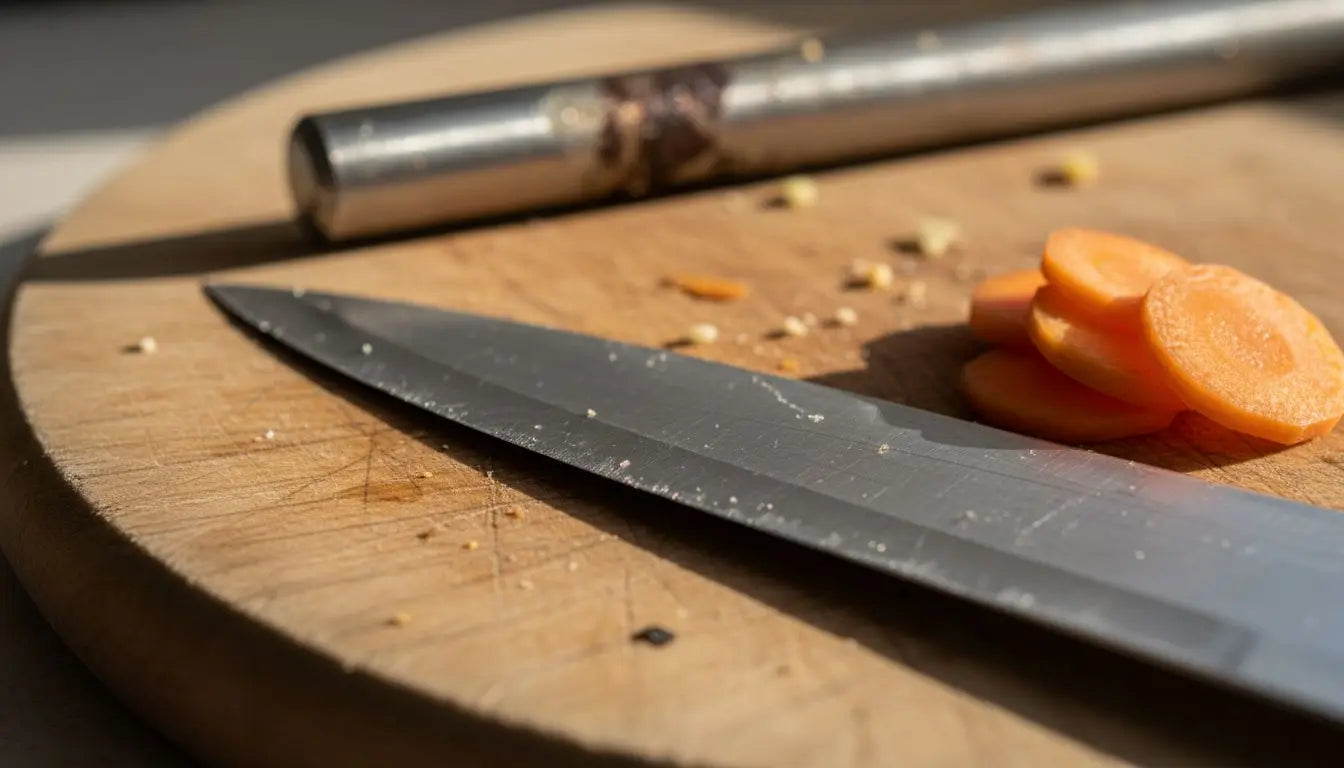
Professional chefs understand that consistent honing extends a knife’s functional lifespan by reducing the frequency of full sharpening sessions. While sharpening removes metal to create a new edge, honing simply realigns the existing edge, preserving the blade’s original material integrity. This maintenance approach is particularly crucial for high-end Damascus steel knives, which require precise and gentle maintenance to retain their exceptional cutting properties and aesthetic appeal.
Pro tip: Clean your honing rod after each use and store it in a dry, protected location to prevent metal contamination and maintain its realignment effectiveness.
Safety And Efficiency Benefits Of Honing
Knife safety goes far beyond simply avoiding cuts, and proper honing plays a crucial role in preventing kitchen accidents. Knife maintenance reduces injury risks by ensuring blades maintain optimal cutting performance, which directly impacts the control and precision of every culinary task.
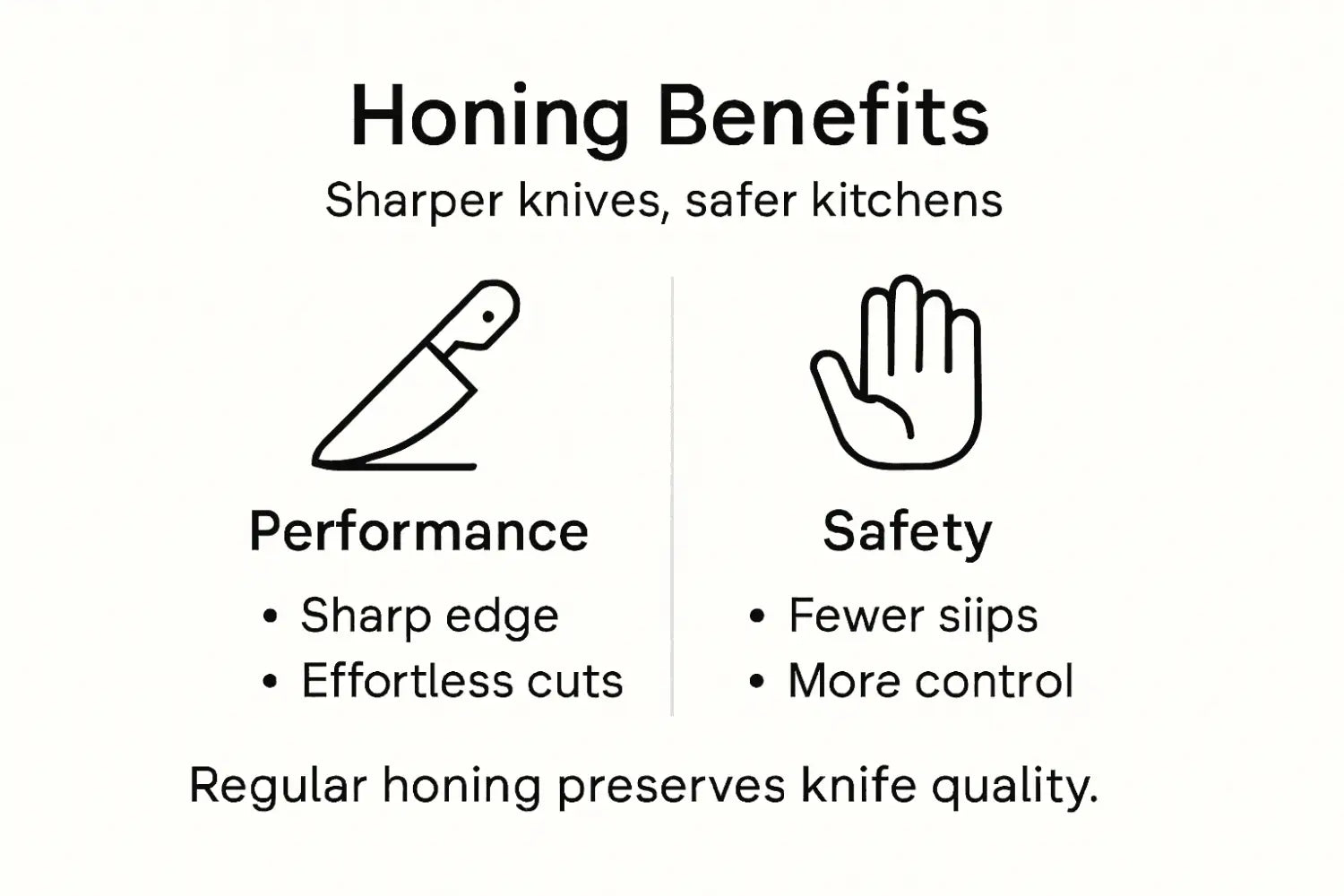
A dull knife is inherently more dangerous than a well-maintained sharp knife. When knife edges become misaligned, they require significantly more pressure to cut through ingredients, increasing the likelihood of slipping or losing control. Honing improves cutting efficiency by restoring the blade’s alignment, allowing chefs and home cooks to use minimal force while achieving clean, precise cuts. This reduction in cutting effort translates to improved kitchen safety and more consistent food preparation.
Professional kitchens prioritize honing as a fundamental safety practice. By maintaining knife edges through regular realignment, culinary professionals reduce the risk of unexpected blade slippage, uneven cutting, and potential injuries. The consistent edge maintenance not only protects the user but also preserves the integrity of expensive kitchen knives, preventing premature wear and potential blade damage that could compromise safety and performance.
Pro tip: Practice your honing technique using gentle, controlled strokes and maintain a consistent angle to maximize safety and blade performance.
Risks, Common Mistakes, And Alternatives
Knife maintenance requires precision, and understanding potential risks is crucial for preserving blade performance. Common honing mistakes can damage blades when users fail to recognize the nuanced differences between honing and sharpening, potentially compromising their knife’s long-term functionality.
The most significant risks emerge from improper technique and misconceptions about blade maintenance. Using incorrect angles, applying excessive pressure, or honing too aggressively can create microscopic damage to the blade’s edge. Honing technique demands careful approach with gentle, controlled movements that realign rather than remove metal. Professional chefs understand that honing is a delicate process requiring consistent practice and understanding of each knife’s unique characteristics.
Key mistakes and alternative methods can impact knife performance in different ways:
| Common Mistake | Potential Damage | Effective Alternative |
|---|---|---|
| Using wrong angle | Micro-chipping or dull edge | Sharpening stone for regrind |
| Excessive pressure | Bent or rolled blade edge | Gentle honing or stropping |
| Over-honing | Blade wear and thinning | Scheduled professional sharpening |
When honing becomes insufficient, alternative maintenance methods become essential. Sharpening stones provide a more aggressive metal removal process for severely dulled blades, while electric sharpeners offer convenience for those less experienced with manual techniques. Stropping represents a gentler alternative that polishes and refines the blade’s edge, complementing traditional honing methods and extending the knife’s overall performance and longevity.
Pro tip: Invest in professional knife maintenance training or watch expert tutorials to learn precise honing techniques that protect your valuable kitchen tools.
Keep Your Knives Performing Like New with Faneema Cutlery
If you understand the importance of regular honing to maintain your knife’s sharp edge alignment and safety then you know how critical it is to invest in knives designed for longevity and precise maintenance. The microscopic metal realignment described in honing is only truly effective when paired with high-quality blades crafted from superior materials like Damascus steel. At Faneema Cutlery, we specialize in premium handcrafted knives engineered for both excellent cutting performance and durability, making routine honing an effective way to extend their lifespan while preserving sharpness and safety.

Experience cutting precision and control that professional chefs and culinary enthusiasts rely on. Elevate your kitchen tools with our collection of expertly forged knives and ensure your honing routine keeps your blades in top condition. Explore our range of premium Damascus steel knives and discover how the right knife combined with proper honing can transform your cooking experience. Visit Faneema Cutlery today to invest in craftsmanship that stands the test of time and sharpening. Don’t wait to give your kitchen tools the care and quality they deserve.
Frequently Asked Questions
What is honing and why is it important for knife maintenance?
Honing is a maintenance technique that realigns the microscopic metal edge of a knife without removing material. It is important because it keeps the blade’s cutting surface aligned, ensuring consistent performance and extending the knife’s lifespan.
How often should I hone my kitchen knives?
It’s recommended to hone kitchen knives before each use or several times during extended cooking sessions. Regular honing helps maintain optimal cutting performance and reduces the frequency of necessary sharpening.
What are the different types of honing tools available, and how do I choose one?
Common honing tools include steel honing rods, ceramic rods, and diamond-coated rods. Choose a steel rod for everyday kitchen knives, a ceramic rod for delicate blades, and a diamond-coated rod for heavily used knives. Each serves a different purpose based on your knife maintenance needs.
Can honing damage my knife if not done correctly?
Yes, improper honing techniques, such as using the wrong angle or applying excessive pressure, can micro-chip or dull the blade. It’s essential to use gentle, controlled strokes and maintain the correct angle to protect your knife’s edge.
Recommended
- Choosing a selection results in a full page refresh.