

Why Outdoor Knives Differ – Key Factors Explained
Rugged American landscapes demand serious gear. Over 90 percent of wilderness survival experts emphasize the importance of using specialized outdoor knives for reliable performance in unpredictable conditions. Whether forging through dense forests or tracking game across rocky terrain, outdoor blades become essential companions for hunters and adventurers who value quality craftsmanship. This guide breaks down the defining features and diverse purposes of premium outdoor knives, helping you recognize which design best matches your wilderness ambitions.
Table of Contents
- Defining Outdoor Knives And Their Purposes
- Major Types Of Outdoor Knives Compared
- Blade Shapes, Materials, And Construction Methods
- Real-World Performance In Outdoor Scenarios
- Common Pitfalls Choosing Outdoor Knives
Key Takeaways
| Point | Details |
|---|---|
| Outdoor knives are specifically designed for challenging environments. | They offer durability and functionality essential for hunting, camping, and survival tasks. |
| Selecting the right materials is crucial. | High-carbon steel blades provide exceptional durability, while stainless steel offers corrosion resistance for humid conditions. |
| Understand the importance of proper knife maintenance. | Regular care can significantly enhance the longevity and reliability of outdoor knives. |
| Choose specialized knives for different tasks. | Carrying a primary survival knife and a secondary specialized knife maximizes preparedness and adaptability in the wilderness. |
Defining Outdoor Knives and Their Purposes
Outdoor knives represent specialized cutting tools engineered specifically for wilderness environments and challenging external conditions. Unlike standard kitchen or utility knives, these implements are designed to handle extreme demands across hunting, camping, survival, and emergency scenarios. Survival knives serve as versatile multipurpose tools capable of performing critical functions like wood cutting, game preparation, shelter construction, and personal protection.
The fundamental characteristics of outdoor knives distinguish them from conventional cutting implements. These tools typically feature robust construction with thick, durable blades manufactured from high-carbon steel or specialized alloys that resist corrosion and maintain sharp edges under demanding conditions. Knife designs vary dramatically based on intended usage—from compact folding models preferred by backpackers to full-tang fixed blade knives favored by hunters and wilderness survival experts.
Critical design elements separate professional-grade outdoor knives from recreational or novelty alternatives. Key features include ergonomic handle designs providing secure grip in wet or cold environments, blade lengths between 4-7 inches for optimal utility, full tang construction ensuring maximum strength, and materials resistant to environmental degradation. Specialized outdoor knives might incorporate additional functionalities like serrated edges for sawing, integrated fire starters, or hollow handle storage compartments.
Pro tip: When selecting an outdoor knife, prioritize full tang construction and high-carbon steel blades for maximum durability and reliability in challenging wilderness conditions.
Major Types of Outdoor Knives Compared
Outdoor knives encompass a diverse range of specialized tools, each designed to meet specific wilderness challenges. Survival knives represent the most versatile category, engineered to handle multiple critical tasks in extreme environments. These robust tools are characterized by heavy-duty construction, featuring thick blades capable of wood cutting, game processing, shelter building, and emergency protection. Military personnel and wilderness experts often rely on survival knives as their primary multipurpose implement.
Hunting knives differ significantly from survival models, with designs meticulously optimized for game processing and field dressing. Their blades typically feature specialized shapes for precise skinning and butchering, with drop-point or clip-point configurations that allow maximum control and minimal meat damage. Combat knives represent another distinct category, originally designed for military engagement but increasingly incorporating versatile outdoor utility features that blur traditional categorization.
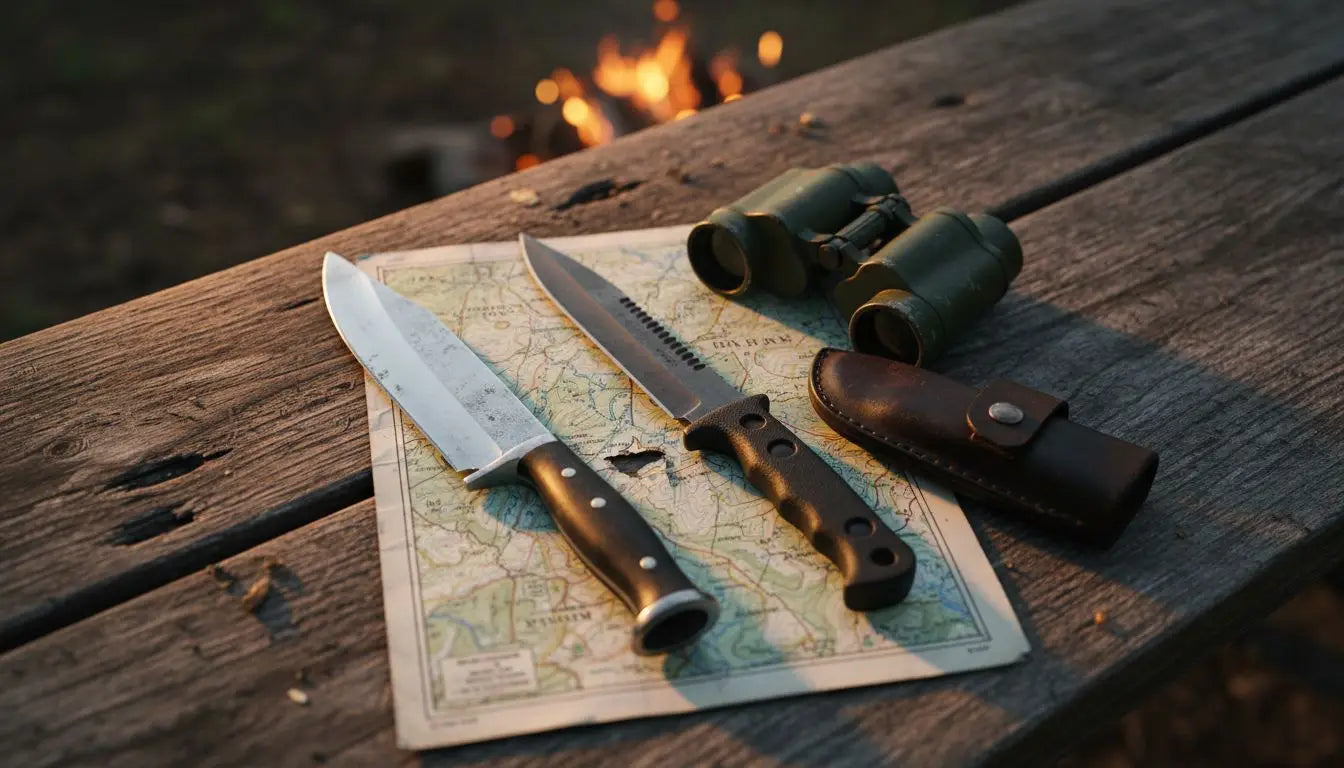
Utility and camp knives round out the primary outdoor knife classifications, offering generalized functionality for campsite tasks, food preparation, and light cutting work. These knives prioritize balanced performance across multiple scenarios, with moderate blade lengths and ergonomic handles designed for comfortable extended use. Serious outdoor enthusiasts often carry multiple knife types to ensure comprehensive preparedness for varied environmental challenges and potential survival scenarios.
Pro tip: Consider carrying two different outdoor knife types—a primary survival knife and a secondary specialized knife—to maximize your preparedness in wilderness environments.
Here is a comparison of major outdoor knife types and their primary uses:
| Knife Type | Main Purpose | Blade Features | Typical Environment |
|---|---|---|---|
| Survival Knife | Multi-task survival | Thick, robust, versatile | Extreme wilderness |
| Hunting Knife | Game processing | Precise, shaped for skinning | Forests, hunting grounds |
| Combat Knife | Tactical, defense | Durable, often serrated | Military, emergencies |
| Utility/Camp Knife | General tasks | Balanced design, ergonomic | Campsites, varied terrain |
Blade Shapes, Materials, and Construction Methods
Blade construction represents the critical foundation of outdoor knife performance, with knife making techniques determining ultimate functionality and durability. Manufacturers utilize multiple production methods including forging, stock removal, and investment casting, each approach delivering unique characteristics to the final implement. Carbon steel and stainless steel remain the primary materials, offering balanced combinations of strength, edge retention, and corrosion resistance that meet demanding outdoor requirements.
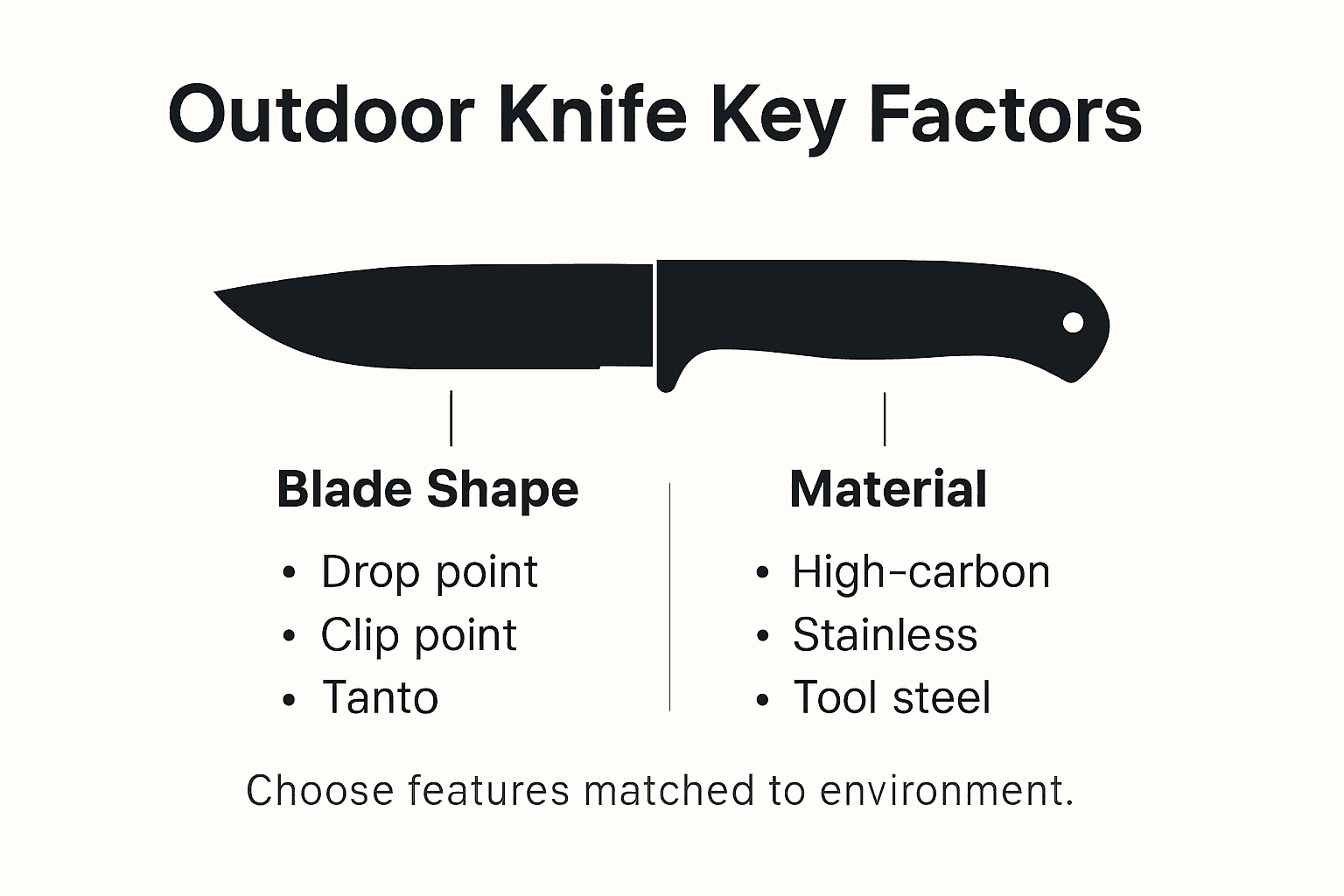
Blade geometry plays a pivotal role in determining a knife’s specific performance capabilities. Different grinding techniques—including flat, hollow, and convex profiles—directly influence cutting efficiency and structural integrity. Thicker blades provide superior strength for heavy-duty tasks like chopping and prying, while thinner blade configurations excel at precision slicing and delicate cutting operations. The blade’s cross-sectional design ultimately determines its ability to withstand extreme environmental conditions and perform specialized outdoor tasks.
Material selection extends beyond basic steel composition, incorporating advanced considerations like hardness, toughness, and thermal stability. High-carbon steels offer exceptional edge retention and durability, while stainless steel variants provide superior corrosion resistance critical for humid or marine environments. Advanced knife makers increasingly experiment with exotic materials like titanium and ceramic composites, pushing the boundaries of traditional blade engineering to create increasingly specialized outdoor tools.
Pro tip: Always match your blade material and shape to your specific outdoor environment and intended use to maximize performance and longevity.
This summary highlights key considerations when choosing outdoor knife blade materials:
| Blade Material | Durability | Edge Retention | Best Use Scenario |
|---|---|---|---|
| High-carbon steel | Exceptional | Long-lasting sharpness | Rugged, dry environments |
| Stainless steel | High corrosion resistance | Good, less than carbon | Wet, humid, marine areas |
| Titanium alloy | Lightweight, strong | Moderate | Backpacking, specialty |
| Ceramic composite | Very hard | Brittle, sharp edge | Precision cutting tasks |
Real-World Performance in Outdoor Scenarios
Survival scenarios demand exceptional knife performance, with survival knives serving as critical multi-purpose tools that can mean the difference between life and death in extreme environments. Military and wilderness professionals rely on these implements for tasks ranging from shelter construction and food preparation to emergency medical interventions. The most effective outdoor knives demonstrate remarkable versatility, capable of cutting rope, processing game, creating kindling, and providing potential self-defense capabilities.
Extreme environmental conditions ruthlessly expose the limitations of inferior knife designs. Temperature fluctuations, moisture, and physical stress test every aspect of a knife’s construction—from blade material and edge retention to handle ergonomics and overall durability. Specialized features like full tang construction become critical survival attributes, ensuring the blade remains securely attached to the handle during high-stress tasks like chopping wood, creating emergency shelters, or processing game in challenging wilderness conditions.
Beyond technical specifications, real-world performance hinges on the knife’s ability to adapt to unpredictable outdoor challenges. Hunters, campers, and wilderness explorers require tools that can seamlessly transition between precision tasks like game field dressing and robust operations like breaking small branches or cutting through dense vegetation. The most exceptional outdoor knives blur the lines between specialized tools, offering a comprehensive solution that addresses multiple survival and utility requirements across diverse environmental contexts.
Pro tip: Practice using your outdoor knife in controlled environments before relying on it in genuine wilderness scenarios to understand its specific performance capabilities and limitations.
Common Pitfalls Choosing Outdoor Knives
Selecting the right outdoor knife involves more than aesthetic appeal, as knife selection mistakes can compromise safety and functionality in critical wilderness environments. Many outdoor enthusiasts fall into the trap of prioritizing brand reputation or decorative features over practical performance characteristics. Overly fragile or unnecessarily bulky blades can severely limit a knife’s utility, rendering it ineffective when genuine survival situations demand reliable tools.
Blade material and construction represent crucial decision points often overlooked by inexperienced buyers. Novice outdoor adventurers frequently select knives without considering critical factors like steel composition, edge retention, and corrosion resistance. Folding knives without robust locking mechanisms pose significant safety risks, potentially failing during high-stress tasks that require consistent, dependable performance. Understanding the nuanced differences between blade geometries and intended use becomes paramount in making an informed selection.
Legal considerations and maintenance requirements add additional layers of complexity to knife selection. Many outdoor enthusiasts inadvertently purchase knives without fully understanding local regulations, risking potential legal complications. Equally problematic is the tendency to neglect proper knife maintenance, which can dramatically reduce a tool’s longevity and reliability. Complex multi-tool designs might seem attractive but can compromise core functionality if the user lacks specialized training or understanding of the knife’s specific capabilities.
Pro tip: Always test potential outdoor knives for ergonomic comfort, verify local legal restrictions, and invest time in understanding proper maintenance techniques before your wilderness expedition.
Discover the Ultimate Outdoor Knife Tailored for Your Wilderness Needs
Choosing the right outdoor knife means understanding durability, blade materials, and design features that survive harsh environments and demanding tasks. If you want a knife that excels in versatility, strength, and corrosion resistance just like the survival and hunting knives discussed, then it is time to explore premium craftsmanship designed to meet those exact challenges. High-carbon Damascus steel knives from skilled artisans provide unmatched sharpness and toughness, ensuring you never have to compromise reliability when it matters most.

Unlock superb outdoor performance with handcrafted knives made for precision and endurance. Visit Faneema Cutlery to browse expertly forged outdoor knives and specialty tools created with the same attention to detail emphasized in the article. Feel confident tackling the wild armed with trusted tools that combine traditional forging techniques and modern quality standards. Act now to elevate your preparedness with exquisite cutting implements built to last through any wilderness trial.
Frequently Asked Questions
What are the main types of outdoor knives?
Outdoor knives primarily include survival knives, hunting knives, combat knives, and utility/camp knives. Each type is designed for specific purposes, such as survival tasks, game processing, tactical defense, or general campsite tasks.
How do blade materials affect outdoor knife performance?
Blade materials, such as high-carbon steel and stainless steel, influence durability, edge retention, and corrosion resistance. High-carbon steel offers exceptional edge retention but may corrode, while stainless steel provides better corrosion resistance at the expense of edge sharpness.
What should I look for when choosing an outdoor knife?
When selecting an outdoor knife, prioritize features like full tang construction, high-carbon steel or durable stainless steel blades, ergonomic handle designs, and the specific tasks you’ll perform in the outdoors. Consider the environmental conditions you’ll face as well.
Why is knife maintenance important for outdoor knives?
Proper maintenance is crucial for outdoor knives as it affects their longevity and reliability. Neglecting maintenance can lead to deterioration in blade sharpness, corrosion, and overall performance, making it difficult to rely on the knife in critical situations.
Recommended
- Choosing a selection results in a full page refresh.