

Kitchen Knife Care Guide: Maintain Premium Blades Easily
A beautifully crafted Damascus steel knife deserves more than just admiration—it thrives on careful, deliberate maintenance. For culinary enthusiasts and professional chefs across the United States, preserving the flawless performance of these premium blades is key to every successful prep session. From creating a safe, stable cutting area to proper knife cleaning and storage routines, each step not only protects your investment but also elevates your kitchen precision and safety.
Table of Contents
- Step 1: Prepare Your Cutting Area And Tools
- Step 2: Clean Knives Properly After Each Use
- Step 3: Dry And Store Knives To Prevent Damage
- Step 4: Sharpen Blades With Correct Techniques
- Step 5: Check Knife Edges For Safety And Performance
Quick Summary
| Key Point | Explanation |
|---|---|
| 1. Create a Safe Cutting Environment | Use a stable cutting board and keep knives organized to prevent accidents and enhance cutting performance. |
| 2. Clean Knives Immediately After Use | Hand wash and dry knives right away to avoid damage, ensuring safety and maintaining the blade’s condition. |
| 3. Ensure Proper Knife Storage | Store knives in a way that protects the blade edges and keeps them sharp, avoiding loose drawers that cause damage. |
| 4. Regularly Check Knife Edges | Inspect blades visually and with simple tests to determine sharpness; this helps prevent injuries and maintains cutting efficiency. |
| 5. Hone and Sharpen Properly | Understand the difference between honing and sharpening, honing frequently for maintenance and sharpening as needed for optimal edge performance. |
Step 1: Prepare Your Cutting Area and Tools
Before your Damascus steel blade touches your ingredients, your workspace needs to be ready. This means creating a stable, organized cutting area where you can work with precision and confidence. Setting up correctly takes just a few minutes and makes an enormous difference in both safety and performance when handling premium knives.
Start by selecting a cutting board with adequate surface area, ideally wood or high-quality plastic that won’t dull your blade unnecessarily. Place a damp towel underneath your cutting board to prevent it from sliding across the counter. This is not a minor detail. Professional chefs know that a shifting cutting board creates dangerous situations where your knife can slip unexpectedly, and it also disrupts the smooth, controlled cutting motion your Damascus steel deserves. The board itself should sit at a comfortable working height, usually around waist level, so you’re not hunching over or overextending your arms.
Next, gather the specific knives you’ll need for your prep work. Your right knife selection depends entirely on what you’re cutting. A chef’s knife handles most tasks beautifully, while a paring knife works best for smaller, detailed work like peeling or deveining shrimp. Serrated knives belong on bread and tomatoes, not on onions or delicate herbs. Arrange your tools within arm’s reach, keeping your cutting board clear of clutter so you have clean space to work. Having everything organized means you won’t fumble around looking for a tool mid-prep, which breaks your rhythm and can create accidents. Wipe down your cutting board once more before you begin, ensuring it’s clean and dry enough that your knife won’t slip but damp enough at the base to stay put.
Pro tip: Keep a damp kitchen towel nearby to wipe your blade periodically during cutting, especially when working with Damascus steel. This simple habit removes residual moisture and particles that can accumulate, keeping your edge performing at its peak throughout your entire prep session.
Step 2: Clean Knives Properly After Each Use
Cleaning your Damascus steel knife immediately after use is not negotiable if you want to preserve its edge and maintain food safety. The moment you finish cutting, your blade needs attention. Allowing residue to dry on the steel makes cleaning harder and can potentially damage the blade’s finish, especially on premium Damascus steel where the layered pattern requires careful handling.
Rinse your knife under warm running water right away, then wash it thoroughly with hot soapy water just like any other kitchen utensil. Use a soft sponge or cloth to gently clean both sides of the blade, paying special attention to the spine and heel where food particles hide. When you’ve been working with raw meat or seafood, proper disinfection prevents cross-contamination and keeps your kitchen safe. After washing, dry your blade immediately with a clean towel rather than leaving it in a dish rack. This step matters tremendously for Damascus steel because water spots and mineral deposits can accumulate on the intricate surface, and moisture lingering near the handle can eventually cause issues with any wooden handles or rivets. Never toss your knife into the dishwasher. The extreme heat, harsh detergents, and constant jostling will dull the edge faster than anything else and can damage the blade’s surface finish irreversibly.
Make this cleaning routine automatic. As soon as you set down your cutting board, your knife should be in your hand, under the faucet. The entire process takes maybe two minutes, and it transforms your knife’s lifespan dramatically. Some chefs keep a clean towel within arm’s reach of their cutting station specifically for this reason. Your blade stays sharp, stays safe, and stays beautiful when you give it this small amount of immediate attention.
Pro tip: Keep a designated towel specifically for drying knives, and ensure it’s lint-free to prevent fibers from sticking to the wet blade and potentially getting into your next dish.
Here’s a summary of knife cleaning and drying methods and their effects on blade longevity:
| Step | Recommended Method | Potential Risks if Neglected | Impact on Knife Lifespan |
|---|---|---|---|
| Cleaning | Hand wash immediately after use | Staining, corrosion, food residue | Blade stays sharp and undamaged |
| Drying | Wipe with a lint-free towel | Rust, water spots, handle damage | Preserves blade edge and finish |
| Dishwasher | Avoid completely | Dulling, chipping, finish loss | Shortens lifespan dramatically |
Step 3: Dry and Store Knives to Prevent Damage
Drying your knife properly is just as critical as cleaning it, and storage choices determine whether your Damascus steel blade remains pristine or deteriorates over time. Moisture is the enemy of premium knives. It causes rust, promotes bacterial growth, and can damage the intricate layered patterns that make Damascus steel visually stunning and functionally superior. The moment you finish washing, pick up that blade and dry it completely with a clean towel.
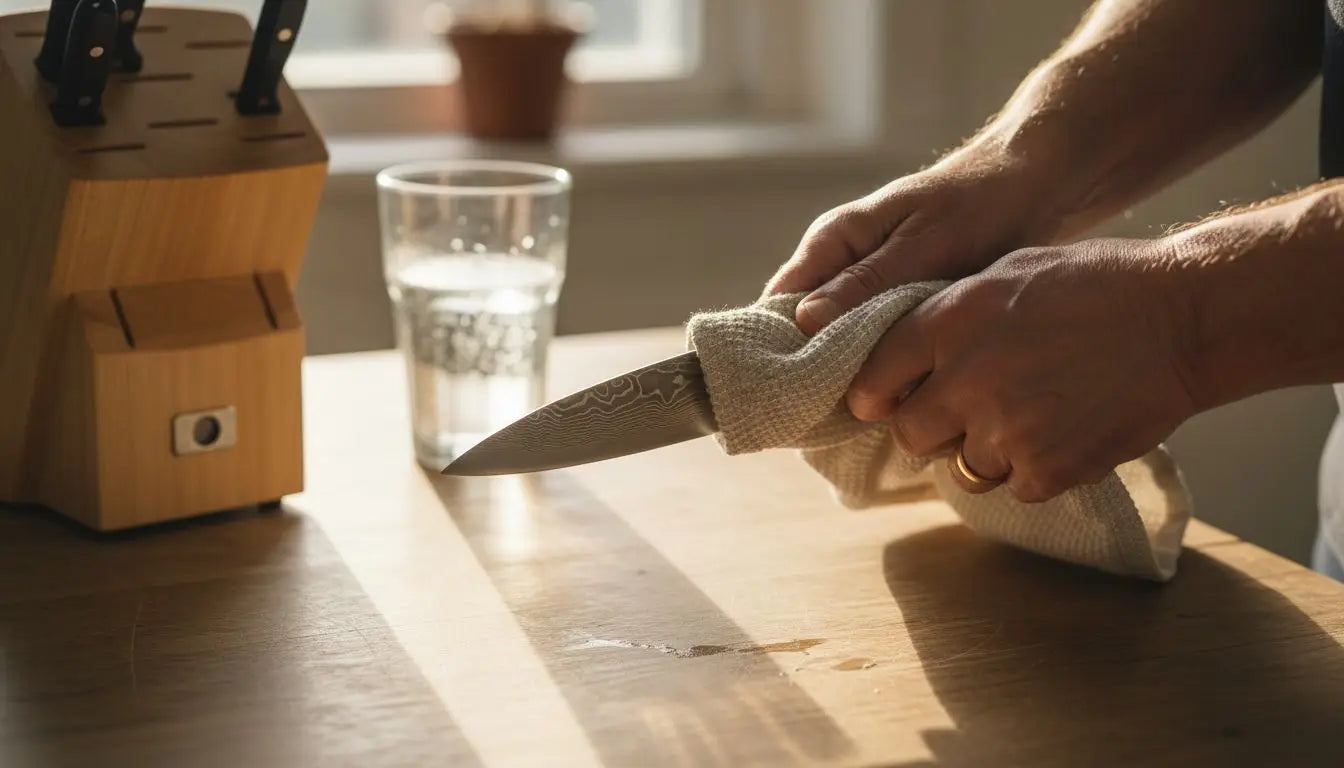
Use a soft, lint-free cloth and work methodically from the spine to the edge, then flip and repeat on the other side. Pay attention to the base of the blade where it meets the handle, as water tends to collect there. Don’t rush this step. Once your blade is bone dry, it’s time to store it properly. Choosing the right storage method protects your investment and keeps your knife performing at peak sharpness. You have several excellent options. A knife block keeps blades upright and organized, making them easy to grab during prep. Magnetic strips mounted on your wall save counter space and display your knives beautifully while keeping them safely out of reach. Individual knife sheaths work perfectly if you have limited space or need portability. What you want to avoid at all costs is tossing your knife into a drawer loose. The blade will bang against other utensils, dulling the edge with every contact and potentially chipping the fine point. Your Damascus steel deserves better than that.
Proper storage protects the blade edge from accidental damage and keeps your kitchen safer by preventing your hand from accidentally touching the sharp blade when reaching for other items. Choose a storage location that stays dry and cool. Avoid areas above the stove where heat and steam can create humidity that encourages rust. If you use a block, ensure it gets cleaned occasionally to prevent moisture from building up inside. Your knife’s performance, safety, and longevity all depend on these final steps after cleaning.
Pro tip: Store your knives in a cool, dry location away from direct sunlight, and if you use a wooden block, ensure it’s made from hardwood like bamboo or walnut, which resists moisture better than softer woods.
Compare popular knife storage options and their effect on safety and blade condition:
| Storage Type | Blade Protection | Space Efficiency | Safety for Users |
|---|---|---|---|
| Knife Block | Excellent, no edge contact | Moderate, countertop use | High, blades hidden |
| Magnetic Strip | Good, visible edges | Very efficient, wall-mounted | High, easy access |
| Drawer (Loose) | Poor, blades hit utensils | Good, no counter space | Low, risk of injury |
| Knife Sheath | Good, shields blade | Excellent, portable and compact | High, safe transport |
Step 4: Sharpen Blades with Correct Techniques
Sharpening your Damascus steel knife is fundamentally different from the casual stropping many home cooks assume is enough. Your premium blade needs actual sharpening to restore its edge when it starts to dull from regular use. Understanding the difference between honing and sharpening will transform how you maintain your knives and extend their lifespan dramatically.
Start by distinguishing between these two essential techniques. Honing realigns the blade’s microscopic edge, which gets pushed slightly out of alignment during cutting. This is quick maintenance you should do frequently, even before each use if you’re doing extensive prep work. A honing steel realigns the blade edge without removing metal, keeping your knife performing optimally between actual sharpenings. Sharpening, by contrast, is more intensive. It removes a small amount of metal to restore a truly sharp edge when honing alone no longer cuts it. For sharpening, whetstones are your best friend. Quality whetstones come in different grit levels, typically ranging from coarse to fine. Start with a coarser grit if your blade is quite dull, then progress to finer grits for a polished edge. Before using your whetstone, soak it in water for about 10 to 15 minutes to prevent excessive metal removal and help the stone work more effectively. Place the blade at approximately a 15 to 20 degree angle against the stone and use smooth, controlled strokes. Work from the heel to the tip on one side, then flip and repeat on the other side. The motion matters more than brute force. Gentle, consistent pressure and proper technique yield far better results than aggressive scrubbing.
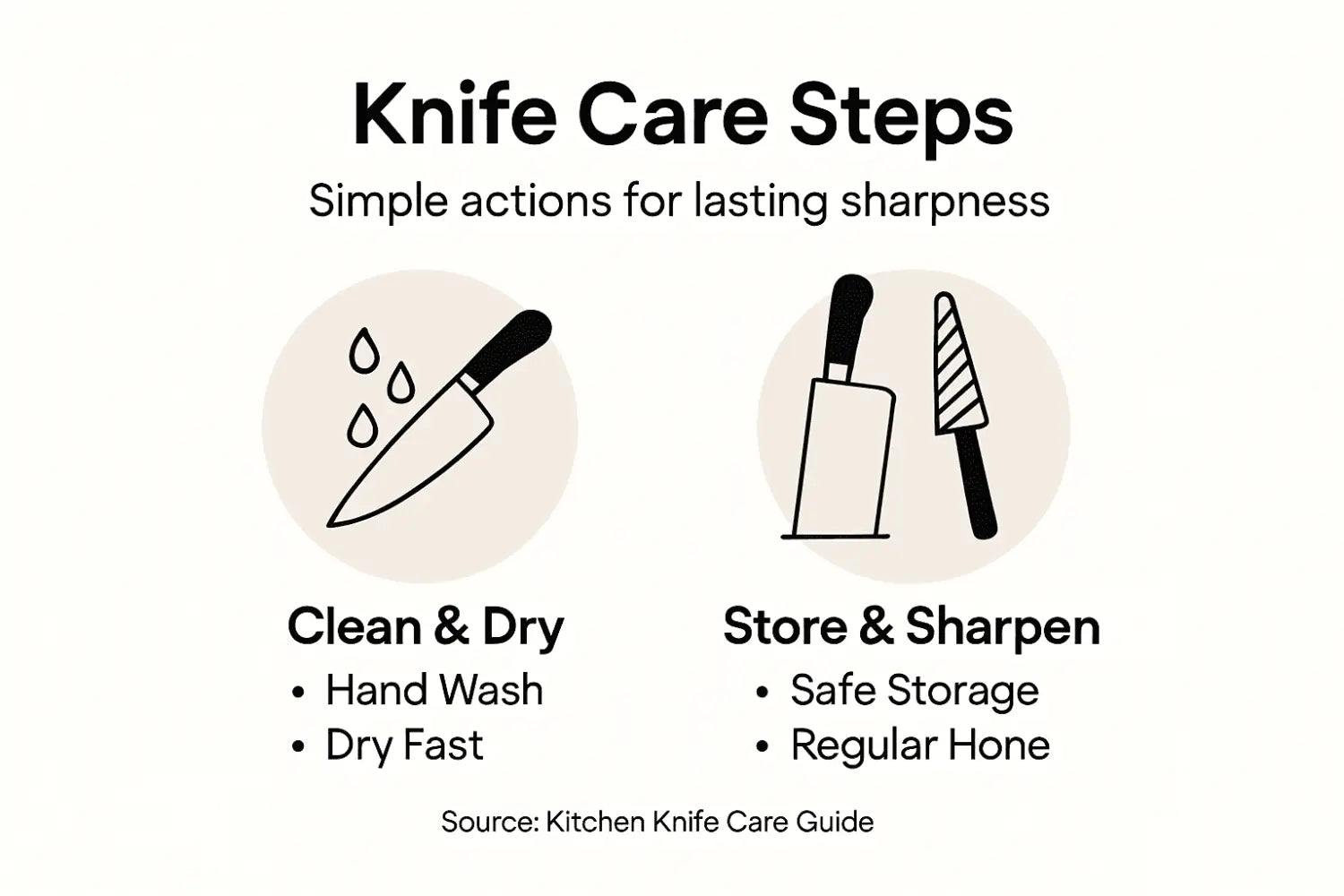
As a home cook, you don’t need to sharpen frequently. Professional recommendations suggest sharpening once or twice yearly for regular kitchen use, while honing should become part of your routine. If you’re uncertain about your technique or have a particularly cherished blade, professional sharpening services exist and are worth the investment. Your Damascus steel knives represent a significant investment in your culinary practice, and maintaining them correctly ensures they’ll perform beautifully for years.
Pro tip: Always hone your knife on a steel before storing it after each use, and reserve whetstone sharpening for when your blade has noticeably lost its sharpness and honing no longer brings it back to peak performance.
Step 5: Check Knife Edges for Safety and Performance
Regularly inspecting your knife edge tells you whether your blade is performing at its best or signaling that maintenance is needed. A sharp edge is not just about cutting efficiency. It directly impacts your safety in the kitchen. Dull blades require more force, which increases the chance of slipping and causing injury. Taking a moment to assess your knife’s condition should become part of your routine maintenance practice.
Start with a visual inspection. Hold your Damascus steel blade up to the light and examine the edge closely. A truly sharp edge will appear almost invisible, catching minimal light. If you see a visible line of light reflecting off the edge, the blade is dull and needs attention. Next comes the tactile test. Carefully run your thumb perpendicular to the blade spine (never along the edge, or you’ll cut yourself). A sharp blade will feel like it wants to grab your skin slightly. A dull blade will slide without resistance. Beyond these checks, practical cutting tests reveal the truth. Slice through paper, which requires a keen edge to cut cleanly. A sharp blade produces thin, even slices while a dull one tears the paper. Tomatoes work beautifully for this test too. A proper blade sinks through the skin with gentle pressure, while a dull blade crushes and manges instead of slicing. These simple tests take seconds and provide accurate feedback about your blade’s condition. A sharp edge reduces cutting force and prevents accidents, making regular inspection an essential safety practice. The moment you notice your blade struggling on these tests, that’s your signal to hone or sharpen. Don’t wait until your knife feels completely useless. Address edge degradation early and your blade will stay performing beautifully throughout your culinary work.
Pro tip: Keep a piece of printer paper in your kitchen drawer specifically for edge testing, and perform this quick check monthly to catch blade degradation before it impacts your cutting performance.
Elevate Your Kitchen Experience with Expert Care and Premium Blades
Keeping your Damascus steel knives sharp and well-maintained can feel like a challenge but mastering knife care transforms your entire cooking routine. This guide highlights crucial steps such as proper cleaning, drying, storage, and sharpening — all essential to protect your investment and maintain the exquisite edge and beauty only premium Damascus steel offers. Avoid common pitfalls like improper storage or neglecting immediate washing that dulls and damages your blades over time.
Discover how our curated collections at Explore Damascus Knives for Precise Cutting – Our Bestsellers and the Premium Damascus Paring Knife Collection by Faneema Cutlery provide you with expertly crafted knives designed for longevity, sharpness, and unmatched craftsmanship that perfectly align with the care techniques you just learned.

Now is the perfect time to invest in your culinary tools with confidence. Visit Faneema Cutlery today to find the right Damascus steel knives tailored for precise cutting and effortless maintenance. Experience the blend of luxury, performance, and durability that only expert craftsmanship can deliver and keep your kitchen knives performing flawlessly for years to come.
Frequently Asked Questions
How can I prepare my cutting area for using a premium knife?
You can prepare your cutting area by selecting a stable cutting board made of wood or high-quality plastic and placing a damp towel underneath to prevent slipping. Ensure that your knives are arranged within arm’s reach and that your cutting board is clean to maintain a safe and efficient workspace.
What is the best way to clean my Damascus steel knife after use?
The best way to clean your Damascus steel knife is to rinse it under warm running water, then wash it with hot, soapy water using a soft sponge. Dry the blade with a clean, lint-free towel immediately after washing to prevent rust and maintain the knife’s finish.
How should I store my premium knife to prevent damage?
You should store your premium knife in a knife block, magnetic strip, or individual sheath to protect the blade from damage. Avoid storing it loose in a drawer, as this can lead to dulling and chipping of the blade over time.
How often should I sharpen my kitchen knife?
You should sharpen your kitchen knife once or twice a year, depending on how frequently you use it. Incorporate honing before each use to maintain the blade’s edge and only use whetstones for actual sharpening when necessary.
What tests can I do to check the sharpness of my knife?
You can check the sharpness of your knife by performing a visual inspection to look for a glint or reflection on the edge and then conducting a tactile test by running your thumb perpendicularly along the blade. Additionally, try slicing through a piece of paper or a tomato; a sharp knife will cut cleanly with minimal resistance.
What is the importance of checking my knife edges regularly?
Regularly checking your knife edges is crucial for ensuring optimal performance and safety in the kitchen. Dull blades require more force, increasing the risk of slipping, so inspect your knife monthly and hone or sharpen as soon as you notice diminished performance.
Recommended
- Choosing a selection results in a full page refresh.