

Outdoor Knife Maintenance Guide for Damascus Steel
A prized Damascus steel knife deserves more than just a casual wipe after each trip into the wild. Caring for these specialty blades preserves their legendary performance and keeps their signature patterns sharp whether you are navigating Montana backcountry or packing for a Pacific Northwest hunt. Using the right cleaning supplies, sharpening stones, light oils, and proper technique extends blade life and helps your knife shine on every adventure. For outdoor enthusiasts who value expert maintenance for Damascus steel, attention to detail makes all the difference.
Table of Contents
- Step 1: Gather Essential Cleaning And Sharpening Tools
- Step 2: Clean The Blade And Handle Thoroughly
- Step 3: Sharpen The Edge With Precision Techniques
- Step 4: Lubricate Moving Parts And Metal Surfaces
- Step 5: Inspect Knife For Damage And Performance
Quick Summary
| Key Point | Explanation |
|---|---|
| 1. Gather essential cleaning tools | Use soft, lint-free cloths and light oil to clean your Damascus steel knife effectively. Microfiber cloths are preferred for moisture and debris control. |
| 2. Clean blade and handle promptly | Rinse your knife under cool water after use, dry it gently, and apply oil to protect against corrosion and maintain aesthetics. |
| 3. Sharpen with precision stones | Use appropriate grits (1000-8000) for sharpening. Begin with coarse grits, then refine with finer ones to achieve a razor-sharp edge. |
| 4. Lubricate metal surfaces regularly | Apply light oil to all metal parts, especially movable components, every 2-3 months to prevent rust and maintain functionality. |
| 5. Inspect for damage consistently | Conduct regular visual inspections for chips, nicks, and handle integrity to ensure your knife remains reliable and safe to use. |
Step 1: Gather essential cleaning and sharpening tools
Before you maintain your Damascus steel knife, you need the right equipment on hand. Having quality tools makes the difference between a quick maintenance session and a frustrating cleanup. Think of gathering your tools as setting up your workspace for success.
Start with cleaning supplies. You’ll want soft cotton cloths that won’t scratch your blade’s delicate surface. Microfiber cloths work even better because they grab moisture and debris without leaving lint behind. Pair these with a light oil for metal lubrication, which protects the blade from oxidation and keeps the Damascus pattern looking vibrant. Many outdoor enthusiasts prefer food-grade mineral oil or specialized knife oils that won’t turn rancid in your pack.
Next, invest in proper sharpening stones. Your Damascus steel blade needs whetstones that match its construction, typically ranging from 1000 to 8000 grit depending on your current blade condition. A 1000 to 4000 grit stone handles regular maintenance and touch-ups, while higher grits polish and refine the edge. Having at least two different grits gives you flexibility when you’re in the field or at your workbench.
Don’t overlook secondary tools that make maintenance easier. A honing steel realigns your blade’s edge between sharpening sessions without removing steel. A simple leather strop with stropping compound works wonders for maintaining your knife between deep maintenance cycles. If you hunt or spend extended time outdoors, pack a small maintenance kit with these basics in a dedicated pouch.
Your toolkit should also include a cutting board that won’t dull your blade faster than necessary. Hardwood or plastic boards work best, while glass and marble destroy edges quickly. A stable surface for sharpening is equally critical, whether that’s a dedicated stone holder or a kitchen towel folded to keep your whetstone stationary.
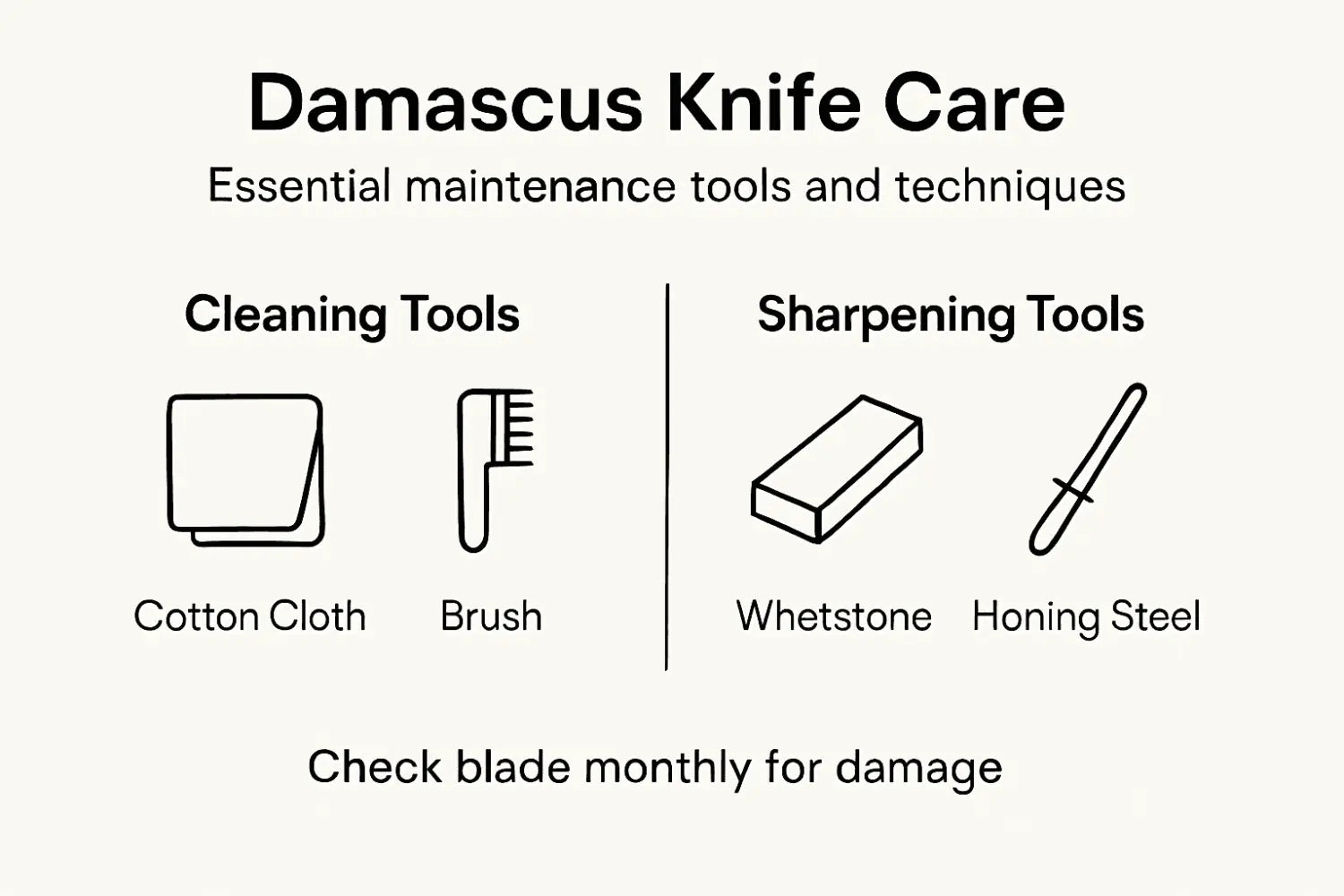
Pro tip: Store your oils and cloths in a small waterproof bag within your maintenance kit to protect them from moisture and keep everything organized when you’re deep in the backcountry or between hunting trips.
Step 2: Clean the blade and handle thoroughly
Now that you have your tools ready, it’s time to clean your Damascus steel knife properly. A thorough cleaning removes debris, moisture, and residue that can damage the blade and compromise its performance. This step takes just a few minutes but makes a huge difference in longevity.
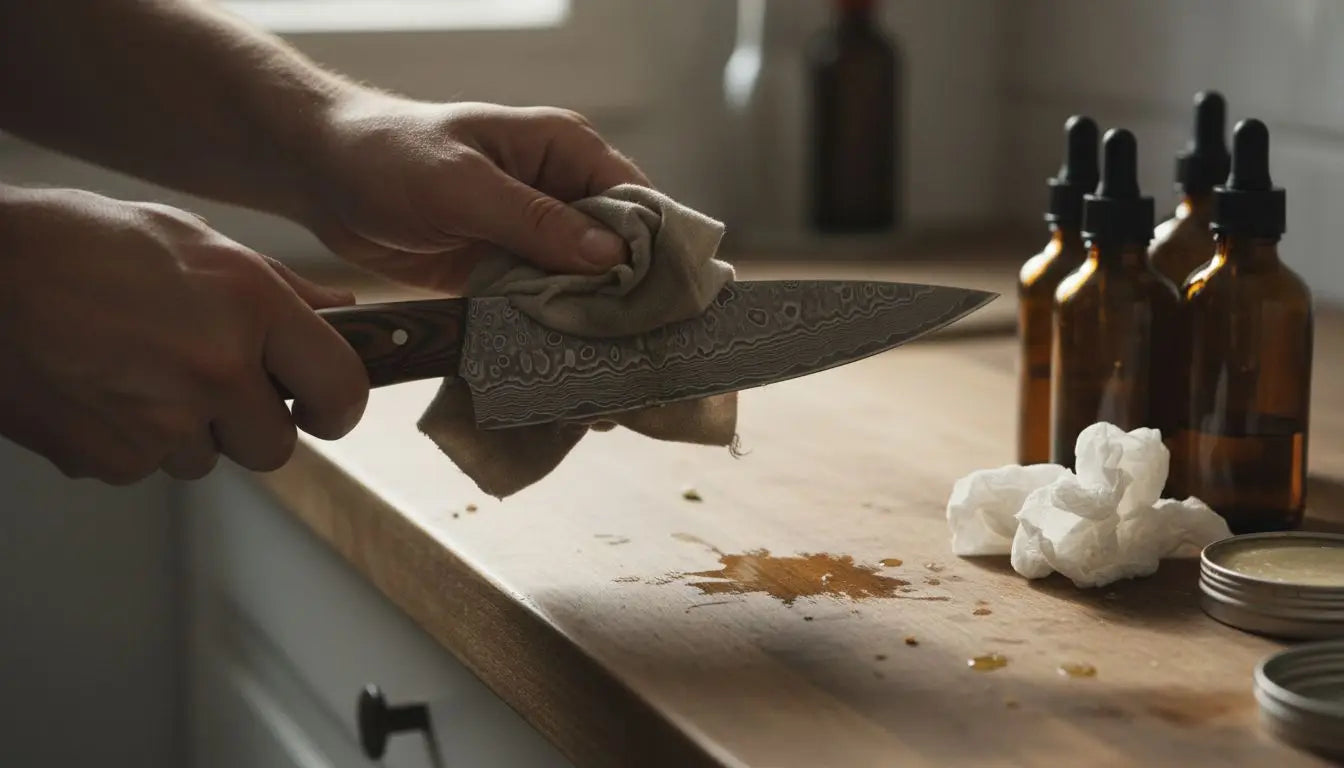
Start by rinsing your blade under cool running water immediately after use. This prevents food particles and moisture from sitting on the steel, which can lead to corrosion or staining on the beautiful Damascus pattern. Use your soft cotton or microfiber cloth to gently wipe the blade dry, paying special attention to the spine and the area where the blade meets the handle.
Next, address the handle with care. Your Damascus knife likely has a handle made from wood, bone, or composite materials that deserve gentle treatment. Wipe down the handle with your slightly dampened cloth to remove any dirt or debris. Avoid soaking the handle in water, especially if it’s wood, as prolonged moisture can cause warping or splitting. For stubborn spots, use a damp cloth and gentle circular motions rather than aggressive scrubbing.
Pay close attention to the junction between blade and handle, where moisture and debris love to hide. Use a small, soft brush or cloth to clean this crevice thoroughly. This area is where rust and corrosion often begin, so don’t skip it. Once everything is clean and dry, apply a thin layer of your light oil to the blade using a clean cloth. This protective layer keeps moisture away and maintains the lustrous appearance of your Damascus pattern.
The handle benefits from occasional oil treatment as well. Apply a minimal amount of food-grade mineral oil or specialized handle oil to wood handles to keep them conditioned and prevent drying out. Just remember that less is more when it comes to oil application. You can follow proper blade cleaning techniques for additional insights on maintaining your investment.
Here’s a quick comparison of common handle materials for Damascus steel knives:
| Handle Material | Durability | Water Resistance | Maintenance Needs |
|---|---|---|---|
| Wood | High | Moderate | Apply oil regularly |
| Bone | Moderate | Low | Avoid soaking, keep dry |
| Composite | Very High | High | Occasional cleaning only |
| Metal | Very High | Very High | Light oiling to prevent rust |
Pro tip: Clean and dry your knife immediately after every use, rather than letting it sit in a sink or dishwasher, as this prevents the majority of corrosion and staining issues before they start.
Step 3: Sharpen the edge with precision techniques
Sharpening your Damascus steel knife demands respect for its unique metallurgy and construction. A properly sharpened blade cuts cleaner, performs better in the field, and actually stays safer in your hands. This step separates the hunters and outdoor enthusiasts who truly care for their tools from those who let them deteriorate.
Begin by preparing your sharpening stones with a good soak. Most whetstones need about 10 to 15 minutes of water submersion before use to ensure even sharpening. Place your soaked stone on a stable surface, preferably with a towel underneath to prevent slipping. The stone should sit at a comfortable working height so you can maintain proper control throughout the process.
Start with your coarser grit stone, typically around 1000 grit, to repair any chips or damage on your blade’s edge. Place the knife at approximately a 15 to 20 degree angle against the stone, depending on your specific Damascus blade’s design. Use smooth, controlled strokes, drawing the blade toward you along the stone’s length. You’re not sawing, you’re gliding. Repeat this motion 10 to 15 times on each side of the blade, maintaining that consistent angle throughout. Maintaining consistent angles during sharpening prevents damage to the blade’s delicate structure.
Once you’ve worked with the coarse stone, progress to medium grit stones around 4000 to 6000 grit. These finer stones refine the edge and begin polishing the blade. Use the same angle and technique, but reduce the number of passes since you’re working with a finer abrasive. Your Damascus pattern will start to shine as you work through these grits. The transition from coarse to fine grits is what creates that razor sharp edge that makes your knife a joy to use.
Finish with your finest stone if you have one available. This final polish creates the micro bevels that maximize cutting performance. After sharpening, wipe your blade completely dry and apply a light coat of oil to protect the freshly sharpened edge from oxidation.
To help you choose the right sharpening stone, here’s a summary comparing grit options:
| Grit Range | Main Purpose | Resulting Edge Qualities | Typical Usage Frequency |
|---|---|---|---|
| 1000-2000 | Edge repair, shaping | Coarse, removes chips | As needed for damage |
| 3000-6000 | Refining, honing | Sharp and smooth | Regular maintenance |
| 8000+ | Final polishing | Razor-sharp, mirror finish | Occasionally for best edge |
Pro tip: Test your sharpening progress by making a paper cutting motion across a sheet of newspaper at a slight angle, rather than slicing downward, since this reveals the true sharpness of your edge.
Step 4: Lubricate moving parts and metal surfaces
Lubrication is your Damascus steel knife’s best defense against corrosion and mechanical wear. Whether your knife has a folding mechanism or you simply want to protect all metal surfaces, proper lubrication keeps everything functioning smoothly and looking pristine. This step takes minimal time but delivers maximum protection.
Start by identifying all the metal surfaces that need attention. For fixed blade knives, focus on the entire blade surface, the spine, and any exposed metal on the handle. If you own a folding Damascus knife, pay special attention to the pivot point and the blade’s folding mechanism. These areas experience the most friction and benefit most from protective lubrication.
Apply your light oil sparingly using a soft cloth. The key word here is sparingly. You’re creating a thin protective film, not coating your knife in grease. Use a clean, lint-free cloth and apply oil in gentle circular motions, covering the entire blade surface evenly. Effective lubrication reduces friction and prevents wear on your blade’s delicate Damascus pattern while creating a barrier against moisture and oxidation.
For folding knives or those with moving parts, apply a tiny amount of oil around the pivot point and along the blade’s edge where it meets the handle. Work the blade open and closed several times to distribute the lubricant evenly throughout the mechanism. Wipe away any excess oil with a clean cloth to prevent buildup that can attract dirt and debris. You want protection, not a sticky residue that compromises your knife’s appearance or functionality.
Don’t forget the handle if it contains any exposed metal components, such as steel bolsters or rivets. These areas can corrode just as easily as the blade itself. A light application of oil protects them while maintaining the natural beauty of your knife. Store your knife in a dry location after lubrication to allow the protective film to set properly.
Pro tip: Reapply lubricant every 2 to 3 months, or immediately after extended outdoor use or exposure to moisture, to maintain optimal protection and keep your Damascus steel looking and functioning like new.
Step 5: Inspect knife for damage and performance
Regular inspection catches problems early before they compromise your knife’s reliability in critical moments. A thorough examination of your Damascus steel blade reveals hidden damage, performance issues, and maintenance needs that casual use might otherwise miss. This step takes just a few minutes but prevents costly repairs or worse, failure when you need your knife most.
Start with a visual inspection of the blade under good lighting. Look carefully along the entire length of the edge for chips, nicks, or small cracks. Examine the flat surfaces of the blade, checking for any bending or warping that would affect performance. Run your finger gently along the spine and sides, feeling for any irregularities. Pay special attention to the junction where the blade meets the handle, as stress can cause problems in this vulnerable area.
Next, assess your blade’s sharpness by attempting a simple paper cut. A properly maintained Damascus knife should slice through paper cleanly without tearing or requiring excessive pressure. If your blade struggles with this basic test, it needs sharpening. Checking blade chips, cracks, and ensuring edge integrity is essential for identifying when maintenance work is required before performance degrades further.
If your knife has a folding mechanism or locking blade, work it open and closed several times while watching for smooth operation. The blade should lock securely and open without hesitation or grinding sounds. Any unusual noise or resistance indicates that lubricant may have dried out or debris has accumulated. Handle security deserves attention too. Wiggle the blade gently to ensure it doesn’t move on the handle. A loose blade is dangerous and needs immediate attention.
Examine your handle for cracks, splinters if it’s wood, or any separation from the blade. Check all rivets or fasteners to confirm they remain tight. Look for discoloration or staining that might indicate moisture damage or rust developing beneath the surface. If you notice anything concerning, address it immediately rather than hoping it improves on its own.
Pro tip: Perform this inspection monthly if you use your knife regularly, or immediately after any hunting trip or extended outdoor adventure, so you catch small problems before they become major issues.
Keep Your Damascus Steel Knife Performing at Its Best with Premium Tools
Maintaining the sharpness, durability, and beauty of your Damascus steel knife can be challenging without the right products and knowledge. This guide highlights important steps like choosing proper cleaning oils, using the right sharpening stones, and applying precise lubrication. If you want to protect your investment and enjoy flawless performance during every outdoor adventure, having top-quality knives designed for longevity makes all the difference.

Explore our Damascus Steel Outdoor Knife Collection for expertly handcrafted knives built to withstand the test of time. When you pair our durable blades with proper care practices, you avoid common issues such as corrosion, dullness, and handle damage. Visit Faneema Cutlery today to discover tools that elevate your cutting experience. Start maintaining your knives like a pro and experience unmatched sharpness and craftsmanship. Don’t wait until damage slows you down; shop now and keep your blade ready for every task.
Frequently Asked Questions
How do I clean my Damascus steel knife after use?
To clean your Damascus steel knife, rinse it under cool running water right after use to remove food particles and moisture. Use a soft cotton or microfiber cloth to gently wipe the blade dry, paying special attention to the junction between the blade and handle to prevent corrosion.
What supplies do I need for sharpening a Damascus steel knife?
You’ll need quality whetstones ranging from 1000 to 8000 grit, along with a honing steel and optional leather strop for maintenance. Prepare your sharpening stones by soaking them for 10 to 15 minutes before use, ensuring a smooth and effective sharpening process.
How often should I lubricate my Damascus steel knife?
Apply a light coat of oil to your Damascus steel knife every 2 to 3 months or immediately after extended outdoor use. Ensure you wipe off any excess oil to prevent buildup, which can attract dirt and debris.
What should I inspect on my Damascus steel knife?
Regularly inspect your Damascus steel knife for any chips, nicks, or cracks on the blade, especially at the junction where it meets the handle. Perform a sharpness test by attempting to cut through a sheet of paper; if it tears or requires excessive pressure, it’s time to sharpen the blade.
What is the best way to store my Damascus steel knife?
Store your Damascus steel knife in a dry location after applying lubricant to ensure the protective film sets properly. Consider using a dedicated knife pouch or case to keep it safe from moisture and physical damage while not in use.
Can I use a dishwasher to clean my Damascus steel knife?
No, you should never use a dishwasher to clean your Damascus steel knife. Instead, clean it by hand to prevent moisture damage, corrosion, and degradation of both the blade and the handle materials.
Recommended
- Choosing a selection results in a full page refresh.