

What Is a Knife Collection: Value, Varieties, and Craft
Most American chefs and passionate home cooks agree that a truly remarkable kitchen starts with the right tools. With interest in knife collecting reaching record highs across the United States, more culinary professionals are discovering that Damascus steel blades offer a unique blend of artistry and practical performance. This guide explores how knife collections work, tackles common myths, and helps you recognize what sets premium American Damascus knives apart in both function and style.
Table of Contents
- Defining Knife Collections and Common Myths
- Types of Knife Collections and Their Focus
- Key Qualities: Materials, Craftsmanship, and Rarity
- Investment Potential and Collectibility Factors
- Legal Guidelines and Safe Storage Practices
Key Takeaways
| Point | Details |
|---|---|
| Knife collecting is an art form | Knife collecting combines historical preservation with an appreciation for craftsmanship and design. It focuses on diverse categories rather than weapons. |
| Research and expertise are crucial | Collectors should develop knowledge about materials, techniques, and historical context to create meaningful collections. |
| Investment potential is significant | Rare and historically significant knives can appreciate in value, making informed collecting and documentation essential for investors. |
| Legal knowledge and storage matter | Understanding local knife laws and implementing robust storage practices are vital for responsible collection management. |
Defining Knife Collections and Common Myths
Knife collecting is a fascinating hobby that transforms functional tools into artful displays of craftsmanship and historical significance. Knife collecting emerged as a structured pursuit in the 19th century, evolving from simple tool preservation to a nuanced art form that celebrates design, metallurgy, and cultural heritage.
Contrary to popular misconception, knife collections are not about amassing weapons but about appreciating precision engineering and cultural artifacts. Serious collectors focus on diverse categories including vintage kitchen knives, handmade custom blades, historical military bayonets, and artisan-crafted Damascus steel pieces. These collections represent more than mere assemblages of metal they are carefully curated narratives of human skill and technological progression.
The American Knife and Tool Institute emphasizes that knives are fundamentally tools designed for practical tasks, not instruments of violence. Modern collectors approach their hobby with deep respect for craftsmanship, studying metallurgical techniques, understanding design evolution, and preserving examples of exceptional workmanship. Some collectors specialize in specific domains like hunting knives, culinary implements, or regional forging traditions, developing expertise that transforms their collections into living museums of human ingenuity.
Expert Tip: When starting a knife collection, focus on understanding the historical and technical context of each piece rather than simply accumulating random items.
Types of Knife Collections and Their Focus
Knife collecting represents a diverse and intricate hobby with collectors developing specialized interests across multiple domains. Collectors may be generalists or focus on specific categories like bayonets, pocketknives, or custom handmade knives, each collection telling a unique story of craftsmanship and cultural heritage.
Some primary collection types include historical military knives, which document technological advancements and military design evolution; vintage kitchen implements that showcase culinary tool development; regional forging tradition collections highlighting cultural metalworking techniques; and specialized damascus steel collections that celebrate exceptional metallurgical craftsmanship. Professional collectors often invest significant time researching provenance, understanding manufacturing techniques, and preserving rare examples that represent significant moments in knife-making history.
The International Knife Collectors Association provides comprehensive resources for enthusiasts exploring different knife collection categories, supporting collectors in developing nuanced and meaningful collections. Serious collectors typically categorize their collections through specific parameters such as manufacturing era, geographical origin, blade design, handle materials, or functional purpose. Some collectors focus on artisan-crafted pieces, while others prioritize mass-produced knives that represent industrial design milestones.
Pro Tip: Start your knife collection by selecting a specific sub-category or theme that genuinely interests you, allowing you to develop deep expertise rather than acquiring random pieces.
Here’s a comparison of popular knife collection types and what makes each unique:
| Collection Type | Primary Focus | Notable Features |
|---|---|---|
| Military Knives | Historical designs and evolution | Markings, rich provenance |
| Vintage Kitchen Implements | Culinary history and utility | Unique materials, regional styles |
| Regional Forging Traditions | Cultural metalworking techniques | Local craftsmanship, rare alloys |
| Damascus Steel | Metallurgical artistry | Patterned blade, high durability |
Key Qualities: Materials, Craftsmanship, and Rarity
Knife making involves intricate processes of material selection and craftsmanship that transform simple metal into extraordinary collectible pieces. The quality of a knife collection hinges on understanding the nuanced interplay between blade materials, manufacturing techniques, and historical significance.
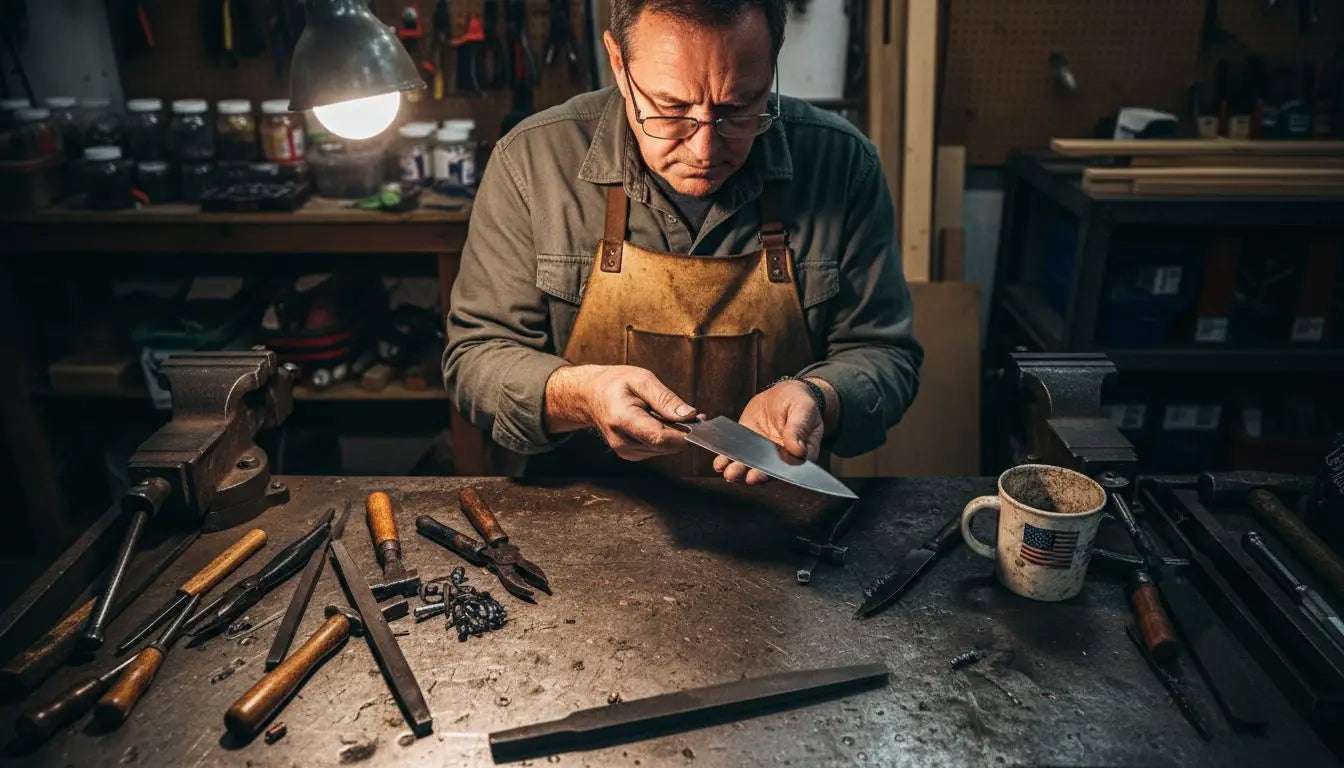
Blade materials represent the fundamental building block of knife quality, with options ranging from traditional carbon steel to advanced stainless steel and exotic materials like ceramic and obsidian. Each material offers unique characteristics of hardness, edge retention, and corrosion resistance. Professional collectors meticulously evaluate blade composition, examining how heat treatment, forging techniques, and metallurgical processes contribute to a knife’s overall performance and aesthetic appeal.
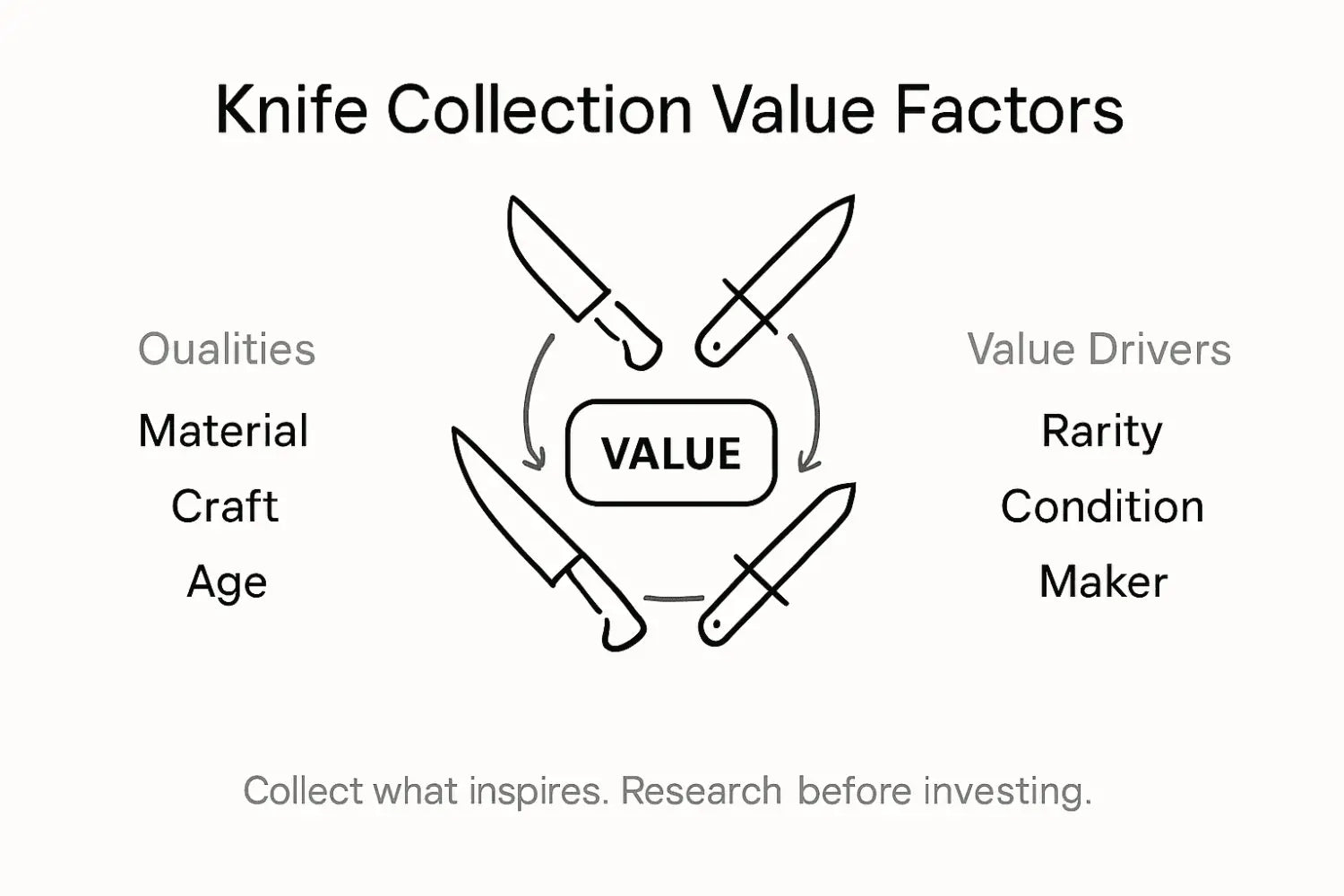
Collectors assess knife value through multiple critical parameters including age, condition, craftsmanship, and historical provenance. Rare knives often command significant interest when they demonstrate exceptional manufacturing techniques, feature unique materials like ivory or gold-inlaid handles, or represent pivotal moments in knife-making history. The most prized collections showcase not just individual pieces, but comprehensive narratives of technological evolution and cultural craftsmanship.
Pro Tip: Develop a discerning eye by studying multiple knife examples, understanding material properties, and learning from experienced collectors to distinguish truly exceptional pieces.
Investment Potential and Collectibility Factors
Knife collecting has transitioned from a niche hobby to a sophisticated investment avenue, with collectors carefully evaluating potential value beyond mere aesthetic appreciation. The complex landscape of knife investment requires a nuanced understanding of multiple critical factors that influence long-term collectibility and market performance.
Key investment considerations include rarity, maker reputation, historical significance, and preservation condition. Professional collectors meticulously document each piece’s provenance, understanding that authenticated knives with clear historical narratives command significantly higher market values. Vintage knives from renowned craftsmen, limited edition pieces, and those representing technological milestones or cultural moments become particularly attractive to serious investors and collectors.
The collectible knife market demonstrates substantial growth potential, with rare and historically important knives consistently fetching impressive prices at specialized auctions. Market dynamics are influenced not just by objective attributes like material quality and craftsmanship, but also by collector passion, cultural trends, and the broader narrative surrounding specific knife types or manufacturing traditions. Successful knife investors develop deep expertise, network within collector communities, and maintain meticulous documentation to maximize their collection’s potential value.
Pro Tip: Build your knife collection strategically by focusing on well-documented pieces from respected makers, and always preserve original packaging and authentication materials to enhance future investment potential.
This table summarizes key factors influencing collectible knife value:
| Factor | Impact on Value | Example Details |
|---|---|---|
| Rarity | Drives auction demand | Limited editions, rare models |
| Maker Reputation | Ensures premium pricing | Renowned craftsman, signatures |
| Historical Significance | Adds narrative importance | First production run, war-era |
| Condition & Documentation | Validates authenticity and worth | Original packaging, certificates |
Legal Guidelines and Safe Storage Practices
Knife legislation represents a complex landscape of regulations that vary significantly across different jurisdictions, requiring collectors to navigate a nuanced legal environment with careful attention to local and state-specific requirements. Understanding these legal intricacies is crucial for responsible knife collection, as regulations can differ dramatically based on blade length, design, intended use, and geographic location.
Most jurisdictions impose specific restrictions on knife ownership, particularly concerning blade characteristics such as length, locking mechanisms, and potential concealment. Certain knife types like switchblades, butterfly knives, and automatic opening knives frequently face more stringent legal constraints, with some regions completely prohibiting their possession. Collectors must remain vigilant about local statutes, recognizing that legal parameters can change between states, municipalities, and even specific locations like schools, government buildings, and public spaces.
Effective collections management requires implementing robust storage protocols that ensure both preservation and safety. Professional collectors invest in secure storage solutions that protect knives from environmental damage while preventing unauthorized access. This involves using climate-controlled display cases, implementing strict documentation practices, and establishing clear handling protocols that minimize potential risks. Proper storage not only preserves the physical integrity of collectible knives but also demonstrates responsible stewardship of potentially valuable historical artifacts.
Pro Tip: Consult local law enforcement or a legal professional specializing in weapon regulations to obtain precise, up-to-date information about knife ownership laws in your specific jurisdiction.
Elevate Your Knife Collection with Artisan Damascus Steel from Faneema Cutlery
Building a meaningful knife collection means focusing on craftsmanship, rarity, and historical significance as the article highlights. Whether your passion lies in understanding metallurgy, appreciating cultural forging traditions, or investing in collector-quality blades, finding knives that combine superior materials and artisan skill is essential. At Faneema Cutlery, our premium Damascus steel knives deliver the sharpness, durability, and aesthetic appeal collectors and culinary professionals seek.
Discover curated collections of handcrafted chef knives, utility knives, and specialty blades that embody the artistry and precision discussed in the article. Each piece represents a fusion of heritage and innovation designed to enrich both your collection and culinary experience. Take advantage of our expertly forged knives today and bring true craftsmanship to your knife collection.

Start your journey to owning timeless knives through Faneema Cutlery’s exclusive collections. Explore the beauty of Damascus steel and invest in exceptional pieces that reflect your passion for quality and value. Visit Faneema Cutlery now to enhance your knife collection with precision-forged excellence.
Frequently Asked Questions
What are the common types of knife collections?
Knife collections can vary widely, with popular types including military knives, vintage kitchen implements, regional forging traditions, and Damascus steel pieces. Each type highlights different aspects of craftsmanship and historical significance.
How do materials influence the value of a knife collection?
Blade materials significantly impact the value of a knife collection, with factors like hardness, edge retention, and corrosion resistance influencing both performance and aesthetic appeal. Rare materials or unique compositions can increase a knife’s desirability.
What key factors should I consider when investing in knives?
Key factors to consider when investing in knives include rarity, maker reputation, historical significance, and the condition of the knife. Authentic documentation and provenance can also significantly enhance a knife’s market value.
How can I properly store my knife collection?
Proper storage of a knife collection involves implementing secure storage solutions that protect knives from environmental damage and unauthorized access, such as climate-controlled display cases and strict documentation procedures.
Recommended
- Choosing a selection results in a full page refresh.