

Why Kitchen Knife Sharpness Really Matters
Every American chef knows the difference between slicing effortlessly through ripe tomatoes and struggling with slipping, squished cuts. That gap in performance is all about knife sharpness, which is shaped by the blade’s angle and steel quality—not just luck or routine sharpening. For serious cooks, a truly sharp edge means greater control, cleaner results, and safer kitchen work. Discover how premium Damascus steel knives provide the precise, long-lasting sharpness that sets expert cooking apart from the everyday.
Table of Contents
- Defining Kitchen Knife Sharpness And Misconceptions
- Types Of Knives And Edge Characteristics
- How Sharpness Impacts Safety And Control
- Effects On Food Quality And Cooking Efficiency
- Common Sharpness Pitfalls To Avoid
- Maintaining Superior Blade Edges Effectively
Key Takeaways
| Point | Details |
|---|---|
| Understanding Knife Sharpness | A sharp knife is characterized by a fine edge angle, crucial for effective cutting without damaging the ingredient. Regular honing maintains this sharp edge, while sharpening renews it when dull. |
| Safety and Control | Sharp knives are safer as they require less pressure to cut, reducing the risk of slipping and causing injury. Professional chefs maintain sharp knives to improve control and prevent accidents. |
| Choosing the Right Knife | Different knife types, such as chef’s, bread, and paring knives, serve distinct purposes and vary in edge characteristics. Selecting the appropriate knife for your cooking style enhances performance and efficiency. |
| Maintenance is Key | Consistent knife maintenance, including regular honing and proper cleaning, preserves sharpness and blade integrity. Neglecting maintenance can lead to dulled blades and potential safety hazards. |
Defining Kitchen Knife Sharpness and Misconceptions
If you’ve spent time around professional kitchens or watched experienced chefs work, you’ve probably noticed something striking: the best cooks handle their knives with a confidence that seems almost effortless. That confidence comes from one simple fact: they know exactly what a sharp knife is, and they understand why it matters. Knife sharpness isn’t some vague quality you either have or don’t have. It’s a measurable, technical characteristic determined by the angle and geometry of your blade’s edge combined with the steel’s composition. When a blade is truly sharp, the metal edge tapers to an extremely fine point, typically maintained at around 20 degrees on each side for most kitchen knives. This narrow angle creates that almost-invisible cutting edge that glides through a tomato skin without crushing the flesh underneath or separates herbs into gossamer-thin ribbons. The difference between a truly sharp knife and a dull one isn’t subtle. A sharp blade cuts cleanly and efficiently. A dull blade requires significantly more downward pressure, and that’s where problems start.
Here’s where many home cooks get confused, and this confusion costs them both safety and performance. The most common misconception is treating honing and sharpening as the same thing. They’re not. Not even close. Honing realigns the microscopic teeth along your blade’s edge that get bent or displaced during regular cutting. It’s quick maintenance, usually done with a honing steel, and it restores your knife’s performance without removing any metal. Sharpening, by contrast, actually grinds away steel to create a brand new edge. When your knife has truly dulled beyond what honing can fix, you need sharpening. This distinction matters because using a honing steel won’t help a truly dull blade. You’ll keep running it across the steel, expecting improvement that never comes, and your knife stays ineffective. Understanding proper sharpening techniques and maintenance prevents this frustration and keeps your blades performing as they should. Another major misconception involves safety. Many home cooks think dull knives are “safer” because they seem less dangerous. This is backwards and potentially harmful. Sharp knives are actually safer because they require less pressure to cut, which means less likelihood of slipping and causing injury. A dull knife forces you to press harder, apply more force, and that’s exactly when accidents happen. Your hand slips, the blade veers unexpectedly, and suddenly you’re dealing with a serious cut. Professional chefs maintain razor-sharp knives precisely because dull blades create more workplace injuries, not fewer.
The steel composition in premium handcrafted Damascus blades adds another layer to sharpness that mass-produced knives often miss. Damascus steel’s layered structure and the careful forging process create a blade that not only achieves exceptional sharpness but maintains it longer than conventional stainless steel. The edge holds its keenness through extended use because the metal structure supports that fine cutting point more effectively. This is why professional chefs and serious home cooks invest in quality blades. Your knife’s sharpness isn’t just about today’s performance. It’s about how long that performance lasts and how consistently your blade responds to maintenance. When you understand these fundamentals, sharpness transforms from an abstract quality into something concrete and controllable. You stop chasing mysterious problems and start making informed decisions about your cutting tools.
Pro tip: Test your knife’s actual sharpness by attempting to cleanly slice a sheet of paper held vertically, or by cutting through a ripe tomato skin without pressure. If either feels difficult, your blade needs honing or sharpening, not replacement.
Types of Knives and Edge Characteristics
Not every knife in your kitchen drawer performs the same job, and understanding why matters more than most home cooks realize. A chef’s knife isn’t interchangeable with a bread knife, and neither of those belongs near a delicate herb or fragile fish fillet. Each knife type exists because different cutting tasks demand different blade geometries, edge angles, and steel characteristics. Chef’s knives represent the workhorse of professional kitchens and serious home cooking. Usually around eight inches long with a broad, slightly curved blade, they excel at slicing, dicing, and chopping. The edge angle typically hovers around 20 degrees, striking a balance between sharpness and durability. This moderate angle allows the blade to maintain a keen edge through extended use while staying robust enough to handle the repetitive impacts of daily cutting. When you compare this to a bread knife with its serrated edge and 15 to 20 degree angle, you immediately see why one cuts vegetables cleanly while the other tears through crusty exteriors without crushing the soft interior. The serrations create multiple small cutting points that saw through bread rather than slice it, an entirely different mechanical action. Then there’s the paring knife, typically three to four inches long with a sharper edge angle around 15 degrees. This smaller, more precise tool handles detailed work like deveining shrimp, peeling vegetables, or trimming fat from meat. The acute angle supports that precision even though it means the edge requires more frequent maintenance. Understanding how to choose quality knives for your kitchen helps you select the right tool for your cooking style and needs.
Blade material and construction method profoundly influence how sharp a knife gets and how long it stays that way. Carbon steel achieves exceptional sharpness because the metal takes and holds a finer edge than stainless alternatives. Carbon steel also responds brilliantly to honing and sharpening. The tradeoff is maintenance: carbon steel oxidizes and requires careful cleaning and storage to prevent rust and discoloration. Stainless steel offers lower maintenance and corrosion resistance but typically doesn’t achieve quite the same razor-sharp edge as carbon steel, and it doesn’t hold that edge quite as long. This is where Damascus steel enters the picture as a middle ground that leans toward excellence. The layered construction of Damascus blades, achieved through careful forging and folding of different steel types, creates a material that achieves outstanding sharpness while maintaining better edge retention than conventional stainless steel. The decorative patterns visible on Damascus blades aren’t just aesthetic; they reveal the careful metallurgical work that makes these knives perform at such high levels. Beyond material choice, the construction method matters. Forged blades are hammered into shape during creation, which aligns the steel’s grain structure and creates stronger, more durable knives that hold edges longer. Stamped blades are punched from sheets of steel, making them lighter and less expensive but typically less durable. For the discerning home chef or professional cook, the characteristics of specialized cutting tools directly impact your ability to execute precise cuts consistently.
When edge angle decreases, sharpness increases but durability decreases. It’s a fundamental tradeoff in blade design. A surgical blade might maintain a 10 to 15 degree angle, making it extraordinarily sharp but fragile. Kitchen knives typically live in the 15 to 25 degree range because that window balances the sharpness you need for clean cuts with the durability required for real cooking. A delicate fillet knife might sport an 15 degree angle for precision work with fish, while a chef’s knife stays at 20 degrees for all around versatility. Japanese knives often feature tighter angles around 15 degrees because Japanese steel traditionally holds finer edges longer than Western steels. Western knives frequently use 20 degree angles as a practical compromise. These angles matter because they determine how your knife interacts with food. A sharper angle cuts vegetables with less crushing. A less sharp angle resists chipping when you accidentally strike a bone or hard surface. The best knife for your kitchen matches the angle to your primary cutting tasks and cooking style. Professionals choose based on what they cook most often. A butcher needs different edge characteristics than a vegetarian chef. A sushi master requires razor precision. A home cook preparing dinner three nights a week needs something forgiving yet sharp. Quality handcrafted Damascus steel knives adapt beautifully across these demands, offering the fine edge precision of specialized tools while maintaining the durability you need for everyday real world cooking.
Pro tip: Match your knife selection to your cooking style by considering what you prepare most frequently, then invest in two to three quality knives rather than an entire set of mediocre ones. A great chef’s knife, paring knife, and bread knife will outperform ten cheap knives sitting in a block.
Below is a summary of knife blade materials and their influence on edge performance:
| Blade Material | Sharpness Potential | Edge Retention | Required Maintenance |
|---|---|---|---|
| Carbon Steel | Very high | Short–moderate | Needs careful cleaning |
| Stainless Steel | Moderate | Moderate | Easy to maintain, resists rust |
| Damascus Steel | High | Long-lasting | Regular care preserves layers |
Here’s a quick comparison of common kitchen knife types and their key edge characteristics:
| Knife Type | Typical Edge Angle | Primary Purpose | Edge Durability |
|---|---|---|---|
| Chef’s Knife | ~20 degrees | Slicing, chopping | High for daily use |
| Bread Knife | 15–20 degrees | Cutting bread, pastries | Serrated, holds edge well |
| Paring Knife | ~15 degrees | Detail work, peeling | Needs more frequent honing |
| Fillet Knife | ~15 degrees | Filleting fish | Fragile, suited for precision |
How Sharpness Impacts Safety and Control
Here’s something that might surprise you: the most dangerous knife in your kitchen is the dull one. Not the sharp one. Professional chefs understand this deeply, and it’s why they prioritize blade maintenance with almost obsessive attention. When you pick up a dull knife, you’re essentially forcing yourself to use more pressure to cut through food. That extra pressure is where accidents happen. Your hand grips the handle tighter. Your arm muscles tense. You press down harder, and suddenly the blade slips off a vegetable and heads toward your fingers. A sharp knife, by contrast, glides through food with minimal pressure. Your hand stays relaxed. Your control improves dramatically. The blade does the work instead of your muscles fighting against resistance. Sharp knives reduce injury risk by requiring less force because they cut cleanly and predictably, without the unpredictable slipping that characterizes dull blades. This is physics, not opinion. When you reduce the force needed, you reduce the potential energy behind any accidental slip. A sharp blade gliding off a tomato at low pressure causes a minor scrape. A dull blade fighting through that same tomato at high pressure can cause serious lacerations.
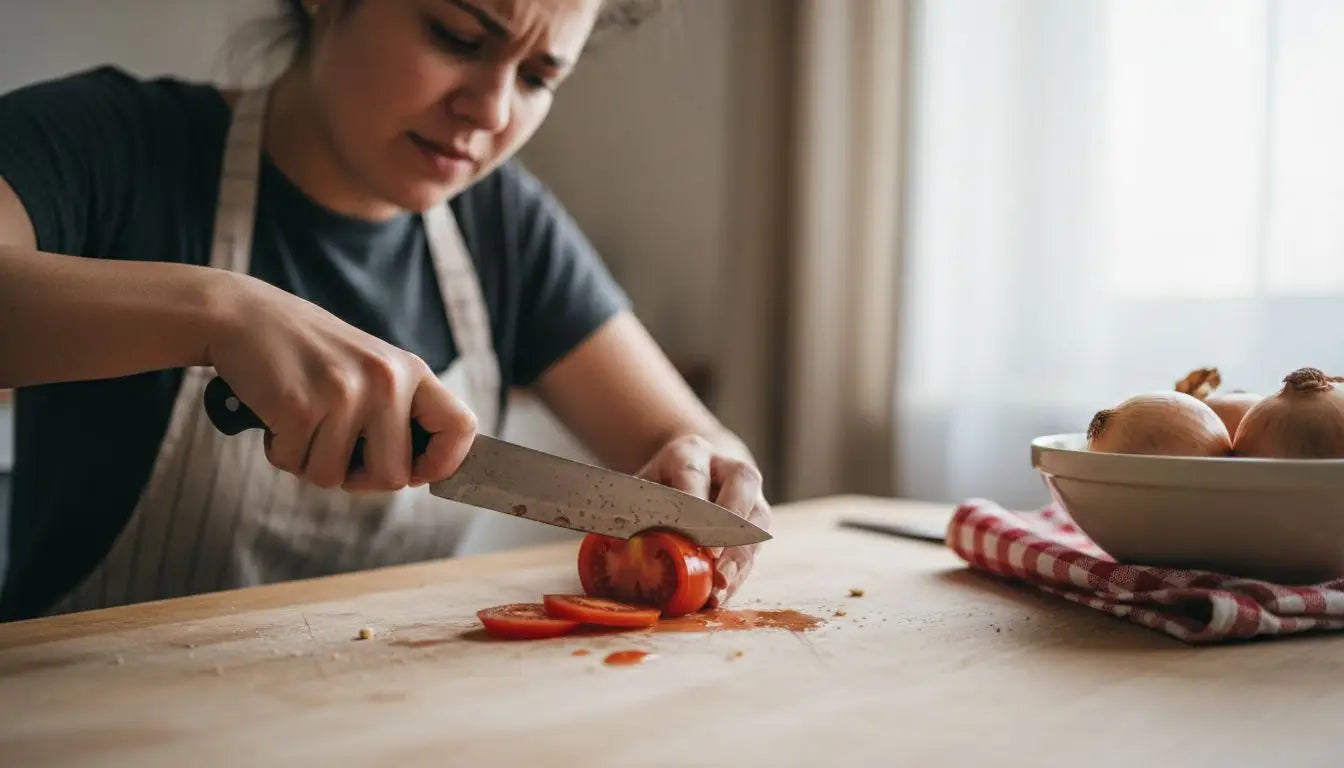
Control is where sharpness really shows its value in the kitchen. Think about the last time you used a truly sharp knife. The blade responded exactly as you expected. You could make precise, clean cuts with minimal effort. Now remember using a dull knife. You had to saw at vegetables. You had to apply downward pressure. The blade wandered. You couldn’t make clean, consistent cuts no matter how carefully you positioned your hands. That loss of control compounds your injury risk. When you can’t control your blade, you can’t predict where it goes if something goes wrong. Professional chefs develop their skills around sharp knives because a sharp blade follows your intentions reliably. You can execute fine julienne cuts. You can slice tomatoes paper thin without crushing them. You can trim delicate fish fillets with surgical precision. All of that control vanishes with a dull blade. Professional sharpening techniques enhance precision and safety during cutting tasks, which is why serious cooks never accept mediocre edges. They understand that maintaining a properly sharpened blade isn’t optional maintenance. It’s a fundamental safety practice.
The relationship between sharpness and safety extends to preventing accidental damage to the blade itself. A dull knife tempts you to use it in ways you shouldn’t. You start using it to pry open something. You tap it against a hard surface to break apart frozen food. You use downward chopping motions with excessive force. All of these improper uses damage the blade further, chipping the edge or bending the spine. A sharp knife doesn’t tempt you toward these dangerous practices because it works so efficiently that you don’t need shortcuts. You cut properly because the knife cuts properly. This creates a virtuous cycle where sharp knives encourage safe handling, which preserves the blade, which keeps the knife sharp. Dull knives create the opposite cycle. You get frustrated. You use the knife improperly. The blade gets damaged further. The knife becomes more dangerous. Premium handcrafted Damascus steel knives respond particularly well to this cycle because the layered steel construction and careful forging create blades that maintain their edges longer with proper care. That edge retention means your investment in a quality knife directly translates to consistent safety over months and years of use. When you understand the actual mechanics of kitchen accidents, sharpness stops being a convenience feature and becomes a safety requirement that separates careful cooks from careless ones. Understanding how to maintain key sharpness factors helps you keep your blades performing safely and predictably throughout their working life.
Pro tip: Never push harder when a knife isn’t cutting well. Instead, stop immediately and sharpen or hone the blade. This single habit, adopted by professional chefs everywhere, will reduce your kitchen injuries more than any other practice.
Effects on Food Quality and Cooking Efficiency
Watch a professional chef work and you’ll notice something immediately: every cut looks intentional. The vegetables are sliced uniformly. The herbs are minced to consistent sizes. The fish is portioned with precision. None of this happens by accident. It happens because sharp knives make precise cuts possible, and those precise cuts directly impact everything that follows in the cooking process. When you use a sharp knife, you create clean, smooth incisions through food. The cell walls stay intact. The juices remain inside the ingredient. The texture stays firm and appealing. Compare that to a dull knife, which crushes and tears rather than cuts. When you press a dull blade through a tomato, you’re not slicing it. You’re bruising it. The cell walls rupture. The juices leak out. The texture becomes mushy. That damaged tomato doesn’t taste the same, doesn’t look the same on the plate, and won’t cook the same way. Sharp knives enable precise cutting that preserves food texture and appearance, which directly correlates with better cooking outcomes. Professional kitchens understand this connection viscerally because their reputation depends on the final dish’s presentation and taste. A Michelin-starred restaurant doesn’t serve bruised vegetables. They serve perfectly cut ingredients that taste and look exceptional.
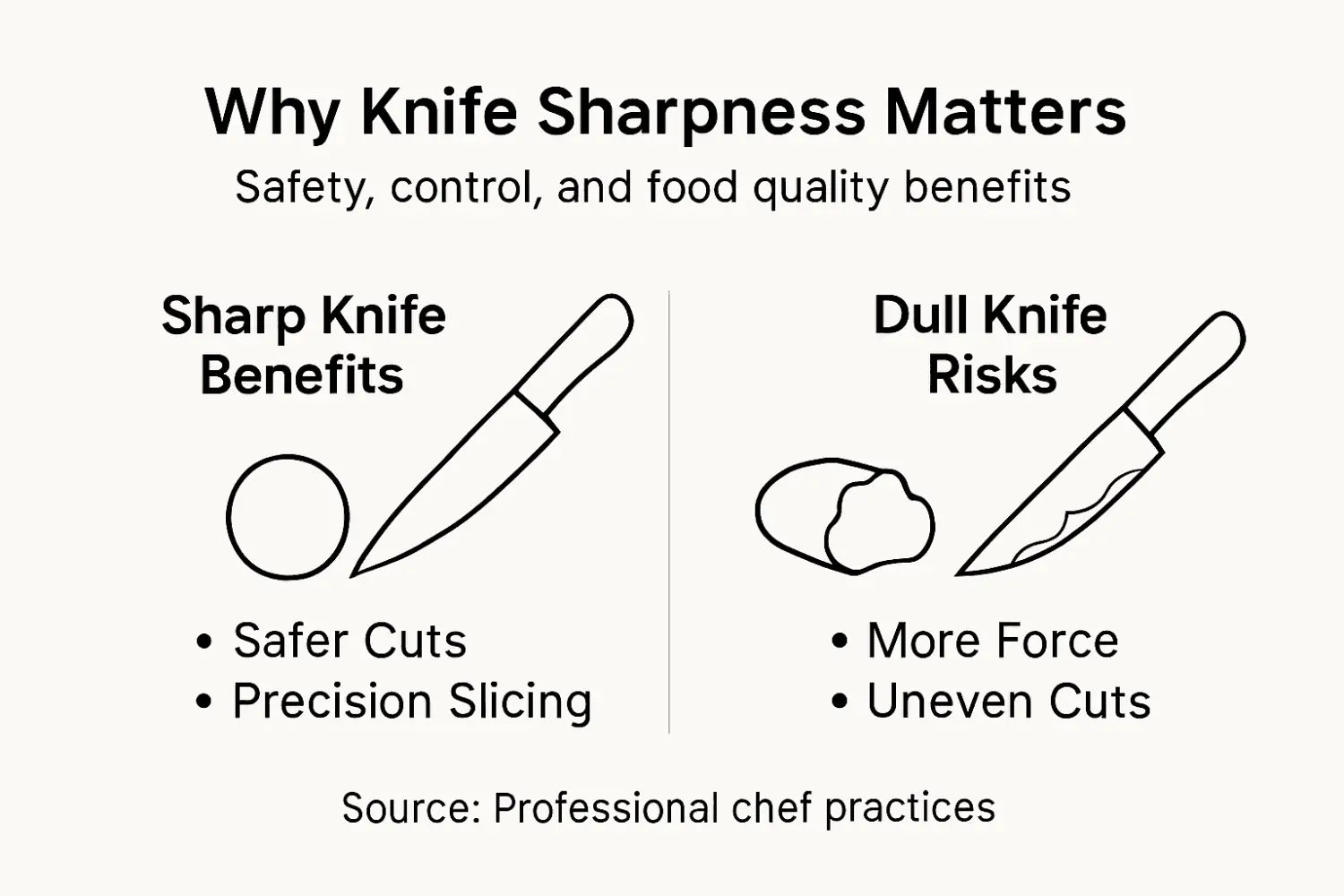
The cooking science behind this is straightforward but often overlooked by home cooks. When food pieces are cut uniformly, they cook uniformly. A bowl of vegetables where some pieces are twice the size of others won’t cook evenly. The smaller pieces turn to mush while the larger pieces remain underdone. Your whole dish suffers. But when you use a sharp knife and cut everything to consistent sizes, everything hits the plate cooked perfectly. Additionally, uniformly cut ingredients cook faster because of their consistent size and the clean cuts that allow heat to penetrate efficiently. A professionally diced onion cooks in half the time of haphazardly chopped onion because the pieces are smaller and more uniform. That efficiency compounds across your entire cooking process. You spend less time waiting for ingredients to soften. You achieve better flavor development because ingredients cook for the right duration. Your meal comes together faster. These aren’t minor advantages. In professional kitchens where speed matters, the difference between sharp and dull knives directly impacts how many covers a kitchen can service. Sharp knives reduce fatigue and increase cooking efficiency by requiring less effort and enabling faster preparation. That efficiency advantage applies equally to home cooks. When you’re not fighting a dull blade, cooking becomes faster, easier, and less exhausting.
There’s also a presentation dimension that serious cooks never underestimate. Food photography has made us all more aware of how important visual appeal is. A perfectly julienned carrot looks like the work of a trained chef. Haphazardly chopped carrot looks like you were in a hurry. A clean slice of fish showcases the ingredient’s quality and the cook’s skill. A mangled fish fillet suggests carelessness. Even if the flavors are identical, the presentation shapes how people perceive and enjoy the dish. Sharp knives make beautiful cuts possible. Dull knives make beautiful cuts impossible. When you’re cooking for family, friends, or clients, every detail matters. The quality of your cuts matters. The quality of your knife matters. Premium handcrafted Damascus steel knives deliver sharp edges that make professional quality cuts accessible to home chefs who care about the complete cooking experience. The decorative patterns on Damascus blades become more visible when the knife cuts cleanly, and the visual appeal of your finished dishes reflects the quality of your tools. You’re not just cooking food. You’re creating an experience, and that experience starts with how precisely and cleanly you cut your ingredients.
Pro tip: Before you start cooking, cut one small piece of vegetable with your knife as a sharpness test. If it cuts cleanly without crushing, you’re ready to cook. If it tears or crushes, take two minutes to hone your blade before you begin. This single check ensures every cut you make during cooking preserves food quality.
Common Sharpness Pitfalls to Avoid
Most home cooks don’t set out to ruin their knives. But through a combination of habit, impatience, and misunderstanding, they gradually damage their blades until even a quality knife performs like a bargain store knockoff. The good news is that these pitfalls are entirely avoidable once you know what to look for. The first major mistake involves confusing maintenance with sharpening. You’ve learned by now that honing realigns your edge while sharpening grinds away metal to create a new edge. Many home cooks buy a honing steel, use it once a week, and wonder why their knife never gets sharper. They’re doing exactly what a honing steel is designed to do, but they’re expecting it to do something it can’t. A honing steel will keep a sharp knife sharp. It won’t rescue a dull knife. This confusion costs people money and frustration because they neglect actual sharpening while religiously honing a blade that needs grinding to restore its edge. Then they blame the knife instead of understanding the maintenance difference. Learning to distinguish honing from sharpening maintenance prevents this frustration and keeps your blades performing as intended. Stop thinking of them as the same category of maintenance. They’re complementary practices that serve completely different purposes.
The second major pitfall involves using your knife as a general kitchen tool instead of a cutting instrument. You see this constantly in home kitchens. Someone uses their chef’s knife to pry open a paint can. Another person uses it to scrape stuck food off a pan. Someone else uses it to hack through frozen food with brute force. Each of these practices damages the blade in specific ways. Prying bends the spine and can chip the edge. Scraping dulls the edge dramatically and can cause micro fractures. Hacking with excessive force chips the blade and can crack the spine. Improper knife uses including prying and hammering damage blade integrity and make your knife unreliable and potentially dangerous. A quality knife is a precision instrument, not a multipurpose tool. Treat it that way and it will serve you for decades. Treat it like a utility knife and you’ll destroy it within months. Professional chefs are obsessive about this precisely because they understand the cost of careless handling. They use their knives only for cutting. They use other tools for everything else. Your expensive handcrafted Damascus steel knife deserves the same respect.
A third pitfall involves improper sharpening technique. If you take your knife to someone who uses the wrong sharpening angle or applies excessive heat, they can actually make your blade worse. Overheating during sharpening can draw the temper from the steel, making it brittle and prone to chipping. Using the wrong angle creates an edge that’s either too acute and fragile or too obtuse and ineffective. Skipping intermediate grits and jumping straight from coarse to fine stones leaves your edge rough and unrefined. Not cleaning and drying your blade after sharpening invites rust, which degrades both the edge and the blade’s appearance. These aren’t minor technical details. They’re the difference between professional quality sharpening and damage disguised as maintenance. This is why investing in quality Damascus steel knives makes sense. Premium blades deserve premium sharpening, whether you do it yourself with proper technique or you take your knife to someone who understands what they’re doing. A damaged blade is a tragedy waiting to happen. A properly sharpened blade is a joy to use.
The final pitfall is neglecting maintenance altogether. You buy a quality knife and then stop thinking about it. You use it regularly but never hone it. You never sharpen it. You leave it wet in the sink. You throw it in a drawer where it bangs against other utensils. Over months, that beautiful sharp blade becomes a dull, damaged tool that you resent using. At that point, many people blame the knife instead of understanding that they destroyed it through negligence. Consistent maintenance takes minutes a week. A quick hone before cooking. A proper wash and dry immediately after use. Occasional sharpening when you notice the blade isn’t responding the way it should. These simple habits preserve your blade and keep it performing beautifully for years. Your knife doesn’t ask for much. It just asks for basic care. Give it that care and it becomes an extension of your hand, trustworthy and reliable. Neglect it and you waste money on a tool you won’t enjoy using.
Pro tip: Create a simple maintenance calendar: hone your knife before cooking sessions, sharpen it quarterly if you cook frequently or semi-annually if you cook occasionally, and immediately wash and dry it after every use. This rhythm keeps your blade sharp and prevents the gradual damage that turns quality knives into disappointing tools.
Maintaining Superior Blade Edges Effectively
Once you understand why sharpness matters, the next step is learning how to preserve it. Maintaining a superior blade edge isn’t complicated, but it does require consistency and understanding the difference between the various maintenance techniques available. Think of blade maintenance as a three-tier system. At the top, you have daily care: washing and drying your knife immediately after use, storing it properly so the edge doesn’t bang against other utensils. In the middle, you have honing, which you perform weekly or before important cooking sessions. At the bottom, you have sharpening, which you do periodically when honing alone can no longer restore your blade’s performance. Each tier serves a specific purpose, and skipping any of them compromises your results. The reason professional kitchens maintain such exceptional blades isn’t magic. It’s discipline. They follow this three-tier system religiously because they understand that sharpness is a direct result of consistent maintenance, not luck or expensive equipment.
Honing deserves special attention because it’s where most home cooks can make the biggest immediate impact on their knife’s performance. When you hone your blade, you’re realigning the microscopic edge that’s been bent or displaced through normal cutting. Think of your blade’s edge like a fence that’s been pushed out of vertical alignment by wind. Honing straightens that fence back up without removing any material. A quick hone takes two minutes, and it can restore 80 percent of your blade’s cutting ability. The proper technique involves pulling the knife spine-first along the honing steel at approximately 15 to 20 degree angle, then flipping and repeating on the other side. Do this five to ten times per side and your edge is realigned and ready to work. Regular honing maintains edge alignment between sharpenings and keeps your knife performing consistently. The mistake most people make is honing incorrectly or not honing at all, then wondering why their knife doesn’t cut well. Your honing steel is one of the most valuable tools you own. Use it properly and frequently.
When honing can no longer restore your blade’s performance, you need sharpening. This is where things get more involved because sharpening actually removes metal to create a brand new edge. Professional sharpening involves a progression through increasingly fine abrasives, starting with coarse stones to establish the basic edge shape, then moving through medium and fine stones to polish and refine that edge to a razor-sharp finish. Effective sharpening uses multiple abrasive grits to build and polish the edge and requires proper angle maintenance, appropriate lubricants, and careful technique throughout the process. Most home cooks benefit from learning to sharpen their own knives because it gives them complete control over the process and deepens their understanding of their tools. However, if you’re nervous about technique, a professional sharpener is worth the investment, especially for premium knives like handcrafted Damascus steel blades. The key is finding someone who understands your knife’s steel type and sharpens at the appropriate angle. Improper sharpening causes more blade damage than careful honing ever could. Once you’ve sharpened correctly, you’re back to stage one: regular honing to maintain what you’ve created.
Storage and cleaning complete the maintenance picture. Your blade needs protection when not in use. Store it in a knife block, on a magnetic strip, or with blade guards. Never throw it loose in a drawer where the edge bangs against other metal utensils. Clean it immediately after use with warm soapy water and dry it completely before storing. Moisture causes rust and corrosion, especially on carbon steel and Damascus blades where the layered construction can trap water. Following a comprehensive knife maintenance checklist ensures you don’t overlook any essential care steps. Premium blades respond beautifully to consistent care. Your handcrafted Damascus steel knife, properly maintained, will perform better in year five than in year one as you refine your technique and deepen your understanding of how your specific blade responds to different foods and cutting styles. That’s the reward for consistent maintenance. You don’t just preserve sharpness. You develop a relationship with your tools that transforms cooking from a chore into a pleasure.
Pro tip: Establish a maintenance routine: hone before cooking, sharpen quarterly with proper technique or professionally, and immediately wash and dry after every use. This simple rhythm takes minutes per week but preserves your blade’s performance for years, making your investment in quality knives worthwhile.
Discover the Power of True Sharpness with Faneema Cutlery
Struggling with dull knives that compromise your safety and food quality? This article highlights the crucial difference between honing and sharpening and the importance of selecting the right blade geometry and steel type to achieve lasting sharpness and control in your kitchen. If you want to elevate your cooking experience and avoid common pitfalls of knife maintenance, exploring premium craftsmanship can make all the difference.

Unlock exceptional cutting precision with our curated collection of Damascus knives for precise cutting designed to maintain razor-sharp edges and unmatched durability. Whether you need a versatile chef’s knife or a specialized slicer, Faneema Cutlery offers handcrafted blades that transform your kitchen safety and efficiency. Visit Faneema Cutlery now to find your next investment in kitchen excellence and bring professional-grade sharpness home today.
Frequently Asked Questions
What is the difference between honing and sharpening a kitchen knife?
Honing realigns the microscopic teeth along your knife’s edge, maintaining its performance, while sharpening grinds away steel to create a new edge when the knife is truly dull.
Why are sharp knives considered safer than dull knives?
Sharp knives require less pressure to cut through food, which reduces the likelihood of slipping and causing injury. Dull knives force you to apply more force, increasing the risk of accidents.
How does the type of steel affect knife sharpness and maintenance?
Carbon steel can achieve a very sharp edge but requires more maintenance, while stainless steel is easier to care for but not as sharp. Damascus steel strikes a balance, offering excellent sharpness and durable edge retention.
What are some common mistakes that damage kitchen knives?
Common mistakes include using knives for improper tasks (like prying or scraping), neglecting regular maintenance like honing and sharpening, and not cleaning and drying them properly after use.
Recommended
- Choosing a selection results in a full page refresh.