

Why Knife Sharpness Matters for Culinary Excellence
Every chef knows the difference between a blade that glides through ingredients and one that crushes them. Sharpness is not just about effortless cutting, but directly influences food quality, safety, and efficiency in the kitchen. A properly sharpened knife demands less force and reduces the risk of slips or injuries, making everyday prep smoother and more precise. Discover why a well-maintained Damascus steel knife transforms both your culinary results and your confidence at the cutting board.
Table of Contents
- Defining Knife Sharpness and Common Myths
- How Sharp Knives Affect Food Quality
- Safety and Efficiency in the Kitchen
- Knife Maintenance: Techniques and Materials
- Choosing and Caring for Damascus Steel Blades
Key Takeaways
| Point | Details |
|---|---|
| Importance of Knife Sharpness | Knife sharpness is essential for efficient cutting, impacting food quality and safety significantly. |
| Myths About Sharp Knives | Contrary to popular belief, sharp knives are safer as they require less force, reducing injury risk. |
| Knife Maintenance | Regular sharpening with appropriate tools is necessary to preserve a knife’s performance and lifespan. |
| Caring for Damascus Steel | Damascus steel requires gentle cleaning and precise sharpening to maintain its unique characteristics and cutting ability. |
Defining Knife Sharpness and Common Myths
Knife sharpness represents far more than a simple cutting capability - it’s a precise intersection of engineering, material science, and culinary performance. Defining knife sharpness) fundamentally involves understanding how a blade’s microscopic edge interacts with different materials, creating clean, efficient cuts with minimal applied force.
At its core, knife sharpness depends on several critical factors: edge angle, edge width, and the intricate geometry of the cutting surface. A truly sharp knife requires an extremely fine, precisely ground edge that can penetrate materials smoothly without crushing or tearing. Professional chefs understand that sharpness isn’t just about how thin the edge is, but how consistently that edge can maintain its geometry during cutting tasks.
Many culinary professionals encounter persistent myths about knife sharpness that can compromise their technique and tool maintenance. One prevalent misconception is that a sharper knife is inherently more dangerous. In reality, knife safety research demonstrates that dull knives actually pose greater risks because they require more force to cut, increasing the likelihood of slipping and causing accidental injuries. A properly sharpened knife allows precise, controlled cutting with minimal effort.
Pro tip: Always test your knife’s sharpness by carefully slicing a piece of paper - a razor-sharp blade will cut smoothly and cleanly without catching or tearing.
How Sharp Knives Affect Food Quality
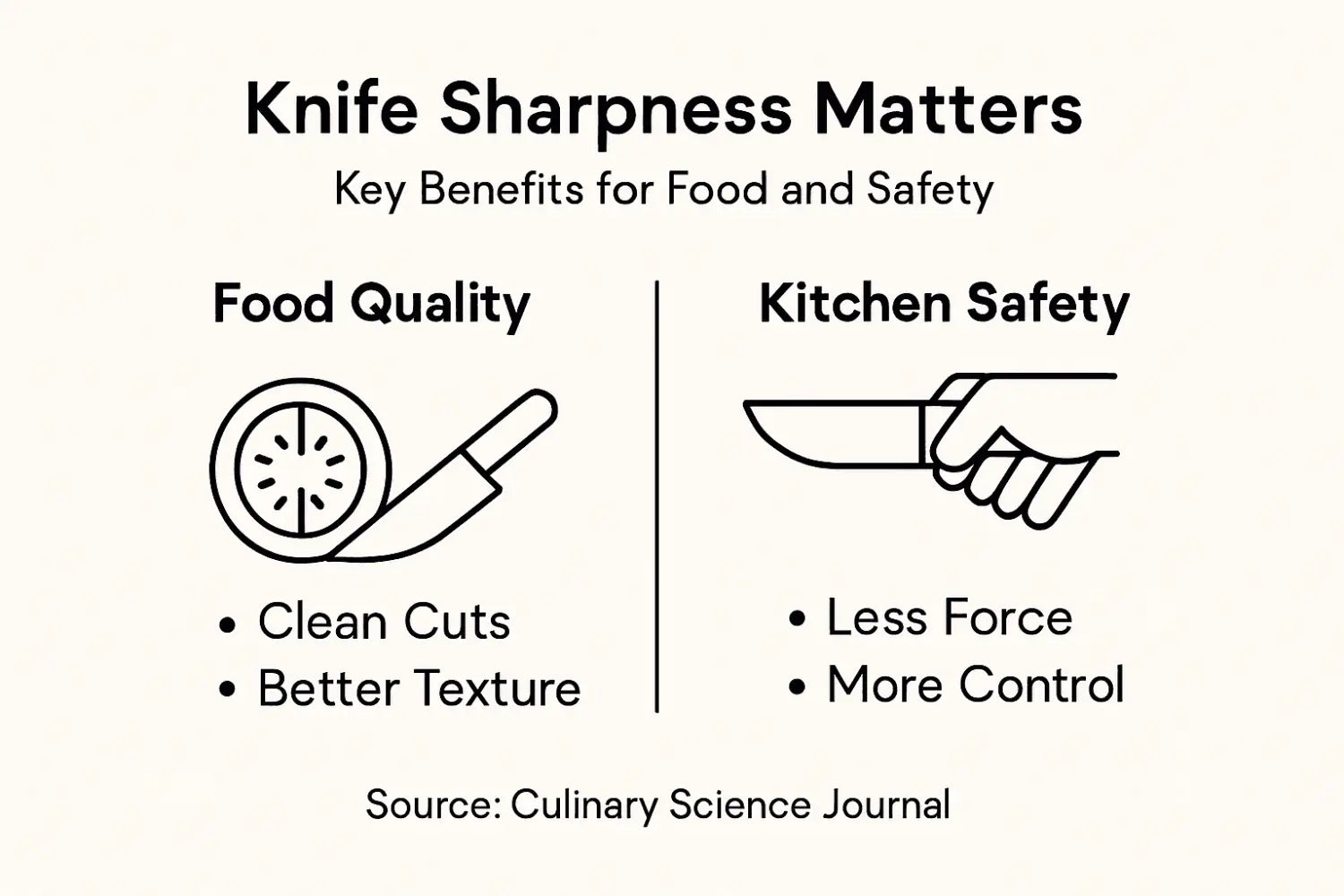
The relationship between knife sharpness and food quality is more profound than most home cooks realize. Knife sharpening fundamentally influences how ingredients are processed, directly impacting texture, flavor preservation, and overall culinary presentation. When a knife maintains a precise, fine edge, it enables chefs to make clean, deliberate cuts that minimize cellular damage to ingredients.
Precision cutting through sharp blades means less compression and destruction of food cells during preparation. This technical approach prevents unnecessary bruising and crushing of delicate ingredients, which can cause rapid oxidation and flavor degradation. Professional chefs understand that a dull knife essentially smashes through ingredients, while a sharp knife delicately separates cellular structures, maintaining the ingredient’s inherent structural integrity and sensory qualities.
Interestingly, scientific research demonstrates that sharp knives can even mitigate unexpected culinary challenges. For instance, when slicing onions, a razor-sharp blade can reduce the release of tear-inducing compounds by creating cleaner, more precise cuts that minimize cellular disruption. This microscopic precision translates into better ingredient handling across various culinary techniques, from delicate vegetable julienne to robust meat fabrication.
Pro tip: Regularly test your knife’s sharpness by attempting to slice a piece of paper - a truly sharp knife will cut smoothly without catching or tearing.
Safety and Efficiency in the Kitchen
Kitchen safety is a critical consideration for both professional chefs and home cooks, with sharp knives playing a crucial role in preventing accidents. Kitchen safety practices demonstrate that properly maintained knives significantly reduce the risk of injury by requiring less physical force and enabling more controlled cutting movements. A sharp knife allows precise control, minimizing the likelihood of unexpected slips that can lead to serious cuts.
Efficiency in the kitchen is directly linked to the quality and maintenance of cutting tools. Dull knives demand more pressure and unpredictable movements, which not only slow down food preparation but also increase the potential for dangerous accidents. Professional chefs understand that a well-sharpened knife moves through ingredients smoothly, reducing preparation time and maintaining consistent cuts that enhance overall cooking performance.
Beyond physical safety, knife sharpness plays a critical role in food safety standards. Clean, precise cuts help prevent cross-contamination by allowing faster, more controlled food handling. This approach minimizes the time ingredients spend in potential bacterial danger zones and supports more hygienic food preparation techniques. Sharp knives enable chefs to work more quickly and cleanly, reducing the window of potential bacterial exposure during meal preparation.
Here’s a side-by-side look at how sharpness impacts kitchen outcomes:
| Aspect | Sharp Knife Benefit | Dull Knife Risk |
|---|---|---|
| Safety | Clean, controlled cuts | Increased slipping risk |
| Food Quality | Preserves texture, flavor | Crushes, oxidizes food |
| Efficiency | Faster prep, less fatigue | Slows workflow |
| Hygiene | Reduces contamination risk | Prolongs exposure time |
Pro tip: Invest in a quality knife sharpening tool and maintain a consistent sharpening schedule to ensure optimal kitchen safety and efficiency.
Knife Maintenance: Techniques and Materials
Knife maintenance techniques represent a sophisticated blend of science and craftsmanship that goes far beyond simple blade care. Professional chefs and culinary enthusiasts understand that maintaining a knife’s edge requires precise knowledge of materials, sharpening methods, and preservation strategies. The goal is not just keeping a blade sharp, but preserving its structural integrity and performance across years of intensive use.
Sharpening involves multiple specialized techniques, with different approaches required for various blade types and materials. Whetstones, honing steels, and diamond plates each play unique roles in maintaining knife edges. Natural stones with varying grit levels allow progressively finer edge refinement, while synthetic alternatives offer consistent performance. Professional knife maintenance demands understanding how different abrasive materials interact with blade metallurgy, ensuring minimal metal removal while maximizing cutting performance.
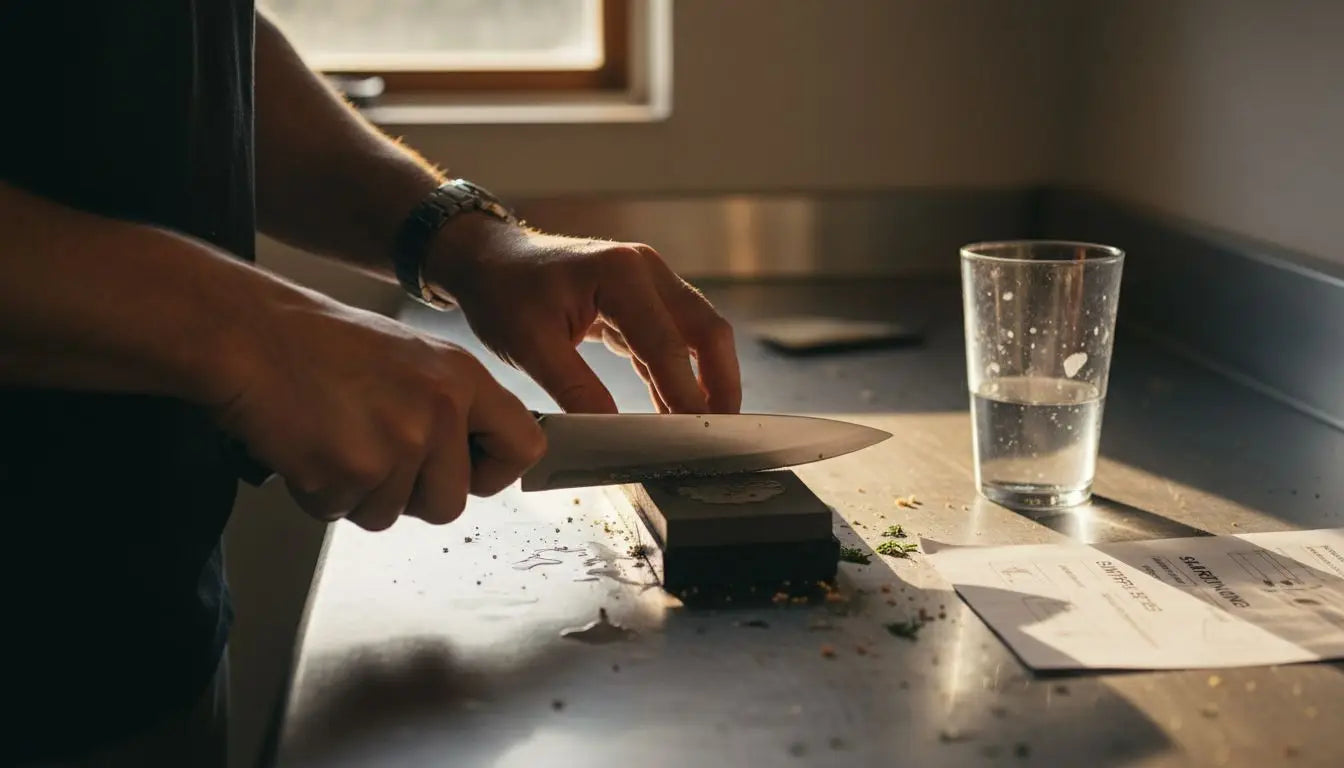
Knife sharpening processes involve intricate considerations of angle, pressure, and material compatibility. Experienced chefs know that sharpening isn’t just about removing material, but carefully realigning and polishing the microscopic edge. Techniques like stropping can provide final refinement, creating a razor-sharp edge that glides through ingredients with surgical precision. The right maintenance approach transforms a good knife into an exceptional culinary tool, extending its functional lifespan and performance.
Pro tip: Invest in a comprehensive knife maintenance kit with multiple grit levels and learn the specific sharpening angle for each of your kitchen knives.
Here’s a summary comparing sharpening tools for kitchen knives:
| Sharpening Tool | Typical Use | Pros | Cons |
|---|---|---|---|
| Whetstone | Manual sharpening | Extremely precise results | Requires skill, time intensive |
| Honing Steel | Edge realignment | Easy for quick touch-ups | Does not sharpen dull blades |
| Diamond Plate | Fast material removal | Effective on hard steels | Can wear down blade quickly |
| Electric Sharpener | Automated sharpening | Very convenient | Reduces blade lifespan over time |
Choosing and Caring for Damascus Steel Blades
Damascus steel origins represent a fascinating intersection of metallurgical artistry and functional engineering. Modern Damascus steel blades are crafted through intricate pattern-welding techniques, creating distinctive wavy patterns that are not just visually stunning but also functionally superior. These blades combine multiple steel types, resulting in exceptional strength, flexibility, and cutting performance that sets them apart from traditional knife materials.
Caring for Damascus steel requires a nuanced approach that balances aesthetic preservation with functional maintenance. The unique layered structure demands gentle cleaning techniques, avoiding harsh chemicals that could compromise the blade’s intricate surface pattern. Professional chefs understand that these knives need careful handling: immediate drying after washing, storage in dry environments, and protection from acidic or corrosive substances that could damage the blade’s complex metallurgical composition.
Knife maintenance strategies for Damascus steel focus on preserving both its functional integrity and visual beauty. Sharpening must be done with precision, using fine-grit stones that maintain the blade’s delicate edge geometry without compromising its layered structure. Each maintenance session is an opportunity to protect the knife’s unique characteristics, ensuring that the blade retains its exceptional cutting performance and distinctive aesthetic appeal through years of culinary use.
Pro tip: Always use a soft, dry cloth for cleaning and store your Damascus steel knife in a protective magnetic strip or wooden block to prevent edge damage and maintain its pristine condition.
Elevate Your Culinary Skills with Expertly Crafted Damascus Knives
Achieving the perfect cut starts with exceptional knife sharpness. As highlighted in “Why Knife Sharpness Matters for Culinary Excellence” clean and precise cuts preserve food texture while enhancing flavor and safety. If you are seeking to overcome the frustrations of dull blades and uneven chopping precision investing in expertly forged Damascus steel knives is essential. Experience the difference of knives designed to maintain a razor-sharp edge so you can cook with confidence and efficiency every time.
Discover our curated collection of premium Damascus knives crafted for sharpness and durability at Explore Damascus Knives for Precise Cutting - Our Bestsellers.

Transform your kitchen tools to match your culinary passion. Visit Faneema Cutlery now for high-quality kitchen knives including chef knives, utility knives, and specialty blades. Don’t let dull knives hold you back—shop our Quality Skinner Knife Collection and start creating dishes with precision and ease. Take action today to enjoy safer, cleaner, and faster food preparation.
Frequently Asked Questions
What factors determine knife sharpness?
Knife sharpness is influenced by edge angle, edge width, and the geometry of the cutting surface. A sharper knife requires a fine, precisely ground edge that can cut smoothly without tearing the material.
Why is a sharp knife safer than a dull knife?
Sharp knives are safer because they require less force to cut, allowing for more controlled cutting movements. Dull knives increase the risk of slipping and accidents due to the greater effort needed to cut through ingredients.
How does knife sharpness affect food quality?
Sharp knives preserve the texture and flavor of food by making clean cuts that minimize cellular damage. This approach prevents bruising and enhances the overall presentation of ingredients.
What maintenance techniques are essential for keeping knives sharp?
Maintenance techniques include using whetstones, honing steels, and diamond plates for sharpening. Regular testing of sharpness and using appropriate cleaning and storage methods are also crucial for ensuring optimal knife performance.
Recommended
- Choosing a selection results in a full page refresh.