

Role of Knife Maintenance – Why Sharpness Matters
A dull blade can turn food prep into frustration and risk for even the most skilled American chef. Knife maintenance is more than a chore, it is the foundation of culinary precision and safety. For those working with Damascus steel, protecting your investment means following proper maintenance routines that safeguard performance and extend longevity. Discover how expert techniques in cleaning, sharpening, and storage elevate both safety and craftsmanship.
Table of Contents
- Defining Knife Maintenance And Its Importance
- Types Of Maintenance For Different Knives
- Impact On Damascus Steel Performance And Longevity
- Proper Cleaning, Sharpening, And Storage Practices
- Risks Of Poor Knife Care And Common Mistakes
Key Takeaways
| Point | Details |
|---|---|
| Knife Maintenance is Essential | Proper knife maintenance preserves functionality and ensures safety for both professional chefs and culinary enthusiasts. |
| Different Knives Require Unique Care | Each knife type, such as kitchen, outdoor, and Damascus steel, demands specific maintenance strategies tailored to their characteristics. |
| Cleaning and Storage are Crucial | Hand washing and appropriate storage solutions significantly enhance blade performance and longevity. |
| Neglecting Maintenance Increases Risks | Poor knife care can lead to dull blades, which heightens the risk of accidents and reduces overall effectiveness. |
Defining Knife Maintenance and Its Importance
Knife maintenance is a critical practice for professional chefs and culinary enthusiasts that extends far beyond simple cleaning. Proper maintenance encompasses a comprehensive approach to preserving the functionality, performance, and longevity of high-quality kitchen cutlery. Knife maintenance involves precise care strategies that protect your investment and ensure consistent cutting performance.
At its core, knife maintenance includes several key components: regular cleaning, appropriate storage, careful handling, and strategic sharpening techniques. Professional chefs understand that a well-maintained knife is not just a tool but an extension of their culinary skill. This practice prevents blade degradation, maintains cutting precision, and reduces the risk of accidents caused by dull or improperly cared for blades.
The importance of knife maintenance cannot be overstated. Sharpening techniques preserve blade performance by restoring the blade’s edge and preventing microscopic damage that can compromise cutting effectiveness. A properly maintained knife ensures clean, precise cuts, enhances food preparation efficiency, and represents a commitment to professional-grade culinary craftsmanship. Consistent maintenance also protects the significant financial investment represented by high-quality Damascus steel knives.
Pro tip: Invest in a professional-grade knife maintenance kit with specialized cleaning cloths, honing steel, and appropriate storage solutions to extend your knife’s operational lifespan and maintain its peak performance.
Types of Maintenance for Different Knives
Knife maintenance is not a one-size-fits-all practice. Different types of knives demand specialized care approaches tailored to their specific design, material, and intended use. Maintenance strategies vary significantly across different knife categories, from delicate kitchen cutlery to robust outdoor survival tools.
In the culinary world, kitchen knives require meticulous maintenance focused on preserving their razor-sharp edge and preventing corrosion. Damascus steel kitchen knives, for instance, need gentle cleaning, careful drying, and strategic sharpening techniques that protect their intricate layered metal construction. Blade geometry and hardness impact maintenance requirements, with professional chefs understanding that each knife demands a unique care approach.
Outdoor and specialized knives present different maintenance challenges. Hunting knives and survival tools must withstand more extreme conditions, requiring more robust maintenance strategies. These knives often need protection against moisture, rust prevention treatments, and periodic deep cleaning to remove debris and potential corrosive elements. The maintenance process for these tools focuses more on durability and structural integrity than the delicate edge preservation required for precision kitchen cutlery.
Pro tip: Create a customized maintenance kit specific to each knife type, including specialized cleaning solutions, appropriate sharpening tools, and protective storage solutions tailored to the knife’s unique characteristics.
Here’s a comparison of kitchen, outdoor, and Damascus knives maintenance requirements:
| Knife Type | Key Maintenance Focus | Cleaning Method | Key Storage Advice |
|---|---|---|---|
| Kitchen | Edge sharpness, corrosion | Hand wash, dry quickly | Magnetic strip or knife block |
| Outdoor/Survival | Durability, rust prevention | Deep cleaning, oiling | Protective sheath, moisture-free bag |
| Damascus Steel | Pattern preservation, strength | Gentle wash, oil lightly | Climate-controlled case |
Impact on Damascus Steel Performance and Longevity
Damascus steel represents the pinnacle of metallurgical craftsmanship, with its distinctive layered structure demanding exceptional maintenance to preserve its legendary performance. Unique microstructure defines steel performance, making proper care not just a recommendation but a critical necessity for maintaining the knife’s extraordinary qualities.
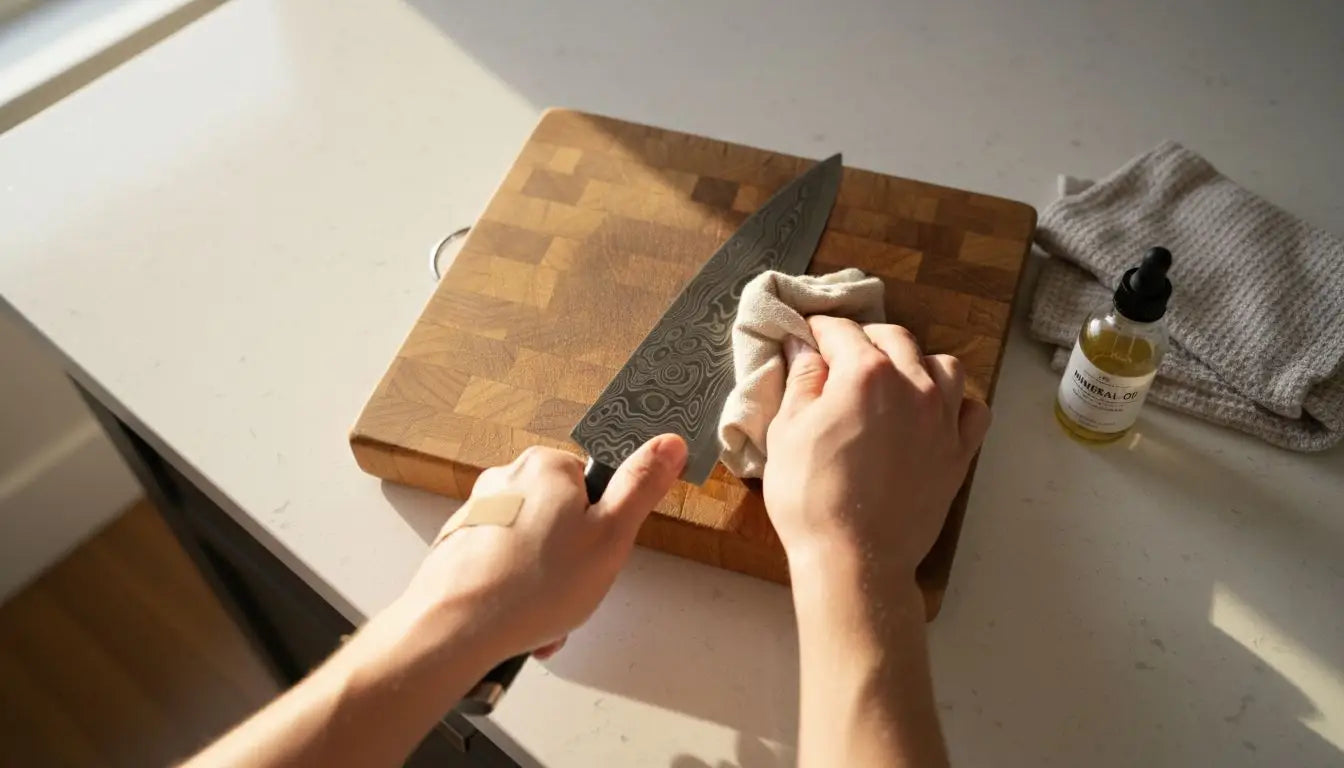
The microscopic composition of Damascus steel creates extraordinary strength and sharpness, but also introduces vulnerability to improper maintenance techniques. Professional chefs and knife enthusiasts must understand that each maintenance action directly impacts the blade’s structural integrity. Carbide banding requires precise preservation through careful cleaning, controlled sharpening, and strategic storage to prevent degradation of its intricate metallurgical patterns.
Moisture, temperature fluctuations, and inappropriate handling can rapidly compromise Damascus steel’s performance. The blade’s legendary sharpness depends on maintaining its delicate molecular structure, which means avoiding harsh chemicals, excessive heat during sharpening, and prolonged exposure to corrosive environments. Understanding these nuanced maintenance requirements transforms knife care from a routine task into a sophisticated preservation practice that honors the blade’s exceptional craftsmanship.
Pro tip: Invest in specialized Damascus steel maintenance tools and create a dedicated preservation environment with controlled humidity and temperature to maximize your knife’s performance and aesthetic appeal.
Proper Cleaning, Sharpening, and Storage Practices
Knife maintenance requires a methodical approach that balances precision with care, protecting both the blade’s performance and the user’s safety. Proper knife maintenance begins with cleaning techniques that preserve the blade’s integrity and prevent potential corrosion or damage. Professional chefs and culinary enthusiasts understand that each cleaning, sharpening, and storage action directly impacts a knife’s long-term functionality.
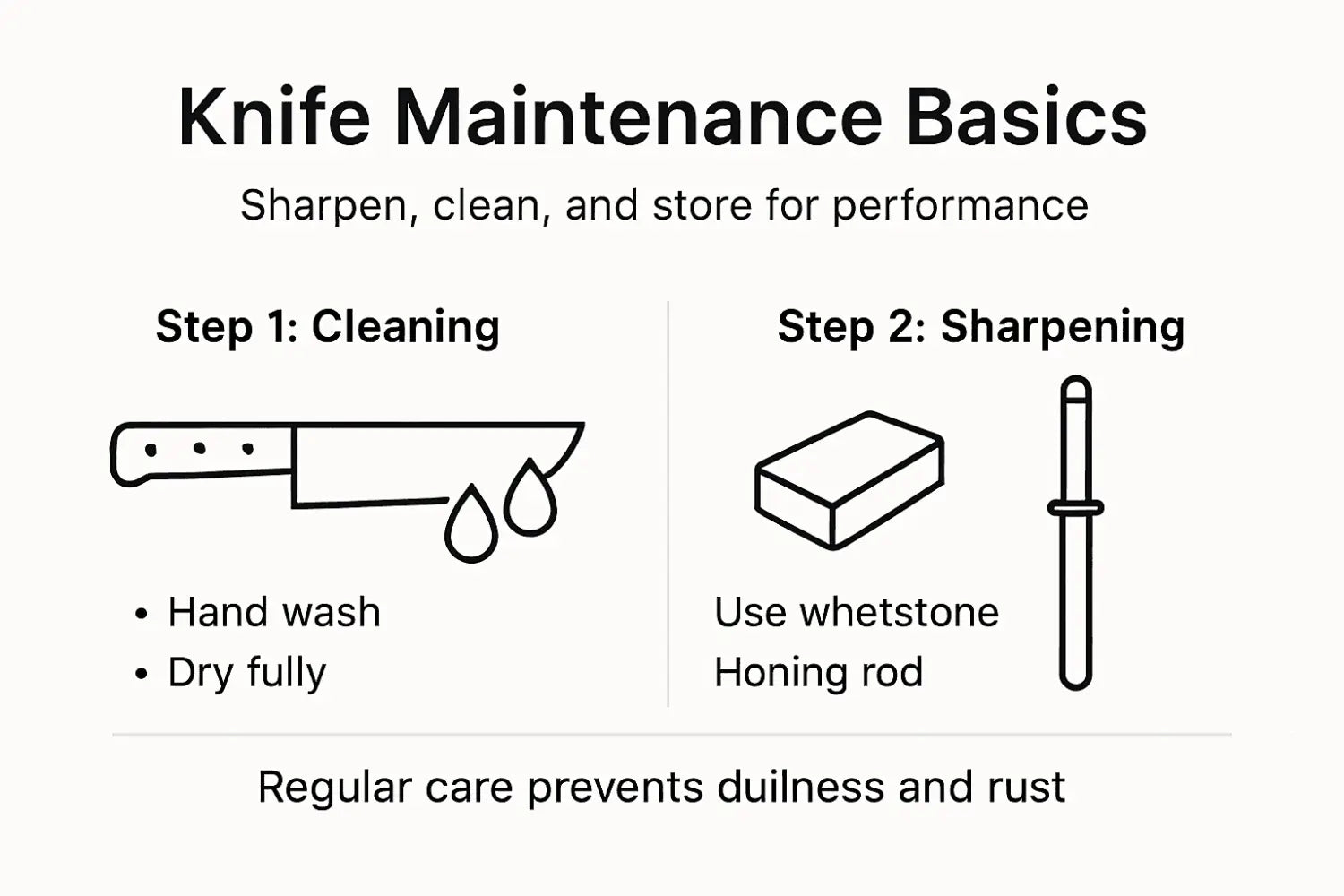
Cleaning protocols demand meticulous attention. Hand washing with mild soap and warm water remains the gold standard, avoiding harsh detergents and completely eliminating dishwasher exposure. Routine cleaning prevents corrosion and food residue by ensuring immediate post-use washing and thorough drying. Damascus steel and high-carbon knives particularly benefit from this careful approach, with immediate cleaning preventing potential rust formation and maintaining the blade’s distinctive metallurgical characteristics.
Sharpening and storage practices represent the final critical components of comprehensive knife maintenance. Professional-grade sharpening requires understanding blade geometry, selecting appropriate tools like whetstones or honing rods, and maintaining consistent sharpening angles. Storage solutions such as magnetic strips, dedicated knife blocks, or protective sheaths prevent edge damage and minimize accident risks, ensuring both blade longevity and user safety.
Pro tip: Create a dedicated knife maintenance station with specialized cleaning cloths, appropriate sharpening tools, and a climate-controlled storage area to maximize your cutlery’s performance and lifespan.
Risks of Poor Knife Care and Common Mistakes
Knife maintenance isn’t just about preserving a tool – it’s about ensuring personal safety and protecting a significant culinary investment. Dull blades significantly increase injury risks because they require more force and are prone to unexpected slipping during food preparation. Professional chefs understand that a poorly maintained knife can transform from a precision instrument into a potential hazard in mere moments.
Improper cleaning and storage represent critical mistakes that compromise knife performance and longevity. Dishwashers, harsh detergents, and careless storage can rapidly deteriorate blade quality, causing rust, edge damage, and structural weakening. Neglecting knife maintenance leads to dangerous usage conditions that increase the likelihood of accidents and reduce the knife’s overall effectiveness.
Beyond cleaning and storage, misusing knives compounds maintenance risks. Common errors include using knives as screwdrivers, prying tools, or hammers, which can cause irreparable blade damage. These inappropriate applications stress the metal, create micro-fractures, and compromise the knife’s structural integrity. Professional culinary experts recognize that each misuse exponentially increases the risk of catastrophic blade failure and potential user injury.
Common knife care mistakes and their effects are outlined below:
| Mistake | Potential Effect | Safety Risk |
|---|---|---|
| Dishwasher cleaning | Rust and blade dulling | Increases |
| Using as a tool | Structural weakness, micro-cracks | Very high |
| Bad storage | Edge chipping, accidental cuts | Moderate |
Pro tip: Develop a strict personal protocol for knife handling that includes immediate post-use cleaning, dedicated storage, and a zero-tolerance policy for using knives outside their intended cutting purposes.
Elevate Your Knife Maintenance with Premium Damascus Steel
Maintaining sharpness is the foundation of safe and efficient cutting. This article highlights how crucial proper knife maintenance is to prevent dullness, reduce injury risk, and protect your investment in high-quality blades. If you’re seeking to experience razor-sharp precision and long-lasting performance, choosing the right knife can make all the difference. Discover the unmatched craftsmanship of Damascus steel with our Premium Damascus Carving Knife Collection designed for those who value durability and artful design.

Don’t settle for ordinary tools that fail to hold their edge. Visit Faneema Cutlery to explore expert-crafted knives backed by superior maintenance knowledge. Enhance your kitchen experience by pairing your purchase with care tips that keep your blade performing at its peak.
Need versatility for everyday use or outdoor adventures Try our shop quality pocket knife selection to find superior sharpness wherever you go. Act now to invest in blades that combine beauty, precision, and lasting strength.
Frequently Asked Questions
What are the key components of knife maintenance?
Knife maintenance includes regular cleaning, appropriate storage, careful handling, and strategic sharpening techniques to preserve blade functionality and performance.
How does improper knife maintenance affect sharpness?
Improper maintenance can lead to dull blades, rust, and structural damage, making it essential to clean and store knives properly to maintain their sharpness and prolong their lifespan.
What are the best practices for sharpening a knife?
Best practices include using the appropriate tools like whetstones or honing rods, maintaining a consistent sharpening angle, and understanding the knife’s blade geometry to restore and preserve its edge effectively.
Why is maintaining Damascus steel knives different from other types of knives?
Damascus steel knives require specialized care due to their intricate layered structure, necessitating gentle cleaning, careful drying, and specific sharpening techniques to protect their unique performance characteristics.
Recommended
- Choosing a selection results in a full page refresh.